
Bridging faiths through shared roots
Let’s talk about why Hanukkah holds such deep significance for Christians.
Let’s talk about why Hanukkah holds such deep significance for Christians.
As the winter holidays approach, many seniors find themselves reflecting on traditions that bring light into the darker days. For Christians, Christmas dominates the season with its joyous celebrations of Jesus’ birth. Yet, there’s another holiday—Hanukkah, the Jewish Festival of Lights—that deserves attention in Christian circles.
Often overlooked as “just a Jewish holiday,” Hanukkah carries profound importance for Christians. It underscores the unbreakable link between Judaism and Christianity, reminds us of Jesus’ own Jewish heritage, and highlights themes of faith, resilience, and divine intervention that resonate across both traditions.
In this column, l want to explore the history of Hanukkah, and Jesus’ participation in it. To understand Hanukkah’s relevance, we must first delve into its rich history. Hanukkah commemorates events from the second century BC, during a time when the Jewish people faced severe persecution under the Seleucid Empire, ruled by Antiochus IV Epiphanes. Antiochus sought to Hellenize the Jews, forcing them to abandon their religious practices in favor of Greek customs.
He desecrated the Second Temple in Jerusalem by erecting an altar to Zeus and sacrificing pigs there—an abomination in Jewish law. This sparked the Maccabean Revolt, led by Judah Maccabee and his brothers, a small band of Jewish fighters who, against overwhelming odds, reclaimed the Temple in 164 BC. The word “Hanukkah” means “dedication” in Hebrew, referring to the rededication of the Temple after its purification.
According to tradition, when the Maccabees sought to relight the Temple’s menorah (a seven-branched candelabrum), they found only enough consecrated oil to last one day. Miraculously, the oil burned for eight days, allowing time to prepare more. This “miracle of the oil” is why Hanukkah is celebrated over eight nights, with families lighting an additional candle on the hanukkiah (a nine-branched menorah) each evening.
Customs include eating oil-fried foods like latkes (potato pancakes) and sufganiyot (jelly doughnuts), playing dreidel games, and exchanging gifts. It’s a story of religious freedom, perseverance, and God’s faithfulness—themes that echo in Christian teachings about overcoming adversity through divine grace.
Why should this matter to Christians? One compelling reason is that Jesus himself celebrated Hanukkah. The New Testament explicitly records this in the Gospel of John. In John 10:22-23, it states: “Then came the Festival of Dedication at Jerusalem. It was winter, and Jesus was in the temple courts walking in Solomon’s Colonnade.”
The “Festival of Dedication” is none other than Hanukkah, marking the anniversary of the Temple’s rededication. During this event, Jesus engages in profound teachings, declaring himself the Good Shepherd and affirming his unity with God the Father.
This moment isn’t incidental; it places Jesus squarely within Jewish religious life, participating in a holiday that celebrated God’s deliverance of His people. For seniors who grew up in Christian households, this biblical reference might come as a surprise, but it illustrates how Jesus lived as a devout Jew. He observed the Torah, attended synagogue, and celebrated Jewish festivals like Passover, Sukkot, and yes, Hanukkah. By joining in Hanukkah, Jesus embodied the holiday’s spirit of light triumphing over darkness—a motif that Christians see fulfilled in Jesus as the “Light of the World” (John 8:12).
Recognizing this connection can deepen your appreciation for the Bible’s continuity, showing how Old Testament promises find fulfillment in the New. This brings us to a foundational truth: Without the Jewish people, there would be no Jesus, and consequently, no Christmas. Jesus was born Jewish, raised in a Jewish family in Nazareth, and descended from the line of David, as prophesied in Jewish scriptures. His mother, Mary, was Jewish; his earthly father, Joseph, was Jewish; and his teachings were steeped in Jewish wisdom, drawing from the Torah, Psalms, and Prophets.
The entire narrative of Christmas—the virgin birth in Bethlehem, the visit of the Magi, the angelic announcements—unfolds within a Jewish context, fulfilling prophecies from Isaiah and Micah.
Christianity emerged from Judaism, not in opposition to it, but as an extension. The apostles were all Jewish, and the early church debated how to include Gentiles while honoring Jewish roots. Without the Jewish commitment to monotheism, the covenant with Abraham, and the preservation of the Scriptures through centuries of trials—including the very revolt Hanukkah commemorates—the stage wouldn’t have been set for Jesus’ arrival.
The Maccabees’ victory ensured the Temple’s survival, maintaining Jewish religious identity until Jesus’ time. Had Judaism been eradicated by Antiochus, the messianic expectations that Jesus fulfilled might have vanished. Thus, Christmas, celebrating the birth of a Jewish Messiah, owes its existence to Jewish resilience. This interconnectedness fosters interfaith understanding, especially valuable for seniors navigating a diverse world.
In retirement communities or family gatherings, sharing stories of Hanukkah can build bridges, which is why I’m writing this column! Imagine lighting a menorah alongside a Christmas tree, discussing how both holidays symbolize hope amid hardship. For Christians, honoring Hanukkah isn’t syncretism; it’s acknowledging heritage. As Pope John Paul II once said, Jews are our “elder brothers” in the faith. In an era of rising anti-Semitism, recognizing this shared history promotes empathy and combats division.
Moreover, Hanukkah’s lessons are timeless for seniors. It teaches that even in later years, you can stand firm in convictions, much like the Maccabees did against impossible odds. The miracle of the oil reminds us that God’s provision often exceeds our expectations, a comfort during life’s uncertainties. Christians can draw parallels to Advent, where candles symbolize anticipation of Christ’s light.
The bottom line: Hanukkah isn’t peripheral to Christianity—it’s integral. Its history of triumph over oppression, Jesus’ own observance, and the undeniable Jewish roots of our faith all point to a profound debt of gratitude. Without Jews, there’d be no Jesus, no salvation story, no Christmas carols or nativity scenes. This holiday season, let’s embrace this connection. Perhaps attend a Hanukkah event, read John 10, or simply reflect on how light from one tradition illuminates another. In doing so, we honor our shared divine narrative, fostering peace and joy for generations to come.
Thanks for reading All About Seniors, see you next week!
Bill Milby is a Director of Visiting Angels® of Central Georgia, a non-medical, living assistance service for seniors. If you have questions or comments about this column you can reach him at william.mercylink@gmail.com or search for us at https://www.facebook.com/VisitingAngelsofCentralGA
Before you go...
Thanks for reading The Houston Home Journal — we hope this article added to your day.
For over 150 years, Houston Home Journal has been the newspaper of record for Perry, Warner Robins and Centerville. We're excited to expand our online news coverage, while maintaining our twice-weekly print newspaper.
If you like what you see, please consider becoming a member of The Houston Home Journal. We're all in this together, working for a better Warner Robins, Perry and Centerville, and we appreciate and need your support.
Please join the readers like you who help make community journalism possible by joining The Houston Home Journal. Thank you.
- Brieanna Smith, Houston Home Journal managing editor
Paid Posts
Author

Related Articles
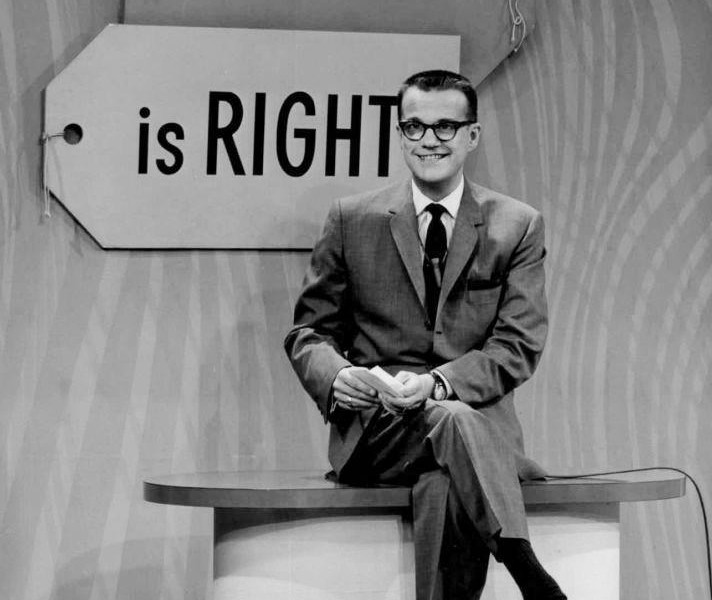
DID YOU KNOW …? Who was the producer’s first choice to host the original “The Price is Right”?
Five hundred columns down, and an infinity of columns yet to go!
After last week’s party for the 500th collection of silly trivia, you’d think I would be ready to give up, right? Heck no. I’m just getting started. In fact, I plan to be around until we hit 1,000 columns and then some!
So while you settle back and enjoy your favorite beverage appropriate for the time of day in which you read this, I’ll be working on future columns to enlighten and entertain you.
Enjoy!
Jesus called Himself ‘Son of Man,’ not ‘Son of God’
The Christian faith teaches that Jesus is the “Son of God,” yet Jesus frequently and consistently called Himself the “Son of Man” — a total of 81 times in scripture.

If you give a coworker a donut
If you give a mouse a cookie…