
Accountability…..Not – Fairness is tricky
Fairness is a very tricky concept when it comes to the criminal justice. In federal court, sentencing guidelines, agreed upon by an independent commission, have been adopted to try to bring uniformity in sentencing across the United States. No matter the crime, if you are arrested in Maine or Kansas, you should be looking at roughly the same sentence. In theory, everyone is treated the same. With relatively stark rules in place, and judges for life, there is not as much room for variance.
Federal law enforcement is generally rotated around the United States. While prosecutors are certainly often (though not always) local attorneys, Justice Department in Washington, with some fairly detailed operational rules, exercises some institutional control over both prosecution and enforcement. This prevents local “culture” from developing within a local agency. Plus, since federal law enforcement is not tasked with community service, we find that the federal criminal justice system is fairly uniform.
The same is not true with the local county and state criminal justice systems. State courts lack this uniformity. In Georgia, it is relatively easy for an accused to be facing decades in prison from a single arrest, as a local prosecutor can stack crimes on top of each other to get to there. How much “real” time is faced, varies wildly from jurisdiction-to-jurisdiction, as a Fulton County prosecutor and judge might take a very different tack to an arrest as from an analogous tandem from Toombs County. Everything is at the prosecutor and judge’s discretion.
At the state level, then, discretion becomes the handmaiden of fairness. It is a variable that we cannot control. It comes into play with sentencing; the decision by an officer about whom to “stop” and arrest, and a prosecutor’s decision about whom to charge. Individual discrete decisions at all steps in a prosecution. This is how racism can seem to bleed into the system.
Most criminal justice interaction between a community and authority is at the local level. Thus, when you hear about “defunding” police, try not to listen to this concept as abolishing a police department; try to listen to the complaints about the unfairness of discretionary decisions and the scope of authority.
State governments can set limits on when a litigant can attack this discretion or not. In Georgia, the state allows you to sue it for negligent actions committed by state officials, with guardrails set by something called the Georgia Tort Claims Act. The same is not true for local prosecutors, who have complete immunity from a lawsuit, and local law enforcement, who cannot be sued when exercising their discretion. This makes it nigh onto impossible to hold local criminal justice actors accountable for their actions; this creates a fertile ground for arrogance, and, yes racism.
In North Carolina, the legislature there passed a law that allowed a minority to attack a death penalty sentence imbued with racist overtones. The idea was to end what had been a racist application of capital convictions. Studies done there, by law students from Michigan State University, looked at jury selection and determined that juries were white-washed, so that black defendants faced juries that were disproportionately white. Prosecutors were asking minorities derogatory questions, such like if one juror could read.
Similar types of things have happened in some South Georgia cases. Ahmaud Arbery was killed by white men with connection to the local Brunswick law enforcement community, and the criminal investigation was infected by this bias. Maybe this was overt racism, but more likely, Mr. Arbery’s death was not fairly investigated as the result of some institutionally racist discretionary decisions.
What is sad is that this has been going on in the last 30 years, as opposed to being ancient history. This type of evil only rarely gets discovered. Being a prosecutor is as honorable a career choice, as being a law enforcement officer. Prosecutors have so much immunity that they hide behind it as a cocoon. In addition to Brunswick, you had Paul Howard being investigated over several fishy financial dealings, and in Paulding County, District Attorney Dick Donovan settled a sexual harassment lawsuit for $300,000. They may face some consequences when they take liberties with their office, yet there is no one to hold them professionally accountable.
The “Klu Klux Klan” Act (42 U.S.C. 1983) is supposed to give a citizen the right to ask for some accountability from a government official. This was passed to give some teeth to the idea of Reconstruction and prevent the kind of “reinslavement” of the freed slaves, Jim Crow all but made a reality. It was supposed to bring federal accountability to local discretionary actions committed in the name of a state or county government.
Still, even here, local prosecutors have absolute immunity if performing in the role as a prosecutor. You can take the most racist actions, like in white-washing a jury, and if you are merely prosecuting, nothing can be done about it.
Accountability is also a problem with your standard street officer. State law enforcement officials can be sued, but judges have come up with a unlegislated theory of qualified immunity, in which, as it has evolved, plaintiffs have to play “whack-a-mole” finding a right that was “clearly established.” I kid you not—one court held that it was not a “clearly established” right, when local law enforcement officers pilfered hundreds of thousands of dollars from an innocent person. It is now, but not at the time.
This is a core problem with our local criminal justice systems; there is no way to hold locals accountable. In Los Angeles, there are literally gangs of white supremacist cliques that permeate the local police departments. They control career advancement and are a cancer on justice. No one is really accountable for this rogue shadow infrastructure and there is almost no way to hold them so.
Obviously, this is the extreme, but the fact that it exists in Los Angeles is why some are crying for defunding departments. Tear them down and start over, make it possible to bring some accountability to our criminal justice system. This is what we need to rethink to bring fairness to the system.
Warner Robins attorney Jim Rockefeller is the former Chief Assistant District Attorney for Houston County, and a former Assistant State Attorney in Miami. Owner of Rockefeller Law Center, Jim has been in private practice since 2000. E-mail your comments or confidential legal questions to jim@rockefellerlawcenter.com.
HHJ News
Before you go...
Thanks for reading The Houston Home Journal — we hope this article added to your day.
For over 150 years, Houston Home Journal has been the newspaper of record for Perry, Warner Robins and Centerville. We're excited to expand our online news coverage, while maintaining our twice-weekly print newspaper.
If you like what you see, please consider becoming a member of The Houston Home Journal. We're all in this together, working for a better Warner Robins, Perry and Centerville, and we appreciate and need your support.
Please join the readers like you who help make community journalism possible by joining The Houston Home Journal. Thank you.
- Brieanna Smith, Houston Home Journal managing editor
Paid Posts
Author

Related Articles
How Important Is That Cup of Coffee? More Than You Think!
I can’t speak for anyone other than myself, of course, but I cannot operate without at least two cups of coffee in the morning.
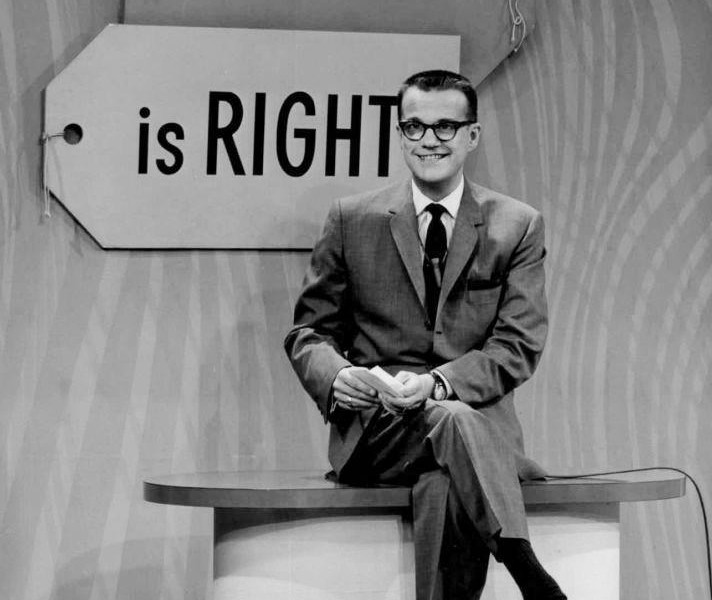
DID YOU KNOW …? Who was the producer’s first choice to host the original “The Price is Right”?
Five hundred columns down, and an infinity of columns yet to go!
After last week’s party for the 500th collection of silly trivia, you’d think I would be ready to give up, right? Heck no. I’m just getting started. In fact, I plan to be around until we hit 1,000 columns and then some!
So while you settle back and enjoy your favorite beverage appropriate for the time of day in which you read this, I’ll be working on future columns to enlighten and entertain you.
Enjoy!

It’s Hurricane and Storm Season; Time to Prepare
From now until late November the weather can become unpredictable in a matter of minutes. Why? Because we are now in the tornado and hurricane season.
Keeping in mind that these storms can knock out power for several days, take lives and leave you, family or friends homeless, it is time to consider taking precautions and preparing in the event of a natural disaster such as a tornado or hurricane.