
Warner Robins Council raises utility rates
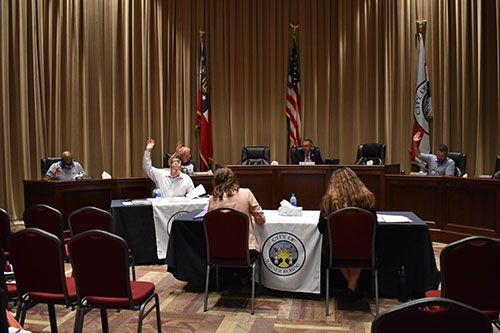
Warner Robins Mayor and Council held the second reading of an ordinance-amending chapter 24 of the city code regarding public utilities rates. At the end of May, the city received the water and wastewater rate and fee study prepared by Raftelis Financial Consultants, Inc., and based on the study results finds, it determined that the monthly service rates and fees should be increased, to which mayor and council approved to increase the rates, Monday.
Due to the current COVID-19 crisis, the public was still not permitted to attend the meeting, but was/is able to view the meeting on the city’s Facebook page live stream and local cable network, Cox channel 14.
The amendment passed 5-0 with council member Larry Curtis not present. Curtis was not at the meeting due to a family personal matter. Curtis, at the June 3 council meeting, was not in favor of increasing the rates.
“I think we should wait,” Curtis said during the June 3 meeting. “Right now we have a lot going on. The unemployment rate in Warner Robins is 10%, and small businesses are struggling. I do agree we need to raise the rates, but it’s not the right time. I believe we should not be putting that burden on the citizens and small business owners. As a small business owner myself, in the last two months I have been losing $3,500 a month, and now with this, my rates are going up. I just don’t think it’s the right time.”
On Monday, council member Keith Lauritsen said that even though it’s a difficult time right now, it’s the time to implement the rate increases because it will be done in phases, whereas if council waits, the increase would be a lot more.
Murray Hamilton, senior manager at Raftelis, which is a utility, water and wastewater public sector consulting company based out of Charlotte, North Carolina, presented the study during the last week of May. The study was completed in March of this year.
“The city last increased its monthly rates for water and wastewater service in fiscal year 2016,” Hamilton said. “A rate study completed in May 2018 identified the need to increase utility rates over time to meet the existing and future expenditure requirements of the system. The rate study included significant capital costs associated with sewer expansion outside the city limits. The sewer expansion program was not adopted by the city council, and projected utility rate adjustments and proposed fees were not implemented. And the city’s existing rates are not adequate to fund the annual operating and transfer requirements of the system.”
Hamilton went on to say that the city plans to refinance a portion of the system’s existing debt to take advantage of interest rate savings over the remaining financing terms. The study tasks are to prepare a five-year financial forecast by developing a funding strategy to pay for system operations, including capital repairs and upgrades, and project revenue requirements to be recovered through monthly water and wastewater rates.
The rate increase will be a 10% adjustment beginning July 1, 2020. The current residential water and wastewater monthly bill is $29.50, and with the proposed rate adjustment for July 2020, will total $32.46, an increase of $2.96. The average residential bill is based on 5,000 monthly gallons of metered water use. The rate will go up another 10% in 2021, but in 2022 will go down to eight percent, and then by 2023, go down again to six percent.
In other business, the city was officially presented its 2019 audit report, which was conducted by Nichols, Cauley, and Associates. The company gave the city a “clean” opinion, which Todd Giddens of Nichols, Cauley, and Associates said, meant that there were no findings and that the city is in good financial shape.
While the city received a clean opinion, Nichols, Cauley, and Associates stated in the report that material weakness in internal control over financial reporting and accounting functions was an issue.
The report also stated, “For effective monitoring of interim financial information and budgets, at the City Council level, data in the City’s financial system must be supplemented by up-to-date and accurate information. The fiscal year ended June 30, 2019, was not closed until March of 2020. The City does not have an adequate internal control system in place to provide reasonable assurance regarding the timeliness and reliability of financial reporting, including internal controls over: The budgeting process, the close out process and procedures (which impacts timely financial reporting), interim financial reporting to Mayor and City Council, capital asset recording and reconciliations, and account reconciliations.”
It went on to state, “The City does not have adequate technology and human resources, nor do they have an adequate system of internal control over financial reporting. For example, the trial balance obtained from the City for the audit on October 21, 2019 was not final when received. Adjusting entries were made, by management, subsequent to year-end fieldwork starting. The inadequate close out process and procedures caused the start of and the completion of the audit to be significantly delayed. The City continues to grow larger and more complex. The internal controls over financial reporting, have not been continuously modified to account for the growth and complexities occurring over time. Furthermore, the accounting function of the City has not been enhanced to keep pace with the growth and complexities occurring.”
Nichols, Cauley, and Associates stated in the report that incorrect or untimely information could result in City management, Mayor, City Council, or City employees making decisions based off of stale and or incorrect information.
“We recommend the City improve its processes, systems and controls over financial reporting including, monthly and year-end close process and procedures, timely and accurate adjustments, and timely and accurate reconciliations. An effective system of internal controls over financial reporting is an important internal control process and should not be minimized. The City should evaluate its resources available and determine enhancements required to effectively implement the processes, systems and controls necessary for correct and timely financial reporting. We also recommend the City evaluate the need of establishing internal control process documentation and monitoring.”
Holly Gross, Warner Robins Chief Financial Officer, said the report will be available on the city’s website, www.wrga.gov, within the week.
At the closing of the meeting Mayor Randy Toms said that the city will have a public hearing on the proposed fiscal year 2021 budget on June 25 at 5 p.m. Toms said to submit input, concerns, or questions, Warner Robins residents may do so by emailing budget@wrga.gov. The budget is currently available for viewing online at www.wrga.gov.
HHJ News
Before you go...
Thanks for reading The Houston Home Journal — we hope this article added to your day.
For over 150 years, Houston Home Journal has been the newspaper of record for Perry, Warner Robins and Centerville. We're excited to expand our online news coverage, while maintaining our twice-weekly print newspaper.
If you like what you see, please consider becoming a member of The Houston Home Journal. We're all in this together, working for a better Warner Robins, Perry and Centerville, and we appreciate and need your support.
Please join the readers like you who help make community journalism possible by joining The Houston Home Journal. Thank you.
- Brieanna Smith, Houston Home Journal managing editor
Paid Posts
Related Articles
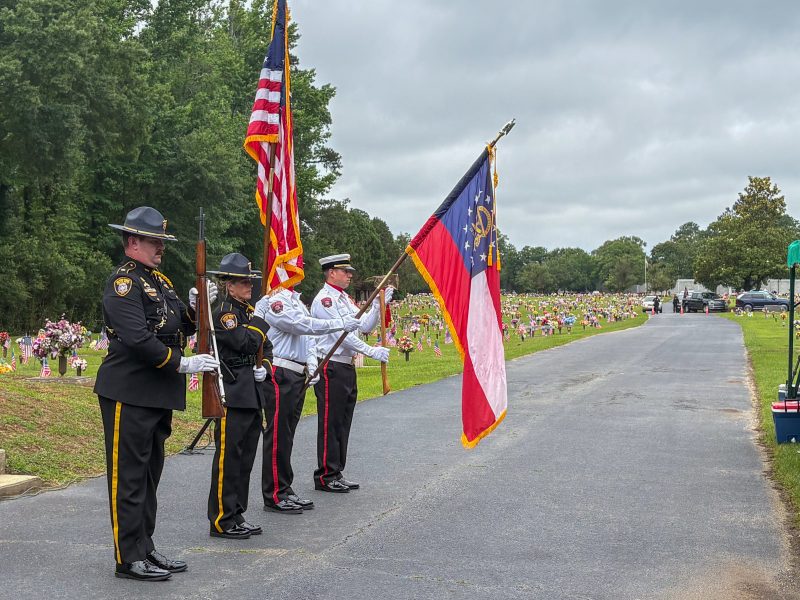
Wounded Warner Robins Marine reflects on service, sacrifice at Memorial Day event
While many celebrate the long Memorial Day weekend with a vacation or barbecue, the city of Warner Robins remembered those who gave all with a ceremony.
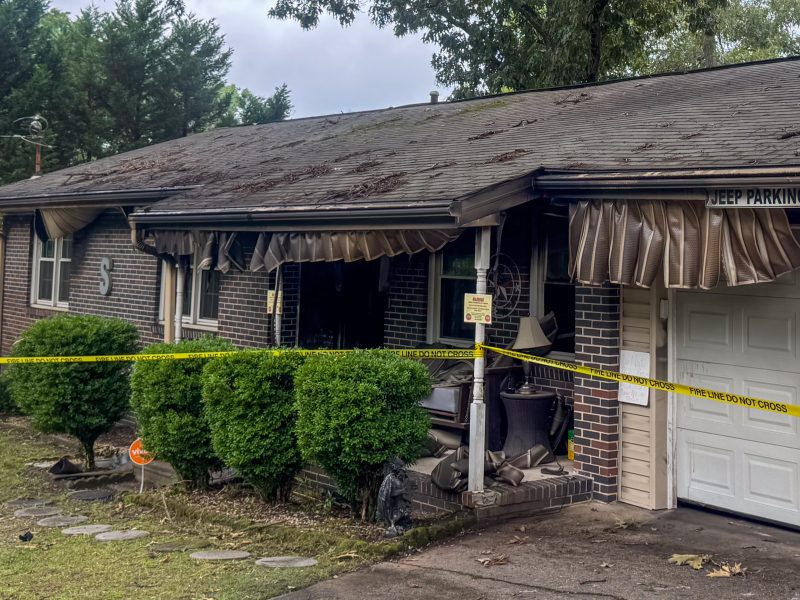
Memorial Day house fire kills 81-year-old Warner Robins resident
One woman is dead and a house is damaged after a fire broke out in Warner Robins in the early morning hours of Memorial Day.
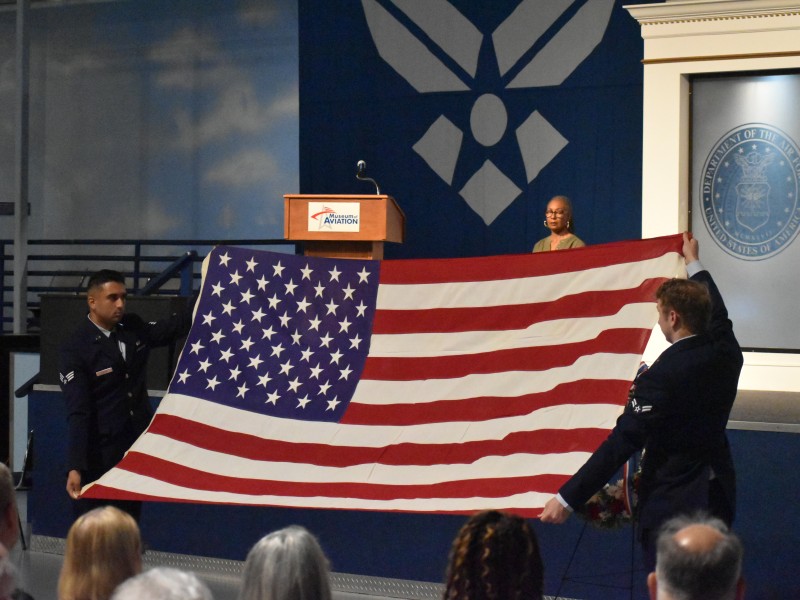
Robins Air Force Base honors the fallen in annual memorial service
In honor of Memorial Day, Robins Air Force Base held their 49th annual memorial service to honor airman and civilians who have passed away.