
Tomato Pruning Tips
Tomatoes are probably the most popular plants in the home vegetable garden.
Tomatoes are probably the most popular plants in the home vegetable garden. They are tasty and boast a variety of uses from pastas, sauces, salsas, and so much more! Boost your tomato yields by properly pruning your plants for greater health and fruit production.
Why prune tomato plants? As tomatoes grow, they continue to develop branches, leaves, and fruit from the main stem. However, some of these branches develop quick and vigorous foliage growth over fruit production. These branches are called suckers.
If suckers, or regular branches for that matter, grow too densely, you may experience greater pest and disease problems relating to poor air circulation and light access. Pruning can help to open up the plant to greater access to and improve air circulation for healthier growth, larger, and higher fruit quality over excessive foliage growth. Regular pruning can also keep your harvest visible and within reach.
A little background on tomatoes is in order. All tomatoes fall largely into two categories, determinate or indeterminate as it relates to their growth habits. Determinate tomatoes tend to be shorter and bushier, with a limited height range. They also set all of their fruit within a limited time frame. While they may need some light pruning from time to time, this should be limited to removing dead or damaged leaves.
Indeterminate types, on the other hand, will continue to produce fruit throughout the summer season. They will also continue to grow vertically with a vining habit that requires support for healthy growth. Indeterminate tomatoes require greater care as they are more likely to need ongoing pruning throughout the season to remove dead or damaged leaves, excessive growth, and sucker branches.
The best time to start pruning tomatoes is when they are young, around a foot tall, and have several sets of leaves. This will allow the plant to continue gathering the light it needs with the remaining leaves.
Suckers are the quick-to-grow branches that form at the leaf axils. This is where the branches extend from the main vine. Regular branches will form horizontally away from the stem. Suckers form at a 45 degree angle and extend upwards. When growing tomatoes, it is best to maintain one main central vine. If a sucker is left unpruned, it may eventually compete with the main stem and ultimately reduce fruit production.
Determinate tomatoes need no pruning other than the removal of all suckers below the first set of flowers. Additional pruning will not affect fruit size or plant vigor. However, if pruning is done anywhere above the first flower cluster, the tomato harvest will be reduced.
Following is a step-by-step tomato pruning guide.
Step 1: Remove dead or diseased branches. When pruning, removing the dead or diseased portions is the most important place to start. This will help your plants divert their energy to new growth and fruit production.
Step 2: Remove suckers. Suckers will form along the central vine in the “V” between the main stem and leaves/branches. It is best to catch these guys when they are young and short. When left to grow, suckers can quickly increase by several inches, eventually competing with the central stem. This should be avoided as suckers will reduce your harvesting yields.
Step 3: Remove the lower leaves. Once the dead and diseased branches and suckers have been removed, you may consider removing any branches below developing fruit. This is optional, but it may improve air circulation and promote fruit ripening.
As long as your tomatoes have strong main stems, it’s fine to leave a few suckers on the plant. The general recommendation is to leave two or three suckers to improve yield, but not to let every sucker grow.
If you are concerned about your indeterminate tomato growing tall and cumbersome, you might try this: once the plant has reached an ideal height (such as the top of your support cage or stake), simply pinch out the main terminal (top) bud on each main branch. This will help keep the plant at that height. Of course, your harvest will be reduced accordingly.
Tomato pruning is more trial and error than precision, so look at it as an experiment. When you first start pruning, do less rather than more. If you grow the same varieties year after year, you’ll get a feel for how they respond to pruning.
Tim Lewis is a Georgia Green Industry Association Certified Plant Professional, gardening writer, and former Perry High School horticulture instructor. He can be reached at (478) 954-1507 or timlewis1@windstream.net.
Before you go...
Thanks for reading The Houston Home Journal — we hope this article added to your day.
For over 150 years, Houston Home Journal has been the newspaper of record for Perry, Warner Robins and Centerville. We're excited to expand our online news coverage, while maintaining our twice-weekly print newspaper.
If you like what you see, please consider becoming a member of The Houston Home Journal. We're all in this together, working for a better Warner Robins, Perry and Centerville, and we appreciate and need your support.
Please join the readers like you who help make community journalism possible by joining The Houston Home Journal. Thank you.
- Brieanna Smith, Houston Home Journal managing editor
Paid Posts
Author

Related Articles

DID YOU KNOW …? Was an iconic star of a 1960s sitcom the first person in the role?
This Saturday is the Fourth of July, which in itself is a wonderful day. But this year, it’s extra-special.
You see, this year’s Independence Day is the 250th anniversary of the signing of the Declaration of Independence, the symbolic thumbing of the nose to King George III of Great Britain by the American colonists.
A pretty nasty war followed that, but once the war was over, these 13 formerly British colonies became a new nation, the one in which you and I live. (Unless you live somewhere else.)
So Happy 250th Birthday, America, and let’s get on with the trivia!

* What To The Slave Is The Fourth Of July? *
Greetings and blessings! My fellow citizens and friends, “Our Unfortunate Democracy In Such A Time As This! Yes, we are about to celebrate our nation’s 250th birthday of freedom and just look at us and where we are now.
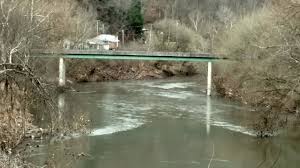
DID YOU KNOW …? Did a West Virginia town turn to the Soviet Union for help in getting a new bridge built?
Well, if this ain’t a kick in the head!
Last week, this column – the silliness you’re reading right now – won an award! For the second year in a row, my little exercise in trivia was voted second place in the Lifestyle/Feature Column category in the Georgia Press Association’s annual Better Newspaper Contest.
Apparently, this makes me (gasp) an award-winning columnist!
I didn’t make mention of it last year because it was such a neat, new thing, but now … read on for some award-winning trivia!
Thanks, Georgia Press!