
This Week in American History
Tugboats attempt to help as ships burn at the Hoboken, New Jersey docks this week in 1900. The fire started in cotton bales on the docks.
Here is what happened this week in American History.
• June 25. On this day in 1876, the US 7th Calvary Regiment under the command of Lt. Gen. George Armstrong Custer, battles with elements of the Lakota, Cheyenne, Arapaho and other Native American tribes led by Sitting Bull and Crazy Horse. The calvary regiment numbers about 300 soldiers, the Native Americans have amassed 5,000 warriors. The US 7th Calvary Regiment is wiped out. The battle, which takes place in Montana, is remembered as the Battle of the Little Bighorn. There are numerous memorials located in the area.
• June 26. In 1977, Elvis Presley holds a concert at Market Square Arena in Indianapolis, Indiana. It will be his last performance. He is not the Elvis Presley that fans had come to idolize. He is suffering multiple medical problems including liver damage, high blood pressure, glaucoma and colon issues. He has trouble articulating words and at times is simply saying words instead of singing lyrics. He will die in less than a month.
• June 27. Today in 2024, on television and computer screens across the country and across the world, President Joe Biden debates former president and presidential candidate Donald Trump. During the debate, Biden’s cognitive decline is sadly apparent to all and results in his candidacy being ended in less than a month.
• June 28. On this day in 1870, Congress establishes the first federal holidays which are New Years Day, Independence Day, Thanksgiving and Christmas.
• June 29. In 1927, US Army Air Corps pilots 1st Lt. Lester Maitland and 1st Lt. Albert Hegenberger complete the first trans-Pacific flight having taken off from Oakland Municipal Airport (now Oakland San Francisco Bay Airport) and landing at Wheeler Field, Hawaii. One of the purposes of the historic flight was to test radio beacon aids in navigation. Both Maitland and Hegenberger were awarded the Distinguished Flying Cross and the Mackay Trophy. The aircraft was a modified Fokker C-2 tri-motor named Bird of Paradise. Sadly, the history-making aircraft was not preserved.
• June 30. Today in 1900, cotton bales stored at the Hoboken, New Jersey, docks catch fire. The fire spreads to nearby barrels of oil, turpentine, and other flammable liquids, which begin to explode. Piers burn to the water line and numerous warehouses are damaged or destroyed. Three trans-Atlantic liners are destroyed along with dozens of smaller ships and boats. The fire was responsible for the deaths of at least 326 people.
• July 1. On this day in 1951, the Korean War stalemate begins. There is no ceasefire and no armistice. Fighting will continue along the border between North and South Korea. Bombing of North Korean and Chinese targets will continue and so will artillery barrages. Skirmishes will continue. At times heavy and bloody fighting will resume, but there will be no more major battles until June 1952. By that time and with no end in sight, the Korean War had become increasingly unpopular with the American public. It has also become an albatross around the neck of President Harry Truman.
Before you go...
Thanks for reading The Houston Home Journal — we hope this article added to your day.
For over 150 years, Houston Home Journal has been the newspaper of record for Perry, Warner Robins and Centerville. We're excited to expand our online news coverage, while maintaining our twice-weekly print newspaper.
If you like what you see, please consider becoming a member of The Houston Home Journal. We're all in this together, working for a better Warner Robins, Perry and Centerville, and we appreciate and need your support.
Please join the readers like you who help make community journalism possible by joining The Houston Home Journal. Thank you.
- Brieanna Smith, Houston Home Journal managing editor
Paid Posts
Related Articles

Andy’s Astronomy: Study Continues on Earth 2.0
A planet discovered 11 years ago, that is very similar to Earth, continues being studied.
It was in July 2015 the Kepler Space Telescope discovered a planet 1,800 light-years from Earth that has been loosely called Earth 2.0 or Earth’s Cousin, though the actual name is Kepler-452b.
This Week in American History
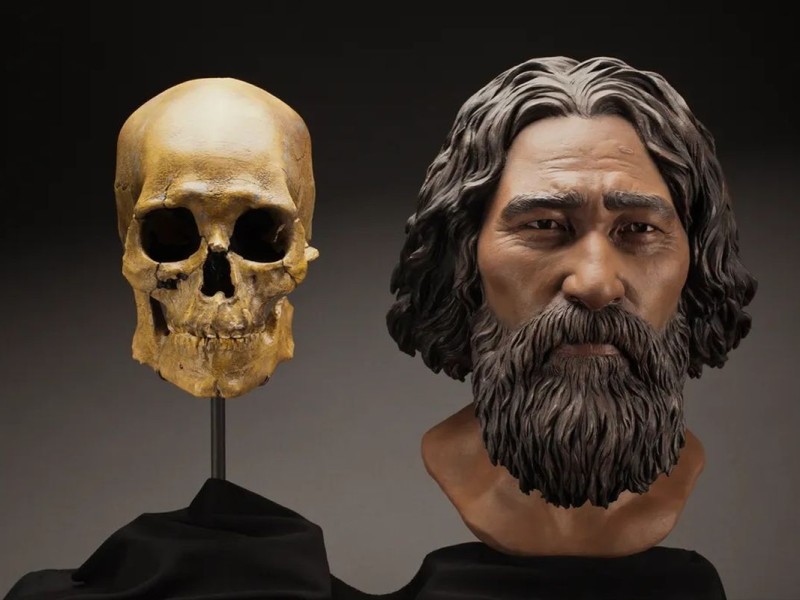
Anyone recognize Kennewick Man? Probably not as his skeleton dates to between 8,400 and 8,700 years ago. His nearly complete skeleton was found by college students this week in 1962. The discovery in the Pacific Northwest changed many theories about ancient peoples in that area and it has been determined that Kennewick Man was related to Native Americans in that area during that time frame. Shown is Kennewick Man’s skull and what he might have looked like.
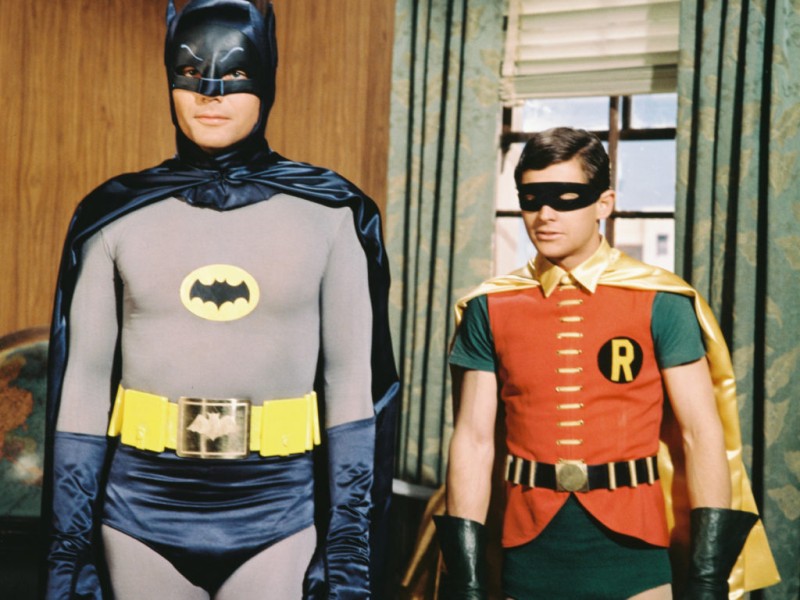
DID YOU KNOW …? Did one of the most popular television programs of the 1960s happen because of a Broadway play?
I know what you must be thinking.
“How in the world does this guy come up with different trivia each week?” That’s got to be it.
Well, if you are indeed thinking that, then I just made the best guess I’ll ever make. And I’ll answer it: I have a storehouse of trivia that may last into the 22nd Century, or beyond! I’ve already mined it; each week I polish up a few nuggets and leave them here for you to enjoy.
That’s my story, and I’m sticking to it.
Now, enjoy this week’s collection!