
Political Science professor explains how redrawing voting maps could affect district two in future elections
Governor Brian Kemp announced a special session to discuss redrawing voting maps. Political Science Professor explains what this means.
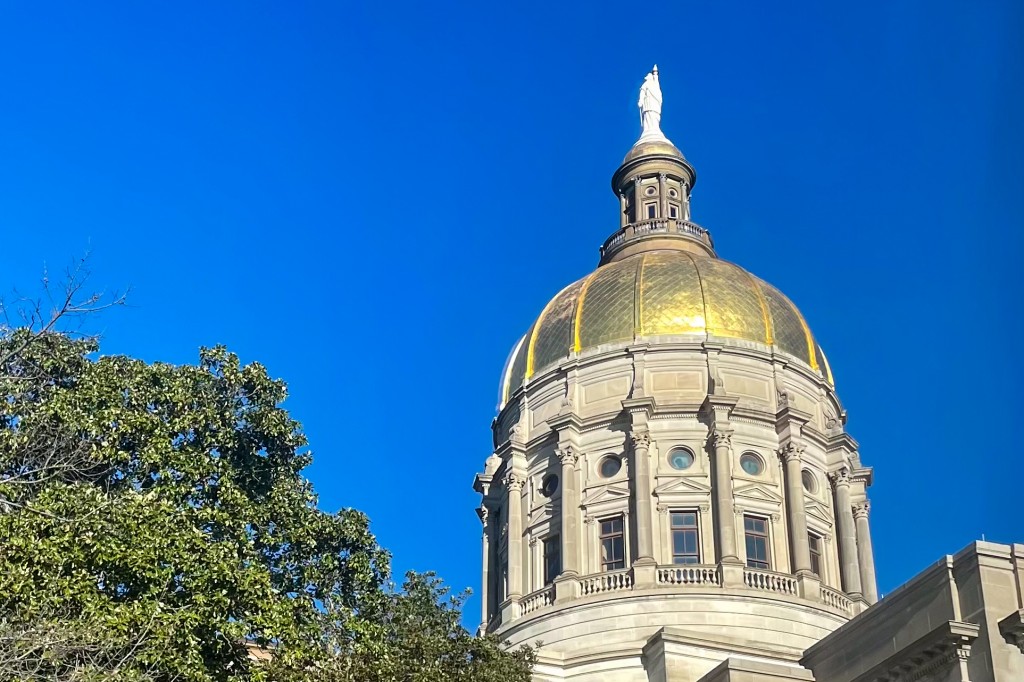
HOUSTON COUNTY — In light of the Supreme Court’s recent decision in Louisiana v. Callais, Governor Brian Kemp announced a special session of the General Assembly on June 17. But what does this mean?
Professor of Political Science at Middle Georgia State University, Christopher Lawrence, explained how this could affect the state.
Louisiana v. Callais
On April 29, the Supreme Court ruled in the Louisiana v. Callais decision in a 6-3 vote.
Lawrence said there has been a lot of back-and-forth on redistricting in Louisiana. He explained that in 2022, the state decided to create two districts, but was challenged in court.
The Supreme Court was deciding if the two districts were consistent with the Voting Rights Act and whether there was no racial discrimination in voting.
The Supreme Court cited a 1982 case called Thornburg v. Gingles, where the North Carolina General Assembly passed a redistricting plan for the state’s Senate and House of Representatives. Black citizens then challenged seven of these districts, saying that it impaired their ability to elect their representatives of choice.
Lawrence said the state went too far in allowing discrimination based on race, and a lot of majority-minority districts were race-based districting, which is not permitted under the Constitution.
The Supreme Court made the unanimous decision that the redistricting plan violated section two of the Voting Rights Act.
Section two allowed the creation of majority-minority districts, which led to Black and Latino representatives being elected to Congress and other political seats, according to the Harvard Kennedy School.
In the case of Louisiana v. Callais, this is why they overturned the redistricting and allowed Louisiana to continue its process.
However, the Supreme Court’s recent decision has opened up the doors for other states like Georgia to redistrict. Tennessee, Alabama, South Carolina and Florida are discussing redistricting as well.
Lawrence said this will lead to Republicans gaining additional seats in political offices.
How does redistricting work?
The redistricting process is required once every 10 years after the Census. It determines how many seats each state is going to have in Congress. This then affects the Electoral College, a process the founding fathers established in the Constitution as a compromise between the election of the President by vote in Congress and by a popular vote of qualified citizens. It was also intended as protection against larger states dominating elections.
Once it is figured out the number of districts a state will have, the next step is to ensure the districts are equal in population, Lawrence said. For example, Georgia has 14 districts.
In the Reynolds v. Sims case back in 1964, the Supreme Court decided to require each district to be equal in population.
In Georgia, there are several majority-minority districts. Since Republicans are the majority in the State Legislature, they would favor a redistricting plan, Lawrence said.
According to Ballotpedia, the State Senate has 21 Democrats and 33 Republicans. In the State House of Representatives, there are 80 Democrats and 99 Republicans.
“Because there’s no longer as much of a requirement for those majority-minority districts, they may be able to create a plan that makes it harder for some of the Democrats to get seats in Congress. That’s basically how it plays out here in Georgia,” Lawrence said.
How will redistricting impact middle Georgia?
Lawrence believes the biggest impact will be on district two, which is represented by Sanford Bishop. This district includes parts of Houston County, Bibb County and Peach County.
According to Data USA, about 49.9% of citizens are African American and 2.3% are Hispanic. This means the district has a 50% minority population.
“It’s probably the district that’s most likely to be affected by redistricting. We haven’t seen any maps come out yet but it’s most likely that the Republicans are going to see that as an opportunity to get another district that’s favorable to Republicans and rearrange that existing second district,” he said.
Lawrence believes this will strengthen the ability for Republicans to win district two in the 2028 election.
The redistricting will not affect the upcoming midterms but will affect future elections.
The special session will discuss redistricting and fixing the voting systems to ensure the November election will be done legally.
The state legislature still has to approve the voting maps, meaning it could ultimately fail.
A similar situation happened in South Carolina during their special session. Five Republican senators voted against the redistricting plan, according to local media.
The decision in Georgia remains up in the air until the special session on June 17.
Lawrence believes redistricting is inevitable, but it could also lead to a debate.
“My expectation is they probably wouldn’t be calling for it if they didn’t think they could get it through, but like we saw in South Carolina, it’s possible that it doesn’t,” he said.
Before you go...
Thanks for reading The Houston Home Journal — we hope this article added to your day.
For over 150 years, Houston Home Journal has been the newspaper of record for Perry, Warner Robins and Centerville. We're excited to expand our online news coverage, while maintaining our twice-weekly print newspaper.
If you like what you see, please consider becoming a member of The Houston Home Journal. We're all in this together, working for a better Warner Robins, Perry and Centerville, and we appreciate and need your support.
Please join the readers like you who help make community journalism possible by joining The Houston Home Journal. Thank you.
- Brieanna Smith, Houston Home Journal managing editor
Paid Posts
Author

Related Articles

Perry Police Department advise community to pay digital after check fraud scheme hits town
After a lengthy investigation, law enforcement has arrested four individuals tied to a check and identity fraud scheme. Five suspects remain at large.
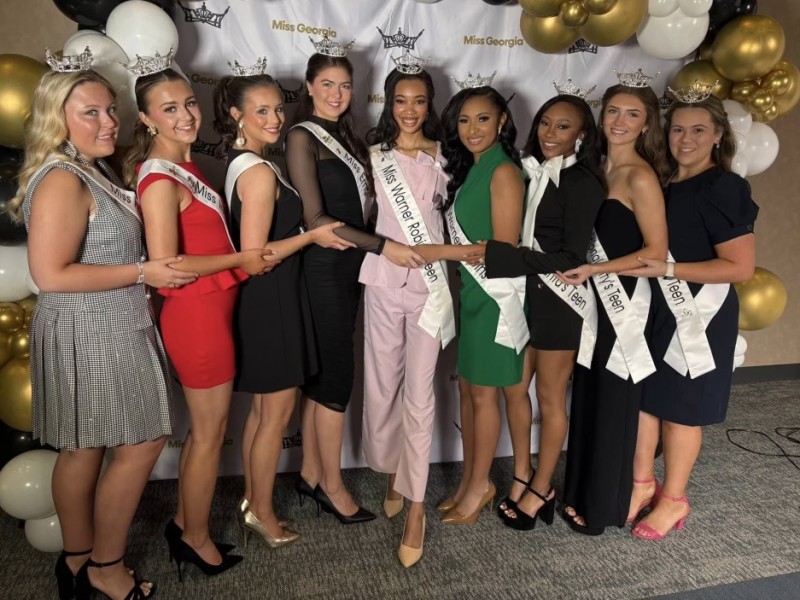
Will Houston County make pageant history again? Here are some of the 2026 contestants for Miss Georgia.
Ten Houston County girls are headed to Columbus, Georgia, and will compete to be crowned the 2026 Miss Georgia or Miss Georgia’s teen.
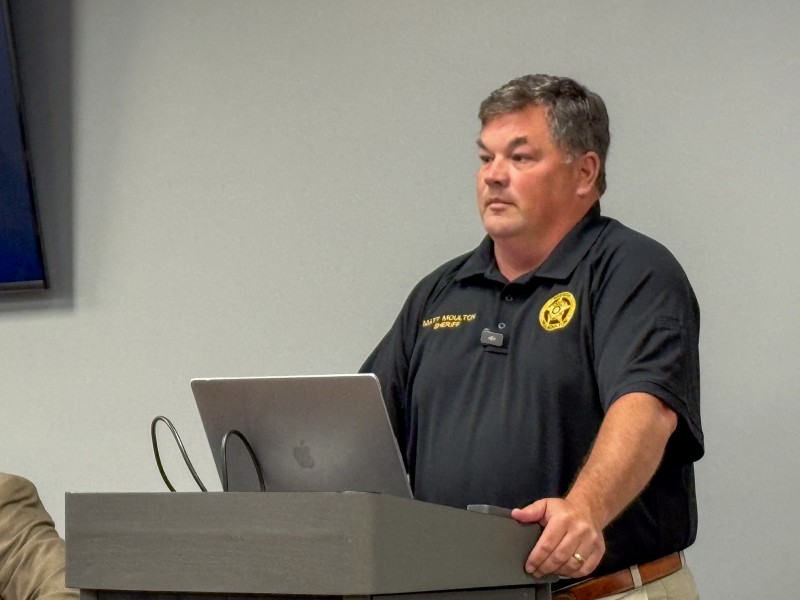
Reporting family violence and other crimes in Houston County just got easier with new Crimestoppers app
After a deadly year of domestic violence in 2025, the Sheriff’s Office and Crimestoppers are releasing an app to make reporting that much easier.