
March is colorectal awareness month: United States is most affected nation

Staff
reports
Just
as October is breast cancer awareness month March is colorectal awareness
month.
Dr.
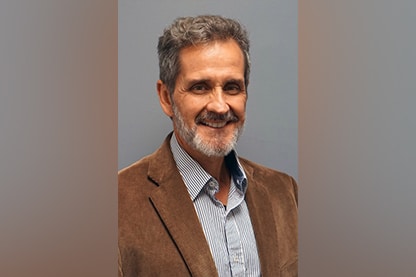
Layth Saymeh, a gastroenterology and hepatology physician talked about the
importance of preventive care and early detection of colon cancer.
“The
United States is the nation most effected by colon cancer. We eat good food,
just not healthy food,” Saymeh said.
According
to the doctor, the best way to screen to colon is to do a procedure called a
colonoscopy.
A
colonoscopy is a test that allows your doctor to look at the inner lining of
your large intestine, rectum and colon. He or she uses a thin, flexible tube
called a colonoscopy to look at the colon. A colonoscopy helps find ulcers, colon polyps,
tumors, and areas of inflammation or bleeding.
Saymeh
noted that during a colonoscopy, tissue samples can be taken and growths known
as polyps can be taken out.
The
colonoscopy is a thin, flexible tube with a small video camera attached to the
colonoscopy so that your doctor can take pictures or video of the large
intestine colon.
Saymeh
said one of the most important components of the test is the prep the night
before. The prep requires you to clean out the colon.
Saymeh
said the test itself is very straight forward and doesn’t take long at all. He
said once in the operating room or procedure room it only takes 20 minutes or
so to complete.
According
to Saymeh a colonoscopy is just as important as the rest of your routine
medical checkups. While it is not necessary to have one every year it is
important to have one by age 50 or earlier if you have family history or other
medical problems.
“A
patient should listen to their body, especially as they age,” Saymeh said. “Our most effective weapon in defeating
colorectal cancer is early detection and treatment. Through a
regular screening program that includes fecal blood testing,
periodic partial or full colon examinations, or
both, health professionals can detect and remove pre-cancerous
polyps before they turn into cancer. Such cancer screening should become a routine part of preventive health care for
anyone over the age of 50, because the risk of developing colorectal cancer increases with age.”
HHJ News
Before you go...
Thanks for reading The Houston Home Journal — we hope this article added to your day.
For over 150 years, Houston Home Journal has been the newspaper of record for Perry, Warner Robins and Centerville. We're excited to expand our online news coverage, while maintaining our twice-weekly print newspaper.
If you like what you see, please consider becoming a member of The Houston Home Journal. We're all in this together, working for a better Warner Robins, Perry and Centerville, and we appreciate and need your support.
Please join the readers like you who help make community journalism possible by joining The Houston Home Journal. Thank you.
- Brieanna Smith, Houston Home Journal managing editor
Paid Posts
Related Articles

Lack of cow pasture prevents championship
Former Macon County coach Jimmy Maffett, a good friend of mine, was a star basketball player at Montezuma High School during the World War II years.

Bargains, the ‘heart’ of the matter
I came across a story on my news feed about a 12-year-old boy, Austin Applebee, who fought high seas, fear, fatigue and who knows what else, to rescue his family from certain death.
What are we really drinking? Modern beverages and our health
In today’s world, what we drink may quietly shape our health more than we realize.