
DID YOU KNOW …? Did Canada once prepare invasion plans against the United States?
The heights of summer! (Or the depths, depending on how you look at it.)
Some people decry the heat and humidity, while others seem to revel in it. I’m not too sure about those revelers, though. Personally, when the heat and humidity get too much, I contemplate jumping into a swimming pool.
Only at the shallow end, though, since I can’t swim. If I go into the deep part, I sink.
Or should there be a “t” in that word somewhere?
Anyway, on with the trivia!
The heights of summer! (Or the depths, depending on how you look at it.)
Some people decry the heat and humidity, while others seem to revel in it. I’m not too sure about those revelers, though. Personally, when the heat and humidity get too much, I contemplate jumping into a swimming pool.
Only at the shallow end, though, since I can’t swim. If I go into the deep part, I sink.
Or should there be a “t” in that word somewhere?
Anyway, on with the trivia!
Did you know …
… it would take you 19 minutes to fall to the center of the Earth? That’s assuming a hole was drilled all the way, the hole was wide enough, and you were silly enough to jump or fall into it. (How did they figure that one out, anyway?)
… a best-selling book was published in 1989 with a surprise? Everything Men Know About Women, by Dr. Alan Francis, spells out just what the title indicates. Topics such as making friends with women, romancing women, achieving emotional intimacy with women, and more are covered fully … in the book’s 128 blank pages. That’s the surprise. Alan Francis is the pen name of authors Cindy Cashman (born 1958) and Dr. Alan Francis Garner (born 1934). The book was so popular that it was reissued for a 25th anniversary in 2014, and a 30th in 2019. (I don’t think I would need 128 pages to say I know nothing about a topic, but that’s just me.)
… a Hungarian rebel leader met a very grisly end? György Dòzsa (1470-1514) led a revolt of Hungarian peasants against his kingdom’s landed nobility in 1514. His forces were defeated and Dòzsa was captured, but his punishment has to rate as one of the worst of all time. Dòzsa was sentenced to be placed on a metal throne and forced to wear a metal crown and scepter – and then the throne, crown and scepter were heated to a very high temperature. As if being cooked to death wasn’t bad enough, once he was “done,” his followers are forced to eat him and drink his blood. (Oh, my!)
… most polar bears live in Canada? Current estimates are that between 22,000 and 31,000 polar bears are alive in the wild, and the vast majority of them – between 60 and 80 percent – live in Canada. The rest can be found in Greenland, Norway, Russia and Alaska. (And they’d love for you to visit them. Really.)
… what the lowest-budget movie to win the Best Picture Academy Award™ was? In an era that is filled with movies with budgets in the hundreds of millions of dollars, it would be very difficult to imagine a film with a budget that is a fraction of that figure being a Best Picture. But Moonlight, released in 2016, had a budget of only $1.5 million. And before you mention the earlier years and changing value of the dollar, consider: the first movie to win the Best Picture Oscar, Wings, had a budget of $2 million in 1927 money. (Proof of what you can do if you need to.)
… Canada once prepared invasion plans against the United States? Titled “Defence Scheme 1,” the plan was created on April 12, 1921, and was drafted as a response to a hypothetical U.S. invasion of Canada. The plan assumed that U.S. forces would try to capture the capital at Ottawa, Montreal, Toronto, the Prairie Provinces, and British Columbia, and Canadian forces would respond by taking Seattle; Portland, Oregon; Fargo, North Dakota; Great Falls, Montana; and Minneapolis, Minnesota.. The plan was drafted by Lt. Col. James Sutherland Brown (1881-1951) and was predicated on British support for Canada in the event of the plan being needed. What Brown did not know was that Britain had deemed Canada far too large an area to defend, and thus had no plans to send large military forces. The plan was junked in 1928 after the Canadian General Staff decided more peaceful U.S.-British relations were a good idea. (Sure, but what would they gain by taking Fargo?)
… water is not wet? I know, I know, but bear with me a moment. Science defines “wetness” as a liquid’s ability to maintain contact with a solid surface. Water itself, by this definition, is thus not wet – but it can make other things wet. (My head hurts all of a sudden.)
… starfish do not have brains? These undersea animals have a very simple system which does not include that particular organ. (In that regard, they remind me of some people I know.)
… popcorn pops in two main shapes? The shapes are called mushroom and butterfly. A mushroom pop is rather uniform in shape, while a butterfly pop is more explosive. (People actually get paid to figure this stuff out.)
… Daylight Saving Time has economic consequences? You doubt me, I know, but read on: JPMorganChase conducted a study into Daylight Saving Time in 2016, to see if there really are economic issues. The study showed that there was a 0.9 percent increase in daily credit/debit card spending per capita at the beginning of the time change, and at the end there was a spending reduction of 3.5 percent. (Another argument for ending it.)
… you may suffer from papaphobia? I hope you aren’t Catholic if you do. Papaphobia is the fear of the Pope. (I thought it was fear of your Dad.)
… the first direct-dial coast-to-coast telephone call was made in 1951? On November 10, 1951, the mayor of Englewood, New Jersey, Leslie Denning (1895-1986), telephoned his counterpart in Alameda, California, Frank Osborne (1906-1990) by dialing Osborne’s office number using ten digits – the area code and the number. The connection took eighteen seconds to complete. It was the first transcontinental telephone call not placed through an operator or Long Distance service. (Operators hated that.)
Now … you know!
Before you go...
Thanks for reading The Houston Home Journal — we hope this article added to your day.
For over 150 years, Houston Home Journal has been the newspaper of record for Perry, Warner Robins and Centerville. We're excited to expand our online news coverage, while maintaining our twice-weekly print newspaper.
If you like what you see, please consider becoming a member of The Houston Home Journal. We're all in this together, working for a better Warner Robins, Perry and Centerville, and we appreciate and need your support.
Please join the readers like you who help make community journalism possible by joining The Houston Home Journal. Thank you.
- Brieanna Smith, Houston Home Journal managing editor
Paid Posts
Related Articles
This Week in American History
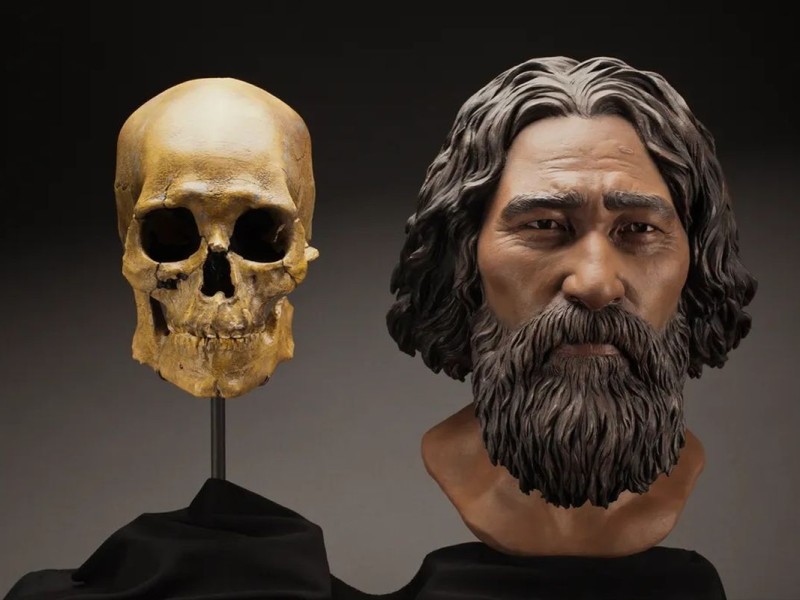
Anyone recognize Kennewick Man? Probably not as his skeleton dates to between 8,400 and 8,700 years ago. His nearly complete skeleton was found by college students this week in 1962. The discovery in the Pacific Northwest changed many theories about ancient peoples in that area and it has been determined that Kennewick Man was related to Native Americans in that area during that time frame. Shown is Kennewick Man’s skull and what he might have looked like.
DID YOU KNOW …? Did one of the most popular television programs of the 1960s happen because of a Broadway play?
I know what you must be thinking.
“How in the world does this guy come up with different trivia each week?” That’s got to be it.
Well, if you are indeed thinking that, then I just made the best guess I’ll ever make. And I’ll answer it: I have a storehouse of trivia that may last into the 22nd Century, or beyond! I’ve already mined it; each week I polish up a few nuggets and leave them here for you to enjoy.
That’s my story, and I’m sticking to it.
Now, enjoy this week’s collection!
Andy’s Astronomy: Premier Summer Meteor Shower Approaching
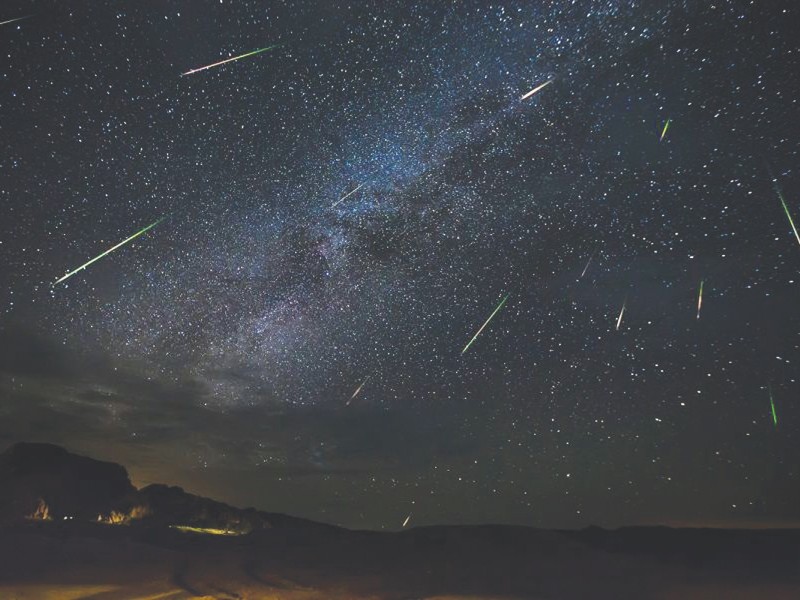
The best meteor shower taking place during the summer months should begin Friday.
Early meteors from the Perseids Meteor Shower usually begin appearing on July 17 with the final meteors flashing across the sky on Aug. 24. Peak activity is forecast for the overnight hours of Aug. 12-13 with the shower producing about 30-50 meteors per hour. As with many meteor showers the best viewing time is shortly before dawn of Aug. 13.