
Atrium Health Navicent to provide virtual therapy in Houston County schools for students, parents
Atrium Health Navicent is making it easier for students and families to take care of their mental health with its program.
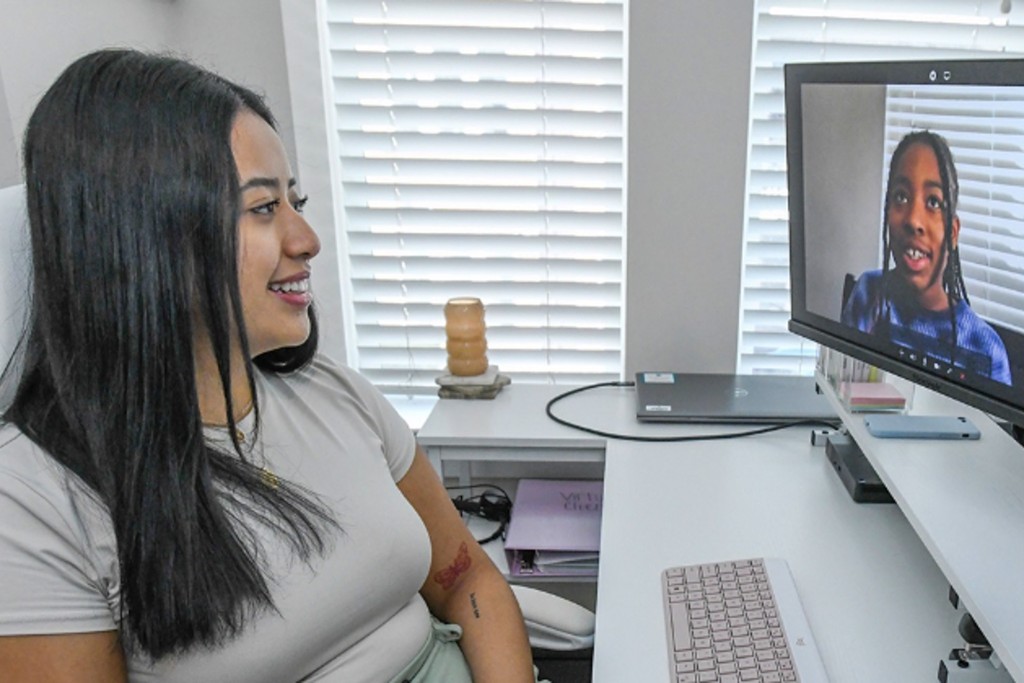
HOUSTON COUNTY — Atrium Health Navicent is making it easier for students and families to take care of their mental health with its school-based therapy program.
Atrium Health partnered with schools in Houston, Peach, and Crawford counties, as well as The Academy for Classical Education in Bibb County.
Donnie Mitchem, Director of Outpatient Therapy at Atrium Health, shared the hospital has been providing school-based therapy for over 30 years.
Then, during the COVID-19 pandemic, everything shifted. Atrium began a virtual program in seven schools. This number has since increased to over 340 schools located throughout North Carolina, South Carolina and Georgia, where the program is offered in about 60 schools.
Mitchem is a psychologist by trade and has been working with Atrium Health for 29 years. She did in-person school-based therapy for 17 years. She considers this her life’s work.
Mitchem said the service is offered primarily in middle and high schools, but can extend to elementary if a student is in need. School-based therapy will be offered during the school day, after hours and over the summer.
The program starts with a parent or school identifying a concern with a student. The school counselor then meets with the parent and gains consent to make a referral to their licensed mental health therapist. The therapist then reaches out to the parent in 10 days or less to begin therapy.
Therapy is provided on a confidential iPad provided by the school, according to Mitchem. A simple process, the student answers the call, they have their session and hang up. Families and interpreters can also join in on the session.
Mitchem said the program provides individual therapy and family therapy. The therapist can help students and families dealing with depression, anxiety, trauma, grief, and ADHD. All of their mental health clinicians are licensed.
In 2022, death by suicide was the fourth leading cause of death in Georgia for children ages five to 17, according to Atrium Health.
A 2025 report by Mental Health America showed that 12% of Georgia youth between the ages of 12 and 17 had thoughts of suicide, 17% experienced a major depressive episode and more than 9% reported having a substance abuse disorder. More than half of the students who reported a depressive episode did not receive treatment.
However, the school-based therapy program aims to decrease those numbers. According to Mitchem, 38% of students report an improvement in depressive symptoms, 36% of students report an improvement in their anxiety symptoms. Other data shows that no students engaged in virtual therapy have died by suicide.
“I think that’s a really important statistic because we’re getting care to students when and where they need it and keeping them safe and here tomorrow,” she said.
Due to the statistics from the report, the Georgia Department of Education launched a student mental and behavioral health services grant, allocating $20,000 in funding for each public middle and high school in the state.
Mitchem believes schools are a natural place for students to receive care. She said one in five students exhibits a mental health concern in school, which can impact their education. Two-thirds of those children will only get the care they need in school.
“School becomes that natural place where we can partner with the school to get the care so that the students can get the care that they need and their parents won’t have to miss work to take them and the students miss less time out of school,” she said.
Mitchem notices parents wanting to provide support, but they often can’t miss work. With virtual school-based therapy, parents do not have to miss work, and children still receive the care they need.
According to Mitchem, there has been a 10% increase in family therapy through the virtual platform, due to the convenience for parents.
Mitchem shared they have also seen an increase in middle and high school students preferring the virtual platform.
“The virtual platform allows for flexibilities and specificities that we can’t always get in-person in schools,” she said.
These specificities include selecting a male or female therapist and preferred language.
Mitchem believes this is an important program that can help both children and parents receive the care they need.
To learn more about the program, visit their website.
Before you go...
Thanks for reading The Houston Home Journal — we hope this article added to your day.
For over 150 years, Houston Home Journal has been the newspaper of record for Perry, Warner Robins and Centerville. We're excited to expand our online news coverage, while maintaining our twice-weekly print newspaper.
If you like what you see, please consider becoming a member of The Houston Home Journal. We're all in this together, working for a better Warner Robins, Perry and Centerville, and we appreciate and need your support.
Please join the readers like you who help make community journalism possible by joining The Houston Home Journal. Thank you.
- Brieanna Smith, Houston Home Journal managing editor
Paid Posts
Author

Related Articles

Warner Robins Adopt-a-Box program expands: When a traffic control box becomes art
The newest utility box features a piece of Warner Robins history.

Byron woman sentenced to prison, banishment after shoplifting and identity theft
The Houston County District Attorney’s Office said she had seven prior convictions.

Centerville stabbing leaves one dead over the weekend, police investigating
A man is dead after a stabbing at a home in Centerville, Houston County Coroner James Williams and the Centerville Police Department confirmed.