
Assistant DA speaks on human trafficking
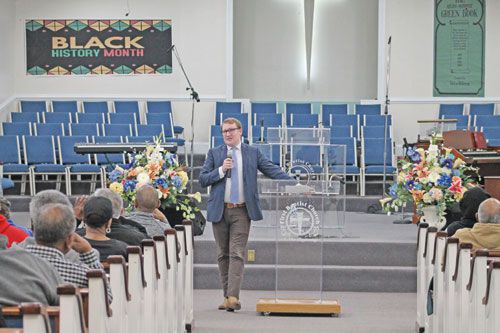
First Baptist Church on Garmon Street in Warner Robins hosted Houston County Assistant District Attorney Eric Edwards. Edwards is currently the lead prosecutor in the special victims unit, which includes domestic crimes and crimes against children. These crimes also include human trafficking, Internet crimes against children, and child molestation.
Edwards said that human trafficking has turned into an industry that generates the same type of money amounts as drug trafficking, and the goal is to eradicate the problem. The focus of his presentation was the criminal sexual exploitation of minors.
According to Edwards, the general definition of human trafficking is the trade of humans for the purpose of forced labor, sexual slavery, or commercial sexual exploitation for the trafficker or others. Edwards said that the forced labor aspect is typically an issue that is seen more in border states, although it is seen in Georgia as well. As for the sexual trafficking, Edwards said that this is more along the lines of prostitution and pimping.
Edwards explained that before he started prosecuting sex trafficking cases, his idea of the issue was young women being kidnapped, smuggled into other countries and sold. And while Edwards says that it does happen, it generally is not the case here. The most prevalent form of trafficking that is seen in Georgia is the prostitute and pimp scenario.
Child sex trafficking is defined as any sexual abuse of a child accompanied by renumeration in kind to the child or third person or persons. Edwards said that in Georgia, children under the age of 16 are incapable of agreeing to sexual contact, but children under the age of 18 are incapable of entering into any contract. With these types of crimes, children enter into sexual contacts that they are not capable of agreeing to. This means that children cannot legally be willing participants in an agreement to exchange sex for money.
Edwards explained that state trafficking laws apply to anyone who buys or sells another person for sex; therefore, both the buyer and the pimp are perpetrating the trafficking, and it is possible that both parties can be charged equally. Interstate and international travel does not have to be present in the circumstance of the trafficking for laws to apply, and payment for sex can include shelter, drugs, food, transportation, or money.
Edwards said that advertisement for these crimes appear on websites and various advertisement sites, sometimes using codes in their postings. Word of mouth is also a large aspect of advertising.
Edwards shared that the average age of entry to the trafficking industry is between 12 and 13 years of age, and since 2009 in Georgia, there have been at least 2,000 victims of child sex trafficking, with origins spanning over 100 different counties, that have been referred to Georgia Cares—a not for profit organization that assists victims of these crimes. Statistics show that after intercession from these types of non-profit organizations, 80% of those victims do not return to the lifestyle.
Atlanta, said Edwards, has placed in the top 14 cities for human trafficking, citing tax incentives for filming attracting adult film industries, as well as large busy hotels, some near strip clubs. Edwards also explained that Hartsfield-Jackson International Airport creates the opportunity for international trafficking as well.
Edwards has had to prosecute for human trafficking cases in Houston County since November of 2017. According to him, two of those cases were buyers who did not go to trial; the other two were pimps who did go to trial. One of the pimps was local while the other was passing through the county from Florida. He further explained that not only is the industry trickling down Interstate 75 from Atlanta, but that it is also heading upward from Florida, passing through the county.
Edwards said that these cases are difficult to prosecute. Sometimes victims don’t see themselves as the said victim. “They don’t think of it as something that they are being forced or coerced into; it’s something that they think they want to do,” Edwards noted. He went on to explain that the victim could be financially and/or emotionally dependent on the pimp or distrustful of law enforcement. There is also, in most cases, a lack of witnesses and physical evidence. Edwards said that possibly the biggest difficulty in prosecuting these types of crimes is the misconception of victims of child sex trafficking, citing the belief that the victim is complicit in the crime as well. Victims also can be reluctant to testify.
Edwards stressed the importance of understanding victims of child sex trafficking noting that there is the misconception that the victims are choosing to get into prostitution, even the belief that it is a victimless crime. The truth, Edwards said, is that there are circumstances behind the choice to enter this lifestyle, and the victims do not choose it. Edwards said that, conversely victims are not choosing to stay in the industry, stating that these victims could be confined, stripped of identification, and/or dependent on their pimp financially or emotionally. They also may blame themselves, become drug dependent, or are scared for their lives.
“No one chooses prostitution as a career. These victims are young and vulnerable kids,” Edwards said. He further explained that many times the kids are runaways, victims of previous molestation, and are most commonly found to come from troubled homes.
Edwards shared that many times victims are not snatched off the street, but rather recruited by their peers. They can also be tricked by false advertisements that they find on online message boards, such as acting and modeling jobs. Internet chatrooms and messaging apps used to lure children also play a role. Social media can be instrumental as well.
Edwards provided some clues to look for that might be indications of human trafficking. Among them were teens with much older boyfriends or travel companions, signs of unexplained physical and emotional trauma, as well as potential runaways and homelessness. Pre-paid credit cards and hotel keys, especially if there are multiple, are good indicators that the young person might be involved in trafficking according to Edwards. Inappropriate dress, as far as weather and revealing nature, can also be an indicator.
Edwards said that there are many resources available for victims, such as the Rainbow House Child Resource Center and Georgia Cares. These centers provide services for victims, including counseling.
HHJ News
Before you go...
Thanks for reading The Houston Home Journal — we hope this article added to your day.
For over 150 years, Houston Home Journal has been the newspaper of record for Perry, Warner Robins and Centerville. We're excited to expand our online news coverage, while maintaining our twice-weekly print newspaper.
If you like what you see, please consider becoming a member of The Houston Home Journal. We're all in this together, working for a better Warner Robins, Perry and Centerville, and we appreciate and need your support.
Please join the readers like you who help make community journalism possible by joining The Houston Home Journal. Thank you.
- Brieanna Smith, Houston Home Journal managing editor
Paid Posts
Related Articles
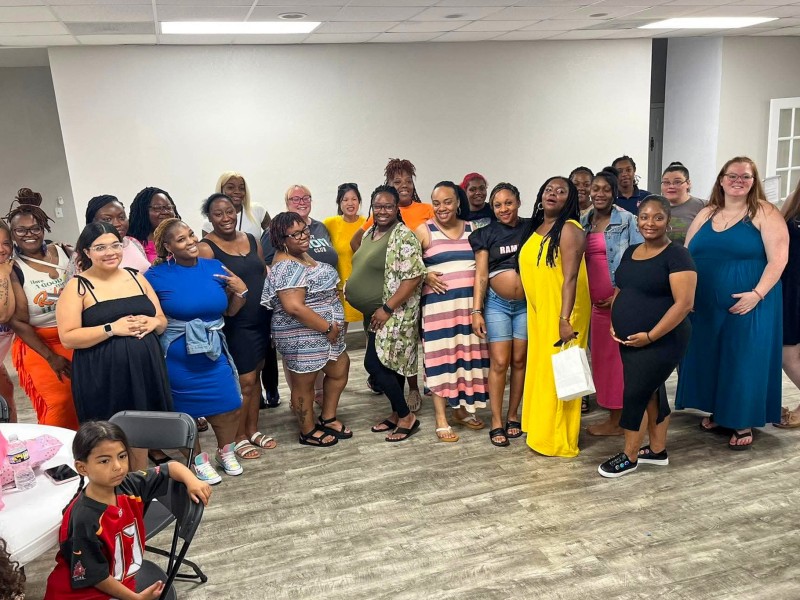
Third annual Community Baby Shower to help expectant mothers this Saturday
The Community Baby Shower will be on Saturday, April 11 from 1:30 p.m. to 3:30 p.m. at the Curtis Event Center in Warner Robins.
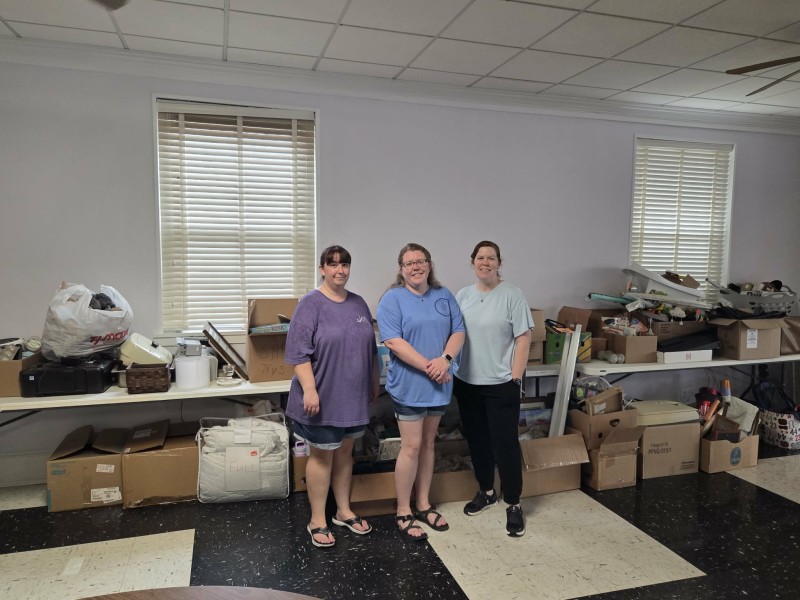
Mom’s Club of Warner Robins to host three-day yard sale to help local girl with rare genetic brain disorder
The Mom’s Club of Warner Robins annual benefit yard sale will start on Thursday, April 16 at the Well at Centerville.
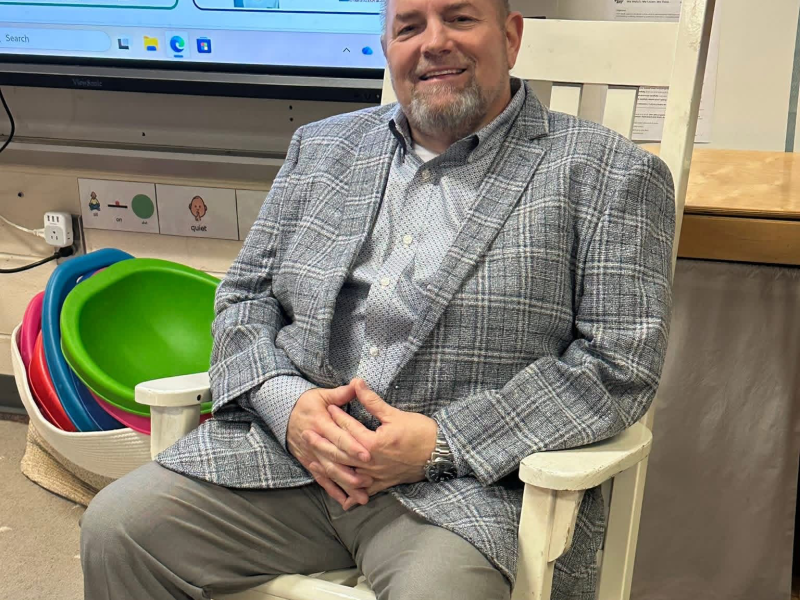
Jon Nichols hopes to continue his calling by serving on the Board of Education
Jon Nichols is seeking reelection for Houston County Board of Education Post 4 and hopes to continue his tenure as a servant leader.