
Do you ride a stallion or a donkey?
In Jesus’ time, when a conquering leader rode into a conquered city on a horse, it meant further fighting, but if he rode in on a donkey, it meant peace.
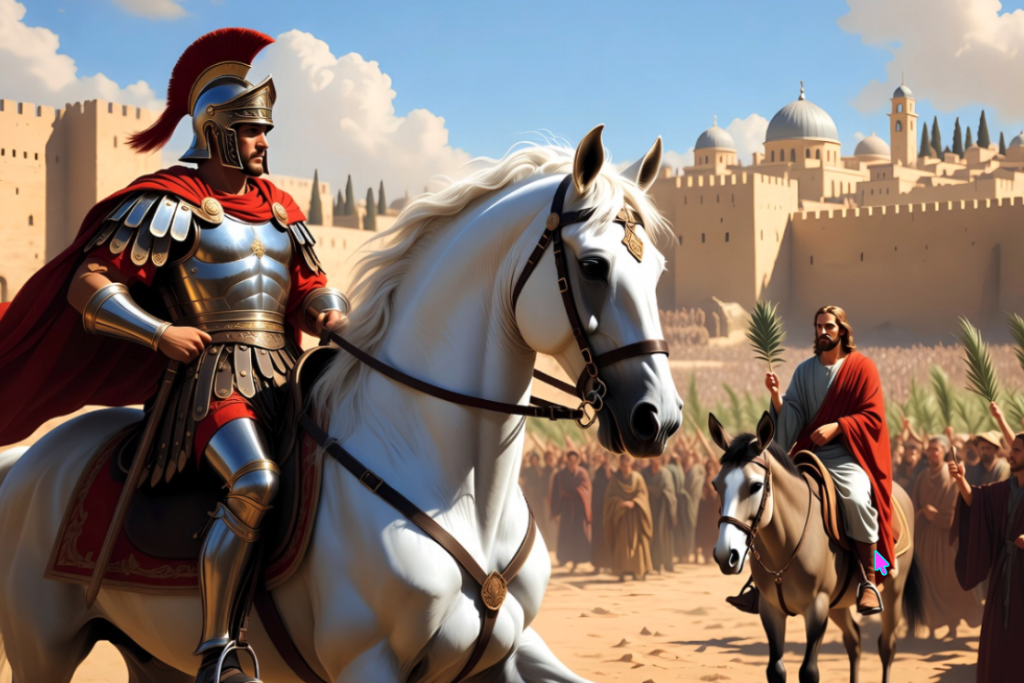
It’s Palm Sunday, and I just returned home from church, where the pastor said that in Jesus’ time, when a conquering leader rode into a conquered city on a horse, it meant further fighting, but if he rode in on a donkey, it meant peace. I hadn’t heard that before; how could I have missed it for 82 years?! I was aware that Jesus’ riding a donkey was a symbol of His humility, but I didn’t realize the corollary: that conquerors generally ride horses.
I sat there in the pew, feeling a little sheepish. Eighty-two years of Easter services, and this was news to me? But the more I thought about it, the more it made sense. In those ancient days, the animal you rode wasn’t just transportation—it was a loud, clear message to the crowd. A king or general charging in on a warhorse, armor gleaming and sword at the ready, was announcing, “I’m here to conquer and keep fighting.” It signaled power, judgment, and more battles ahead. But a leader choosing a humble donkey? That was the ancient world’s version of waving a white flag of peace. It said, “I come in gentleness. No more bloodshed. My rule will be different.” It was humility on four hooves, and the people understood it instantly.
That little history lesson from the pastor opened up the whole story of Holy Week for me in a fresh way. Holy Week is the most sacred stretch on the Christian calendar—the final days of Jesus’ earthly life that lead straight to the miracle of Easter. It all unfolds against the backdrop of the Jewish Feast of Passover, one of the biggest celebrations on the Hebrew calendar. Passover remembers how God delivered the Israelites from slavery in Egypt. Families still gather, share a special meal with lamb, bitter herbs, and unleavened bread, and retell the story of the angel of death “passing over” their homes. Jerusalem was packed with pilgrims for Passover when Jesus arrived.
Palm Sunday kicks it off. That’s the day Jesus rode into Jerusalem on a young donkey while crowds waved palm branches and shouted “Hosanna!”—a cry that means “Save us!” They laid their cloaks on the road like a royal carpet. For a moment, it looked like the people finally understood He was their King. But they were expecting a warrior on a horse who would overthrow the Romans. Jesus came on a donkey instead, offering peace with God, not a sword.
The week moves quickly after that. Maundy Thursday (sometimes called Holy Thursday) is when Jesus shared the Last Supper with His disciples, washed their feet, and gave us the new commandment to love one another. That same night, He was betrayed and arrested in the Garden of Gethsemane. Good Friday follows—the solemn, heartbreaking day of the crucifixion. Jesus was tried, beaten, nailed to a Roman cross, and died between two thieves. Even the sky went dark. For His followers, it felt like the end of everything. Yet that death was the ultimate act of love, paying the price for our sins so we could be forgiven.
Then comes Holy Saturday—a quiet day of waiting and mourning while Jesus’ body lay in the tomb. And finally, Resurrection Sunday—better known as Easter—the glorious morning when the women found the stone rolled away and the tomb empty. Jesus had risen! Death was defeated. Hope burst forth brighter than any spring sunrise.
At least in the early to mid-1900s (and maybe long before that), Easter Sunday in the USA carried its own tradition that feels a million miles from the donkey’s humility. Folks—especially us seniors who remember those days—would dress in their absolute finest: new hats, white gloves, shiny shoes, and the prettiest dresses or sharpest suits money could buy. It was called “Easter finery,” and the idea was to strut your stuff after the long, gray winter. Churches filled with color and perfume and the rustle of new clothes. I’ll admit, I enjoyed the pageantry as a boy. But looking back, it feels a little backwards. We were drawing all the attention to ourselves instead of to the humble King who chose a donkey.
As for me and my house, we’ll choose a donkey. In fact, I wish I could have ridden one to church this morning!
The older I get, the more I see that real strength isn’t in the warhorse or the fancy Easter hat. It’s in the quiet courage of humility, love, and trust in the One who conquered death—not with force, but with sacrifice. This Holy Week, wherever you are in Middle Georgia, may the same peace that Jesus offered on that first Palm Sunday fill your heart. The dogwoods are blooming, the azaleas are popping, and the greatest story ever told is unfolding once again.
Thanks for reading All About Seniors. See you next week!
Bill Milby is a Director of Visiting Angels® of Central Georgia, a non-medical, living assistance service for seniors. If you have questions or comments about this column, you can reach him at william.mercylink@gmail.com or search for us at https://www.facebook.com/VisitingAngelsofCentralGA
Before you go...
Thanks for reading The Houston Home Journal — we hope this article added to your day.
For over 150 years, Houston Home Journal has been the newspaper of record for Perry, Warner Robins and Centerville. We're excited to expand our online news coverage, while maintaining our twice-weekly print newspaper.
If you like what you see, please consider becoming a member of The Houston Home Journal. We're all in this together, working for a better Warner Robins, Perry and Centerville, and we appreciate and need your support.
Please join the readers like you who help make community journalism possible by joining The Houston Home Journal. Thank you.
- Brieanna Smith, Houston Home Journal managing editor
Paid Posts
Author

Related Articles
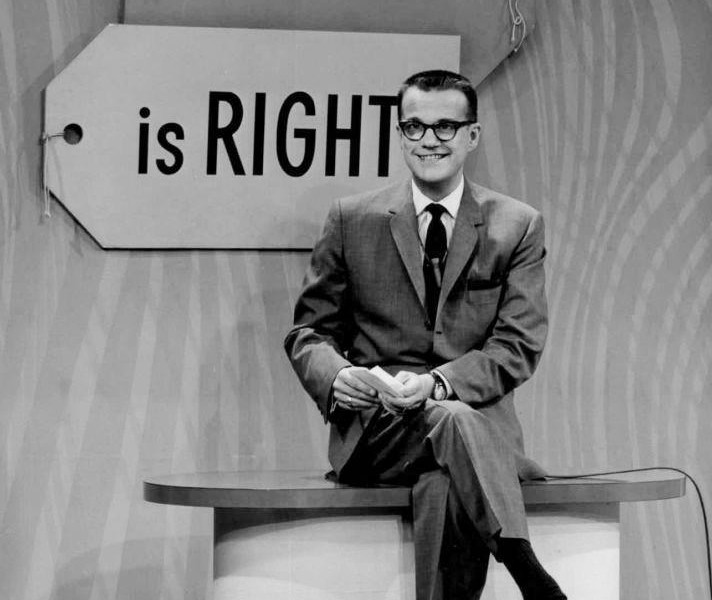
DID YOU KNOW …? Who was the producer’s first choice to host the original “The Price is Right”?
Five hundred columns down, and an infinity of columns yet to go!
After last week’s party for the 500th collection of silly trivia, you’d think I would be ready to give up, right? Heck no. I’m just getting started. In fact, I plan to be around until we hit 1,000 columns and then some!
So while you settle back and enjoy your favorite beverage appropriate for the time of day in which you read this, I’ll be working on future columns to enlighten and entertain you.
Enjoy!

Jesus called Himself ‘Son of Man,’ not ‘Son of God’
The Christian faith teaches that Jesus is the “Son of God,” yet Jesus frequently and consistently called Himself the “Son of Man” — a total of 81 times in scripture.

If you give a coworker a donut
If you give a mouse a cookie…