
WR resident wants better-equipped area for the blind
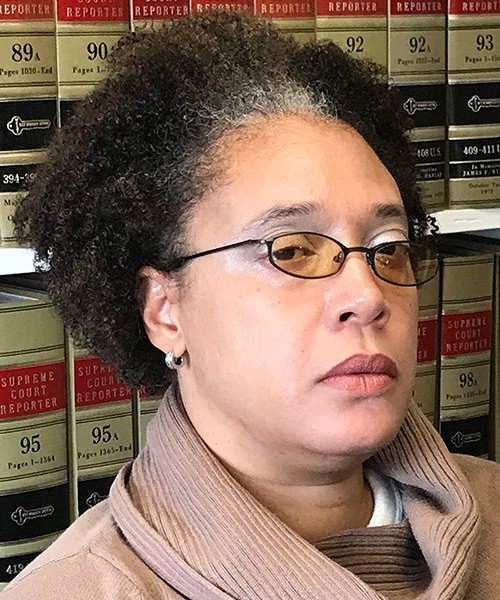
WARNER ROBINS, Ga. — Opal Young, a
Warner Robins resident who lives without her eyesight as a result of retinitis
pigmentosa, said Middle Georgia currently has limited resources to accommodate
the blind community, especially relative to her original home of New York.
Young said after hearing about
Armando Vias and his experience in the May 11 edition of The Journal, she
reached out and connected with him. Vias reached out to The Journal on behalf
of Young because she wanted to also share her experience with blindness and how
it affects her day-to-day life.
“Coming from up north, I can
definitely tell the difference in the resources, just Middle Georgia compared
to north of Georgia,” Young said. “The resources are a lot more open for the
people, for blind and the visually impaired up north.”
After Young moved with her husband
to Warner Robins in 2020 for a good deal on a house, she started researching
appropriate accommodations for the blind around the area. She eventually found
some help she needed, but some time passed before she was able to capitalize on
that help.
“I started feeling lost again when
I moved because the services were not there, and I was becoming depressed
[thinking], ‘I have to start all over,’” she explained. “I had issues getting
joined up with Georgia Vocational Rehab; I didn’t get started with services
until the following year, July 2021.”
Last year, she started a peer support
group called Empowering the Blind, and a representative from Vocational
Rehabilitation Services referred clientele to the group to share their
experiences. Young continued on, speaking about individuals in her group and
how some have been denied their respective Social Security benefits.
She also spoke on area issues with
public transportation, employment as well as completing what most would call
“normal” things on a day-to-day basis, elaborating on how people facing
blindness may sometimes need assistance — but some broader knowledge and
understanding among the rest of the community and local businesses would also
help.
“[Employers] need to become more familiar
with the kinds of things [that help us] … knowing about some reasonable
accommodations so if we do go out and interview, we won’t get shunned
immediately because they don’t understand how we do what we do,” she added. “We
use voiceover, we use JAWS, we use different technologies to make things
accessible.”
She said she works part time two
days a week as an independent living coordinator with Disability Connections, a
social services organization, in Macon. She said her employer was quick to make
appropriate accommodations when she joined the staff.
“I work with people like myself,
and with all disabilities, assisting with different challenges and to become
independent; that is our core service, to become independent,” Young said.
She said that right now her
husband can help her get to and from work, but that might not always be the
case. If someone lives in one part of Middle Georgia and wants a job in another
area nearby that offers more opportunities, oftentimes having reliable
transportation is crucial and options are limited.
“I have that privilege to have
someone,” she said. “A lot of people don’t even have a spouse or a loved one
that can drive them around, so I understand the pain of a person that probably
would want to work in Macon but lives in Fort Valley.”
Young said she had consulted with
city council and the city transportation planner among other staff in the past,
saying the city secretary had given her a list of resources on local transit
options. But those were all related to medical care.
“We want to get to the restaurant,
maybe a movie,” she said. “We’d want to go out independently.”
She added that she wanted to get
some of her group together and consult council at an upcoming meeting.
“We’d love to be able to
participate in some change,” Young said. “We’re not asking, we want to do what
we can to make some change.”
Young said she and a couple of
people from Empowering the Blind are in the process of starting a non-profit
with a goal to direct resources and additional help to people with similar
conditions.
“When they first lose their sight,
they don’t where to go, they don’t know who to call,” she explained. “I want to
be that person or that company that goes, ‘this is what you need to do, here’s
who you need to contact.’”
Young said she enjoys listening to
audiobooks and music in her free time. She said she also loves singing and
dancing to reggae music as well as going out and socializing.
This is topic of continuation.
Expect more stories about this subject in later issues of The Houston Home Journal.
* This story has been edited as of Sept. 7, 2022. The story initially stated that the
Georgia Vocational Rehabilitation Agency referred some clientele to the Empowering
the Blind peer support group. An employee of Vocational Rehabilitation Services actually did that referral. We have updated the text above and made some slight adjustments for accuracy.
HHJ News
Before you go...
Thanks for reading The Houston Home Journal — we hope this article added to your day.
For over 150 years, Houston Home Journal has been the newspaper of record for Perry, Warner Robins and Centerville. We're excited to expand our online news coverage, while maintaining our twice-weekly print newspaper.
If you like what you see, please consider becoming a member of The Houston Home Journal. We're all in this together, working for a better Warner Robins, Perry and Centerville, and we appreciate and need your support.
Please join the readers like you who help make community journalism possible by joining The Houston Home Journal. Thank you.
- Brieanna Smith, Houston Home Journal managing editor
Paid Posts
Related Articles
Genesis Joy House founder Margaret Queen-Flowers remains walking in her purpose | Remarkable Women
This week’s Remarkable Woman is Dr. Margaret Queen-Flowers who created a safe haven for homeless female veterans.
Houston County Habitat for Humanity celebrates home dedication for the Roberson family
The Houston County Habitat for Humanity hosted a ribbon-cutting for Megan Roberson’s new home, the non-profit’s latest community build.
Operation ‘Rockin’ Robins’ leads to 24 arrests connected to sex trafficking, commercial sex buyers
A months-long operation, “Rockin’ Robins,” targeted sex traffickers and commercial sex buyers and led to 24 arrests.