
WR finance committee reviews rates and fees
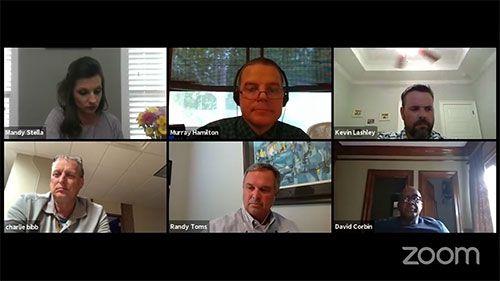
The Warner Robins Finance Committee met Tuesday evening to discuss several matters including possibly adjusting water and wastewater rates and fees as well as sanitation fees.
Warner Robins Mayor Randy Toms and Council created the committee earlier this year, in January, to help research and develop more solutions to help with keeping the city’s fiscal budget in line. Mayor and council approved Councilman Clifford Holmes to chair the committee, and have Councilmen Charlie Bibb and Kevin Lashley as members.
The first order of business was a presentation from Murray Hamilton, senior manager at Raftelis, which is a utility, water and wastewater public sector consulting company based out of Charlotte, North Carolina. The study was completed in March of this year.
“The city last increased its monthly rates for water and wastewater service in fiscal year 2016,” Hamilton said. “A rate study completed in May 2018 identified the need to increase utility rates over time to meet the existing and future expenditure requirements of the system. The rate study included significant capital costs associated with sewer expansion outside the city limits. The sewer expansion program was not adopted by the city council and projected utility rate adjustments and proposed fees were not implemented. And, the city’s existing rates are not adequate to fund the annual operating and transfer requirements of the system.”
Hamilton went on to say that the city plans to refinance a portion of the system’s existing debt to take advantage of interest rate savings over the remaining financing terms. The study tasks are to prepare a five-year financial forecast by developing a funding strategy to pay for system operations, including capital repairs and upgrades, and project revenue requirements to be recovered through monthly water and wastewater rates.
Hamilton said through their study, the proposed rate increases will start in July of this year with a proposed rate adjustment at 10%. The current residential water and wastewater monthly bill is $29.50, and with the proposed rate adjustment for July 2020, will total $32.46, an increase of $2.96. The average residential bill is based on 5,000 monthly gallons of metered water use. Hamilton then explained the rate will go up another 10% in 2021, but in 2022 will go down to eight percent, and then by 2023 go down again to six percent.
“The city’s existing water and wastewater rates are not adequate to meet the projected revenue requirements of the system over the study period,” Hamilton said. “We suggest that the city consider implementing these proposed rates and fees on or after July 1, 2020 because based on the proposed rates, the system is projected to maintain adequate debt service coverage and cash reserves over the study period.”
The next order of business for Tuesday’s meeting was discussing the city’s sanitation fund. Holly Gross, Warner Robins Chief Financial Officer, said the fund is currently operating at a loss, and that the city has not increased its sanitation rates since August of 2015.
“I am not saying we need to have an increase, but we should continue to study this matter and develop some solutions to get out of the loss,” Gross said. “The city never looks to make a profit off of this, but we have to make sure our operating costs are covered.”
Gross went on to say that the current contract would be up in 2023. Bibb expressed that he does not want to hit the community with increases all at once, but said that with growth of the city comes more expenses.
“Some of this stuff should have been addressed way before now,” Bibb said. “Now we have a council working together in unity to do what’s right for the city. Our community is thriving. It’s a great place to live, work, and retire, and people move here because of our great school system, and it’s a safe place to live. But with growth comes more expenses, and I believe our community will understand.”
No decisions or votes were taken Tuesday. Holmes said they plan to look over the study more and discuss and get input from the rest of the council.
Gross also shared that they have put together a preliminary budget for fiscal year 2021, and that it has been available on the city’s website now for two weeks. She said that they have met with the department directors to hear their requests, which the total amount from their requests is $51 million.
“We did implement a new process this year,” Gross said. “So far, it is going well. We now plan to meet with the council next for their input, and then we will sit down with the mayor to finalize the budget in making sure that it’s balanced before we formally present it. We are also seeking input from the community. To do so, we ask the community to contact their council members. We are doing very well for the current budget, fiscal year 2020 in spite of what has gone on with impacts from the coronavirus. It looks like we will make budget because the revenues were healthy and there are no shortages. We are, however, anticipating some impact on revenues going forward into 2021, but we do expect things to come back.”
HHJ News
Before you go...
Thanks for reading The Houston Home Journal — we hope this article added to your day.
For over 150 years, Houston Home Journal has been the newspaper of record for Perry, Warner Robins and Centerville. We're excited to expand our online news coverage, while maintaining our twice-weekly print newspaper.
If you like what you see, please consider becoming a member of The Houston Home Journal. We're all in this together, working for a better Warner Robins, Perry and Centerville, and we appreciate and need your support.
Please join the readers like you who help make community journalism possible by joining The Houston Home Journal. Thank you.
- Brieanna Smith, Houston Home Journal managing editor
Paid Posts
Related Articles
Department of Justice reaches $3 million settlement with various Georgia Boards for alleged violations of the Servicemembers Civil Relief Act
The DOJ has reached a $3 million settlement with 42 Georgia Boards to resolve allegations that they did not recognize the Servicemembers Civil Relief Act.
Lori Johnson hoping to continue putting students and faculty first while serving on the Board of Education
Lori Johnson is running for reelection for Board of Education District 2 and hopes to continue her commitment to the students and faculty of the Houston County School District.

Warner Robins shooting leaves two injured, police say
Law enforcement also found and detained a suspect.