
101-year-old World War II veteran recounts his time serving in Europe as a bombardier in the United States Air Force
World War II veteran J. Keith Lancaster sat down with the HHJ and discussed his time serving as a bombardier in the United States Air Force.
HAWKINSVILLE — The number of surviving World War II veterans is dwindling, but some are still lucky enough to share their experiences in arguably the most recognizable war in history.
J. Keith Lancaster is the grandfather of Nancy Lancaster, the Houston County Public Works Office Manager. He just turned 101 years old and was born and raised in Sturgis, Michigan and currently lives alone in Hawkinsville. He still drives and loves spending time with his son, Kurt.
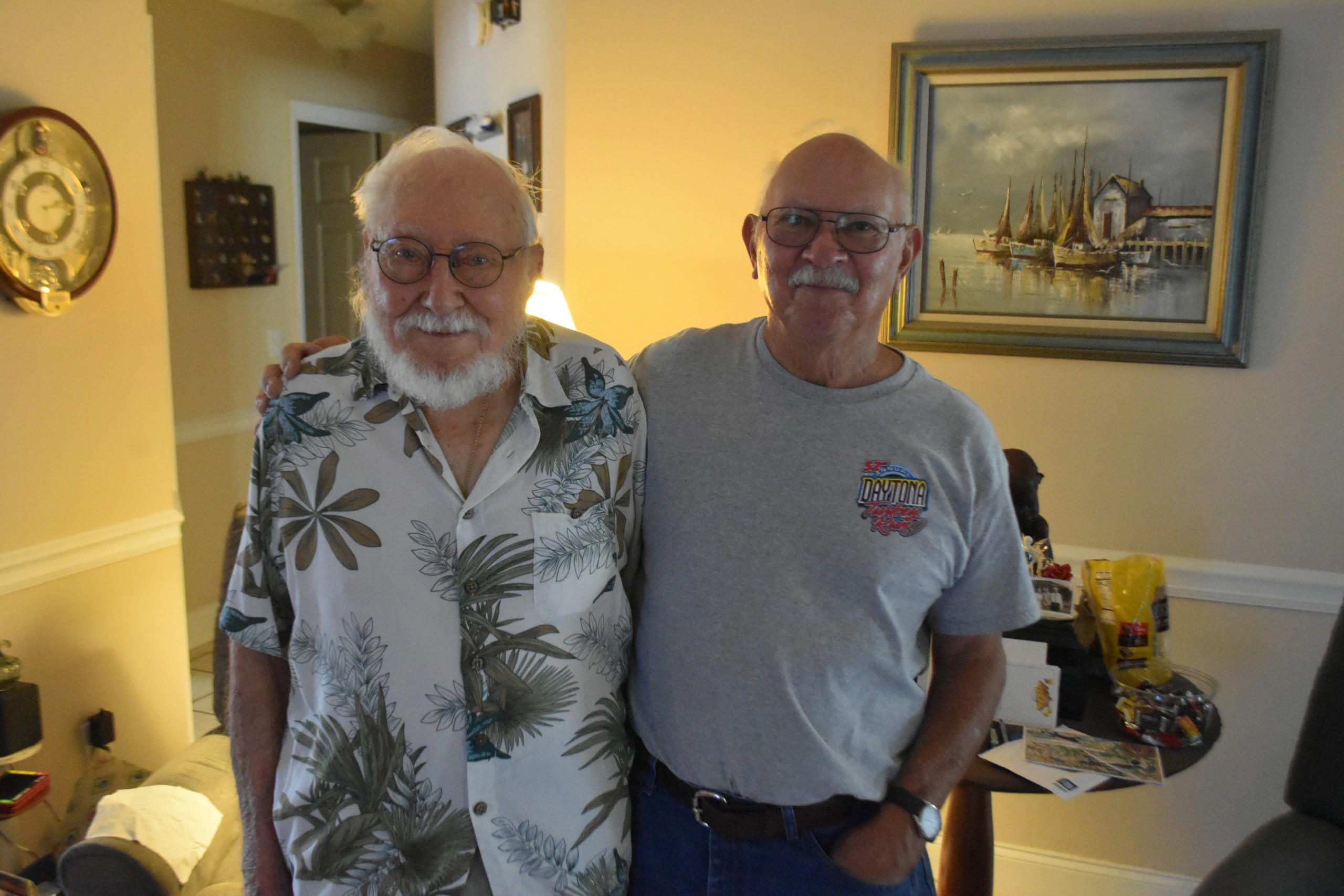
With the United States’ involvement in WWII brewing, Lancaster said in a recent interview that he knew where he was going after graduating high school in 1942.
“Either you were going to be drafted or you enlisted,” he said.
Lancaster and a few of his friends chose to enlist in the Navy, but he was rejected because of an overbite. He then went to Kalamazoo, Michigan, and enlisted in the Army Air Cadet Corps in March 1943. After stopping in Nashville for classification, Lancaster chose to become a bombardier because it was the quickest position to train. As a bombardier, Lancaster simply would drop bombs on enemy targets. A few key responsibilities include identifying the target, knowing when to release the bomb, coordinating effectively with the crew, and managing weapons.
“Not many men wanted to be a bombardier, they all wanted to be pilots,” he said.
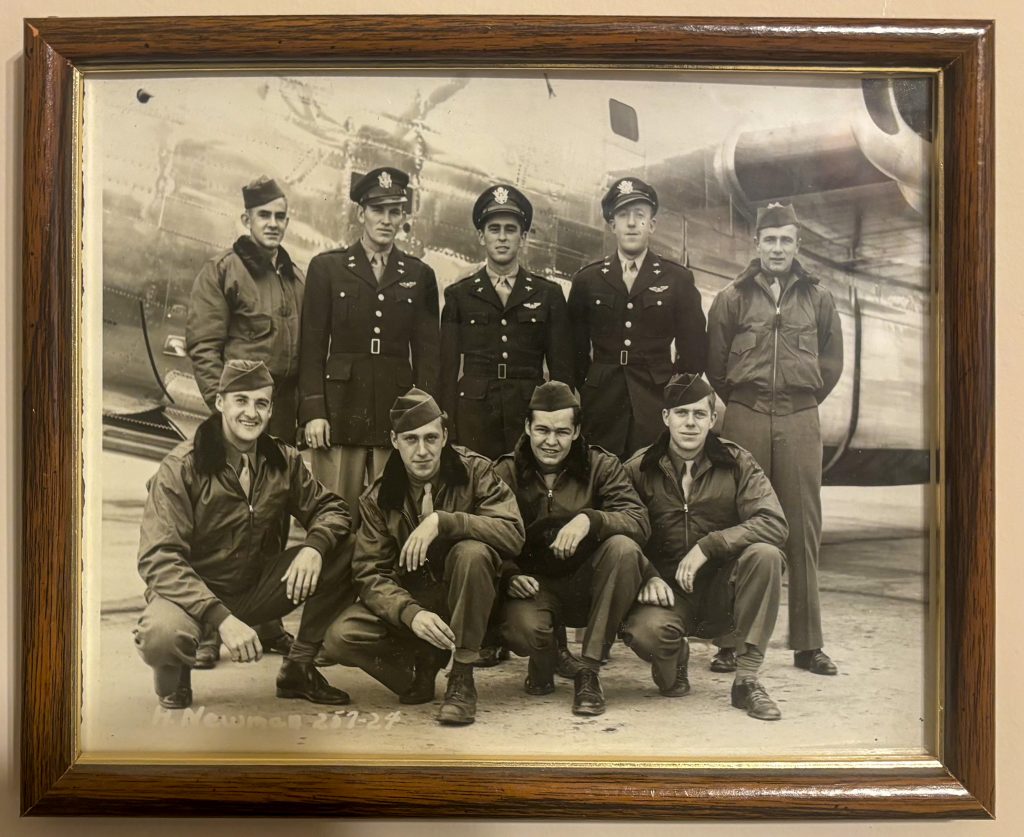
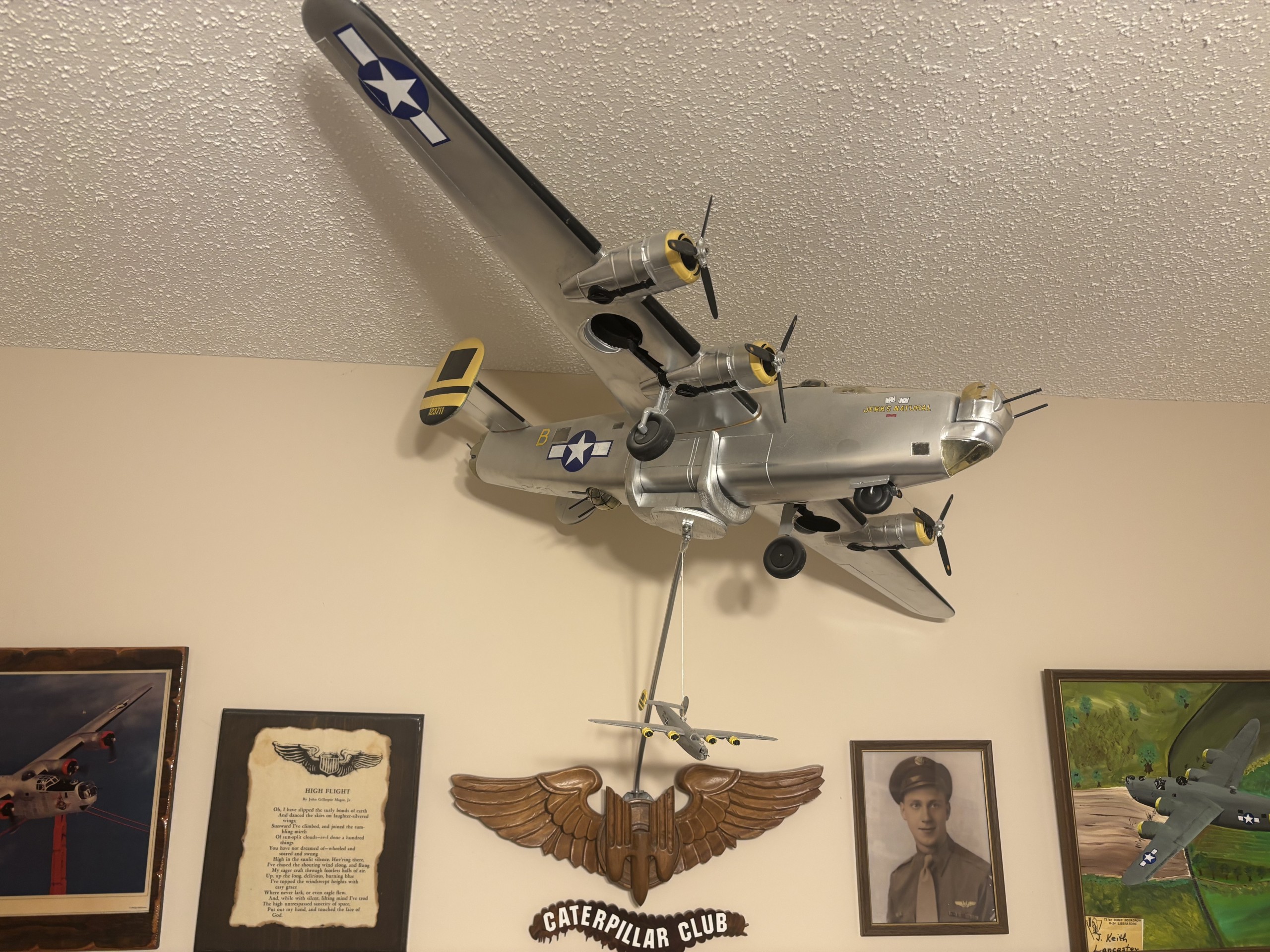
Lancaster was assigned to the 465th Bomb Group of the 15th Air Force. His role was a bombardier and turret gunner, mainly flying aboard the B-24 heavy bomber, known as the Great Liberators.
The B-24s were developed in 1938 by Consolidated Aircraft, which later became Lockheed Martin. The airplane could reach up to 290 mph and carried a 5,000-pound bomb load for 1,700 miles. Over 18,000 B-24s were made and retired after World War II, making it the most heavily produced combat aircraft in history.
Lancaster said the U.S. would get new B-24s to the 8th and send the old ones to the 15th.
“There were planes that had 10 or 15 missions on them with patchwork on the wings and tails,” he said. “We never flew the same plane twice.”
During that time, the 15th was tasked to stop Adolf Hitler’s oil. Lancaster said their basic duty was to stop the production of the Ploesti oil field in Romania. According to the National Museum of the United States Air Force, on August 1, 1943, the Air Force conducted Operation Tidal Wave, a surprise B-24 raid on the major oil field.
The operation had a total of 54 aircraft, 178 bombers and over 1,700 men on the mission. 496 men did not return, with 310 killed and 186 captured.
The raid did major damage to Ploesti, but the facility resumed production. It was not attacked again until April 1944.
Stationed at Pantanella Air Base in Italy, Lancaster flew 33 missions for the 465th, and his first mission in 1943 was quite memorable.
He said the 15th was tasked to go on a “milk run,” which is supposed to be an easy trip.
“Flying over Yugoslavia, the number three propeller came off and broke the fuel lines. A fire started, so we went right down and crash-landed into a potato field,” he said.
Luckily, all of the crew survived. He said they were taken in and cared for by Soviet forces for three weeks before being flown back to their base in Italy.
It wasn’t that long until Lancaster was in harm’s way again. The 15th was a part of the Regensburg/Schweinfurt raid, Lancaster’s fifth mission.
He said an anti-aircraft artillery or “flak” struck their plane’s third engine and knocked it right out of the sky.
“We had a lot of fuel, but we couldn’t transfer it because there was no electricity,” he said. “Then the Red Tails flew to cover us and protected us to get back as far as we could go.”
Flying over British lines in Northern Italy, the Lancaster and its crew bailed out successfully and were recovered by Allied Forces.
“Within six hours, we got together at a British bunker in Italy and stayed there for a couple days,” he said.
Lancaster, being one of the few WWII veterans still living, enjoys a few perks and even a trip overseas.
Last month, Lancaster and other surviving World War II veterans traveled to Normandy on the anniversary of D-Day.
Also known as Operation Overlord, D-Day was the opening invasion and liberation of France that began on June 6, 1944, according to the United States Army.
Over 160,000 troops landed on the seven beaches of Normandy. 5,000 ships and 13,000 aircraft were also used for support in the conflict.
According to the National D-Day Memorial, 2,519 Americans and a total of 4,436 men were killed on D-Day.
While on his trip for the 82nd anniversary of the battle, Lancaster said the French were “in awe” of him and his fellow veterans and welcomed them with open arms.
“I had nothing to do with Normandy, but [the French] accepted me because I was doing the same thing in a different way trying to stop Hitler,” he said. “It was a wonderful trip to know how the French celebrated the American [sacrifice].”
The highlight of the trip for Lancaster was their visit to the Normandy American Cemetery, located in Colleville-sur-Mer. The cemetery covers 172.5 acres and has over 9,000 gravesites, most belonging to D-Day casualties.
“The crosses [in the cemetery] go on and on and the lawns and trees were [well] manicured,” he said. “The cemetery was beautiful.”
Lancaster was honorably discharged in 1945.
Before you go...
Thanks for reading The Houston Home Journal — we hope this article added to your day.
For over 150 years, Houston Home Journal has been the newspaper of record for Perry, Warner Robins and Centerville. We're excited to expand our online news coverage, while maintaining our twice-weekly print newspaper.
If you like what you see, please consider becoming a member of The Houston Home Journal. We're all in this together, working for a better Warner Robins, Perry and Centerville, and we appreciate and need your support.
Please join the readers like you who help make community journalism possible by joining The Houston Home Journal. Thank you.
- Brieanna Smith, Houston Home Journal managing editor
Paid Posts
Author

Related Articles

Rescue Ranch hopes to bring affordable spay and neuter clinic to Perry
A popular spay and neuter clinic is expanding to Perry. Officials hope for a fall 2026 opening.

What’s the buzz about a new takeout spot in Warner Robins?
Taste Good Restaurant kicks it up a notch with smash burgers and specialty dishes like this “salmon exquisite.”
Warner Robins Jody Town celebrates 5-year anniversary of historical marker
Several generations gathered over the weekend to honor the historic Jody Town community in Warner Robins.