Who judges the judges?
Dear Readers, today, we seem to consistently be on the verge of a constitutional crisis. We have been there before, although not all at once the way we are now.
Watergate was a water-shed moment. In its wake, Congress passed a number of reforms. One was to make it clear, contrary to the lies being spread, that Presidential Records belong to the People, not the President. Donald Trump’s “defense” over the indictment case is specious.
In reaction to this South Florida Indictment (and other events,) there are threats to dismantle the whole structure of the Department of Justice … not sure, what is done to replace it. 115,000 people nationwide work for DOJ and its various entities, in part, because of the stability of employment and the retirement perks. I guess the plan is to fire all of them, and start over, leaving our justice system in chaos.
We also have the current dysfunction with Supreme Court ethics. Associate Justice Clarence Thomas, most prominently, has engaged in questionable ethical practices. He may feel, as he himself has said, associate justices are not paid enough. This does not give him the right to use his position to accept lavish gifts and extravagant vacations from wealthy benefactors. Justices are supposed be above the whiff of improper influence.
Federal Judges (both trial and appellate) sit on what are called “Article I” courts. These are our District Court Judges and the judges occupying the 11 Circuit Courts of Appeals (regionally organized by states,) which have fluctuated based on the number of states and population shifts. These judges are completely beholden to the jurisdictional limits (power to hear matters) set by Congress.
Congress has the power of oversight with these Article I courts. It can set standards for judicial conduct and haul any of the individual judges before it for discipline. While they are life-time appointments, that is only because Congress says so. If Congress wanted to, it could “nuke” the whole thing and start over.
The singular Article III Court is the Supreme Court. The Constitution grants it very little explicit power or “original” jurisdiction, as a “trial” court, where there is a dispute between states or ambassadors. Of course, the Chief Justice has a largely ceremonial role presiding over Senate impeachment trials.
Congress has authority to “fix” the number of justices on the Court, which started at six, has fallen to five, and maxed out at ten. It has been fixed at nine since 1869. During the New Deal, President Roosevelt was frustrated by the Supreme Court dismantling his legislation, and he threatened to expand and “pack” the Court with more favorable justices. In the “switch in time, saved nine,” Associate Justice Owen Roberts in a 1937 case seemed to reverse his judicial stance, and the court packing scheme evaporated.
In addition to the power to fix the number of justices, Congress also has impeachment power over them. Only once (1805) has there been an impeachment trial of a justice, Samuel Chase, in the Senate. He was acquitted when less than 2/3s of the Senate voted to convict him of charges; the House brought them for largely political purposes.
Congress has the “power of the purse” over the Supreme Court and its staff. In theory, it could “defund” it leaving the Justices with no pay, offices, or staff – the ultimate power play.
The Judicial Conference of the United States is a body comprised of Circuit and District Court Judges, overseen by the Chief Justice. It sets rules, as a body, for a code of ethics and reporting requirements for all Article I judges. There, rules do not apply to the Supreme Court, unless it says they do.
There is a bit of a spat over Congressional authority to set ethical rules for the justices. Laws passed by Congress apply to Supreme Court justices, as they do to any other American. Hence, Congress could make it illegal (prospectively) for Justice Thomas to “monetize” his position to be wined and dined, subject to DOJ review to consider criminal charges.
This would create a Constitutional crisis (yet, another one.) As you can see, the Article I power (Congress) would enable the Article II power (Executive) to prosecute an Article III justice, in an Article I court.
This can all be avoided, if the Supreme Court would just police itself and say that the ethical rules established by the Judicial Conference also applied to it. Supreme Court justices cannot be above the law.
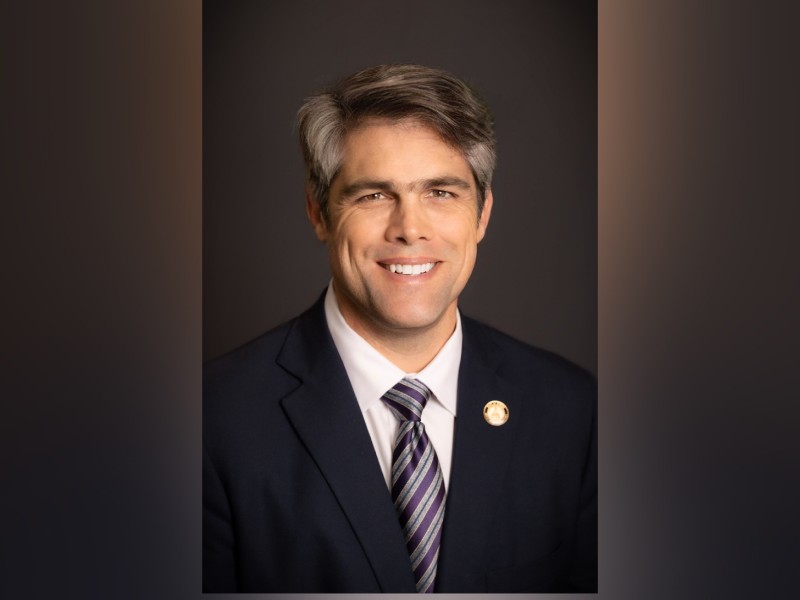
Warner Robins attorney Jim Rockefeller is the former Chief Assistant District Attorney for Houston County, and a former Assistant State Attorney in Miami. Owner of Rockefeller Law Center, Jim has been in private practice since 2000. E-mail your comments or confidential legal questions to ajr@rockefellerlawcenter.com.
HHJ News
Before you go...
Thanks for reading The Houston Home Journal — we hope this article added to your day.
For over 150 years, Houston Home Journal has been the newspaper of record for Perry, Warner Robins and Centerville. We're excited to expand our online news coverage, while maintaining our twice-weekly print newspaper.
If you like what you see, please consider becoming a member of The Houston Home Journal. We're all in this together, working for a better Warner Robins, Perry and Centerville, and we appreciate and need your support.
Please join the readers like you who help make community journalism possible by joining The Houston Home Journal. Thank you.
- Brieanna Smith, Houston Home Journal managing editor
Paid Posts
Author