
Warner Robins Police Department hears the Latino community’s concerns during Town Hall meeting
The Warner Robins Police Department hosted its first Latino Community Town Hall on Monday, Dec.9 which aimed to give the community a voice.
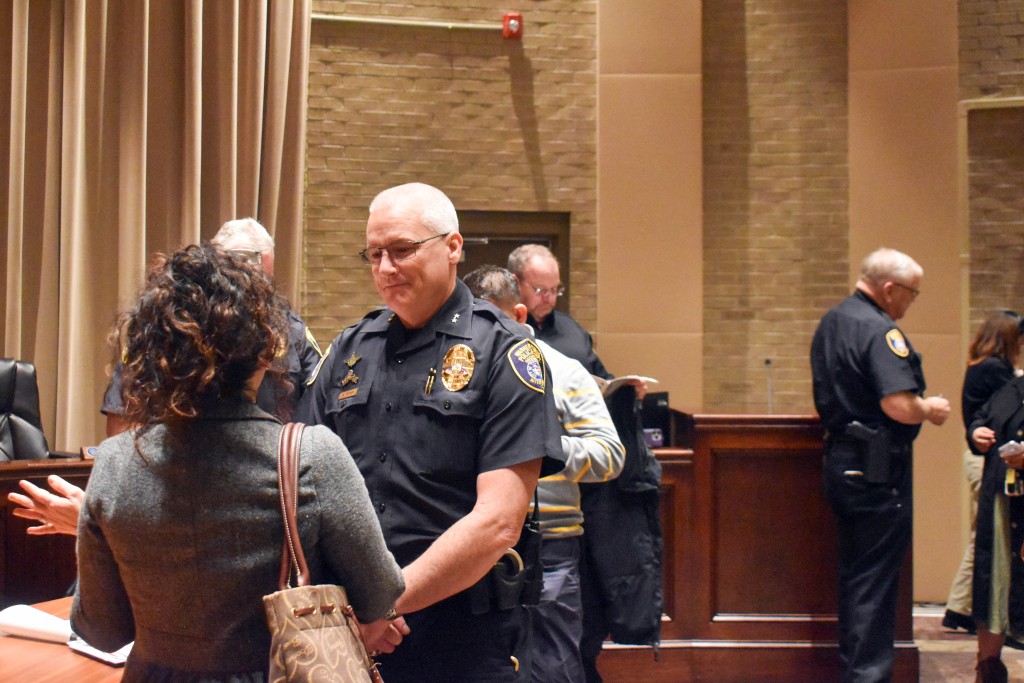
WARNER ROBINS – The Warner Robins Police Department hosted its first ever Latino Community Town Hall on Monday, Dec. 9, giving attendees the opportunity to voice their concerns. Officers who speak Spanish were at the department for those uncomfortable speaking English.
Building trust and House Bill 1105
The political climate was a topic of discussion during the meeting. A concerned citizen brought up House Bill 1105 which was passed by Governor Brian Kemp back in May. The bill, also known as Georgia Criminal Alien Track and Report Act of 2024, authorizes immigration status verification prior to the arrest of certain offenses. The citizen asked Police Chief Wayne Fisher how he thinks people who don’t have an adjusted status are going to feel about the bill when they know a misdemeanor can lead them to jail and potentially be deported.
Fisher replied saying there are a lot of misunderstandings and misperceptions about the bill. According to Fisher, local law enforcement is not part of immigration enforcement at the national level, but they are required to enforce the law of the country and the state. He said the bill is geared toward protecting individuals who are victims of a crime.
Out of a population of 85,000, the department has had 7,526 persons that have been identified as statements of crime. Out of that number, 4,202 were Black, 3,103 were Caucasian, 31 were Asian, 23 were Indian and 61 unknown.
The Hispanic population is approximately seven percent of the city’s population, and they have 106 victims reported being a victim of a crime.
“What we do also understand is there is a fear and avoidance issue reporting a crime based on potential immigration status in this country,” he said. “What House Bill 1105 is geared towards is not the victims of the crime, but addressing the issue of the perpetrators of that crime. Many times, the crime is taking place within a Latino community backing into other Hispanics as well and outside perpetrators offenders into the Hispanic community.”
Fisher also said this results in underreporting in the Hispanic community. He shares the department is bound to provide a service with all citizens in the community. Approximately 5.75% of the police department has Hispanic based Latino origin according to Fisher.
According to Fisher, House Bill 1105 is focused on the persons they have make contact with that they have a probable cause to make the arrest on. He said if they have a victim, they are not the subject of a criminal point or a bad actor. Fisher shared they will get their name and information they need for their follow up but that is not a focus of the bill.
The focus is the bad actor regardless of if they are Latino and the bill pertains to all immigrants regardless of their ethnicity. Fisher said regardless of how a person looks, they have to have identification by a government entity within the United States.
“House Bill 1105 is focused towards the criminal bad actors, not somebody that might be here illegally as far as a status situation from crossing the border. Frankly that’s not a concern of mine. My concern is I have a victim of a crime that needs to be properly investigated and that the bad actor is ultimately taken in custody and prosecuted,” he said.
If the bad actor is an illegal immigrant, regardless of where they are from, there will be a detainment issued by the Federal Government, but it has nothing to do with the local government as far as detainment, Fisher says.
Later in the meeting, he encouraged the audience to drive with a valid drivers license regardless of a person’s ethnicity.
A citizen spoke of her experience with a family member who was driving without a license and traveling with his child. According to the citizen, the police officer told her family member if someone does not pick the child up, they will take her to child services. She said the child is then scared and the experience can lead to trauma.
Fisher then replied saying they must get the minor into the care of another family member or responsible adult. He also said regardless of the person’s immigration status, it is still an arrestable offense to drive without a license.
The citizen then asked if the police officers can lobby to the state to put a system in place for illegal immigrants to get a drivers license. Fisher said what they lobby for is the compliance of the law. He shared they encourage people who are in the country illegally to reach out and start a process to be on a legal status. Fisher also said it isn’t their place to lobby for laws and they can only enforce the law.
Fishers also assure the audience, at this point, they are not planning to round people up to deport them out of the country. He said there are not enough police or energy to do that.
“It’s the focus on those that are committing violent crimes, of those that are committing thefts, those that have detainment orders already issued through the courts based on somebody’s illegal status into this country,” he said.
Fisher later reiterated in the meeting the police department does not illegal status point being soley in the Latino community and it is a violation on their policy on biased based policing. He also said it does not align with the reality points of what they know is happening on the border with illegal immigration crossings. He again repeats, there are people coming illegally into the country from all over the world.
To find out more about House Bill 1105 visit here.
The first question asked by a citizen is how the police department is going to build trust within the Latino community. Fisher responds saying they will be available and present within the community. He said they will present officers and members of the department with language abilities.
The department also plans to be educated about barrier points on cultural perspectives including perceptions and anxieties in dealing with law enforcement. Their fears are usually due to what law enforcement is like in their native countries. They also plan to ease the language barriers that exist to engage better with the community.
“Trust can only be built on personal experiences. As long as we maintain walls between cultural points, then those perceptions will forever be the reality that exist,” he said.
Fisher also shares they are putting out publications in Spanish since it reflects their outreach. He said they know there is a breakdown in communication, and they have to navigate through those aspect points.
The police department also utilizes technology to bridge the language gap. Fisher said they have utilized the language line in the past, but it has built a bigger wall between them and the community. Fisher also said they plan to become more involved in the community, being engaged more and initiating activities.
“It is through these efforts that we are hoping past perceptions don’t become the reality of today and how it’s going to be used policing in the social engagement of the city of Warner Robins,” he said.
Biased based policing
Another citizen also asked if she will be racially profiled if she forgets her driver’s license at home. Fisher replied saying the police department has a policy on biased based policing. It is not acceptable for any officer to make predeterminations based on what they perceived based on a person’s skin color, race, religion or background. If a person does forget their drivers license, Fisher says they can run the person’s name and information through their criminal information system. After that, it will come back verifying if the person has a drivers license issued by whichever state.
A citizen also expressed his concern with patrol vehicles sitting or around a trailer park doing traffic enforcement if they are focusing on the people residing in the area. Fisher said no and uses Moody Road as an example because there is a trailer park located in the area. Police Officers often hide their police vehicles in the area to catch speeders, not who is in the car.
Fisher said while it might be a perception held; he would not dispute it from a cultural point. He reiterates the police department’s policies on biased-based policing that violates any members of the department who is applying bias into their means of enforcement.
A citizen asked if they have cameras to check if an officer is being biased when they arrest a person. She also asked if they could request a FOIA, which is the Freedom of Information Act that is a written request for access to records or information from a federal agency.
Fisher said the police department issues cameras on officers working at a law enforcement capacity. These cameras include body worn cameras and cameras they have in their vehicles.
He also shares department supervisors have a responsibility to evaluate and review officer’s videos twice a month. This is done to ensure there is no biased-based policing and no violation of other policies. If there is a complaint, Fisher said they will address it and there is no problem with releasing the videos.
The action that would be taken if an officer is discriminatory, the department will observe and review. According to Fisher, if it is extreme, the officer will be disciplined.
How to report a crime
Fisher also shared during the meeting crimes the Latino community have been a victim to. These crimes include fraud, which is an issue Fisher sees a lot, personal theft and robberies.
A citizen asked what the process is in reporting a crime. Fisher encourages the audience to call 911 if they can make a telephone call. In the call, they have to provide information on the crime, where they are, and the dispatcher will relay that information to the police department.
The police department will then work with their media source partners within the Latino community to spread awareness.
Fisher said they are advised if there is a language barrier in place. He shares if they have a member who speaks Spanish available, they will assist with the call. If a person does not have access to a phone, they can come to the police department or approach a police officer they see on the road.
“We want the community to feel comfortable making an approach to us to alert us to that they’re a victim of a crime or they observed a crime and for us to go ahead to resolve all that,” he said.
Later in the meeting, a citizen asked about the investigation of a crime. Lt. Justin Clark said he has been working in the police department for 17 years in the Investigation division. He said at no point in time in those years have they checked immigration status Clark then explained the investigation process they do alongside Detective Jubencio Garcia.
“Rest assured that your status whether its legal, illegal [or] anything like that has nothing to do with the process,” he said.
Clark also said that it will never be a question asked by one of his detectives.
Overall concerns and solutions
A citizen voiced her concerns saying they are more than bad actors they are people. She said people who drive without a license drive to work and they are human. She shared immigration status really affects the community, and she has heard stories of why people came to the United States. People in the community can’t get through the system to receive legal status and many distrust the police department, according to the citizen. She shared they are used to lack of support from law enforcement due to the way things are in their home countries.
She encouraged all officers to attend community and cultural events and engage with Spanish media to gain the community’s trust. She also shared having campaigns in Spanish targeting the community. She said there needs to be campaigns in Houston County that address issues in every community. She hopes these campaigns will support the needs of the Latino community.
Fisher said that is the reason for the town hall meeting, to engage with the Latino community. He also said immigration in the country is a broken system and he understands what it is like to go through the system and the frustrations.
“I can understand but on the same token we in law enforcement have to enforce the laws. But likewise, also understand we have to engage within the community, and we know there’s an underservice taking place within the Hispanic Latino community,” he said.
Fisher does not believe their solution will happen overnight and knows it will be a long-term demonstrated commitment of actions. He hopes over time, they will build trust, and he will be held accountable to avoid a disservice to the community.
Jacqueline Guardia, Administrator of Mamás Latinas de Warner Robins speaks about her organization and how she helps mothers in the community. She also encouraged the police department to become more involved in the Latino community and provide information in both languages on social media for everyone to understand.
She encouraged the department to create programs focused on outreach that educate the community and make them feel more comfortable asking for help. Guardia said they know it will get to a point where people and their children will be able to integrate themselves in the community.
Detective Jubenco Garcia shared they are trying to create more programs that reach the Latino community. Captain John Clay encouraged Guardia and the audience if they have any questions about the department’s programs to contact him.
For more information about Mamás Latinas de Warner Robins click here.
Garcia also encouraged people to get kids involved in the Public Safety Cadets program which is geared towards young adults. The program helps young adults between the ages of 14 to 21 to know more about law enforcement. Garcia asked the audience if they had questions to contact Lead Mentor Sgt. Josh Wilcox.
For more information on the program click here.
A citizen asked Garcia what his experience has been like being in the police department. Garcia said he has been in the department since 2008, and it has been a great experience. He shared he has always wanted to be a police officer since he was a child, and the job has helped him grow.
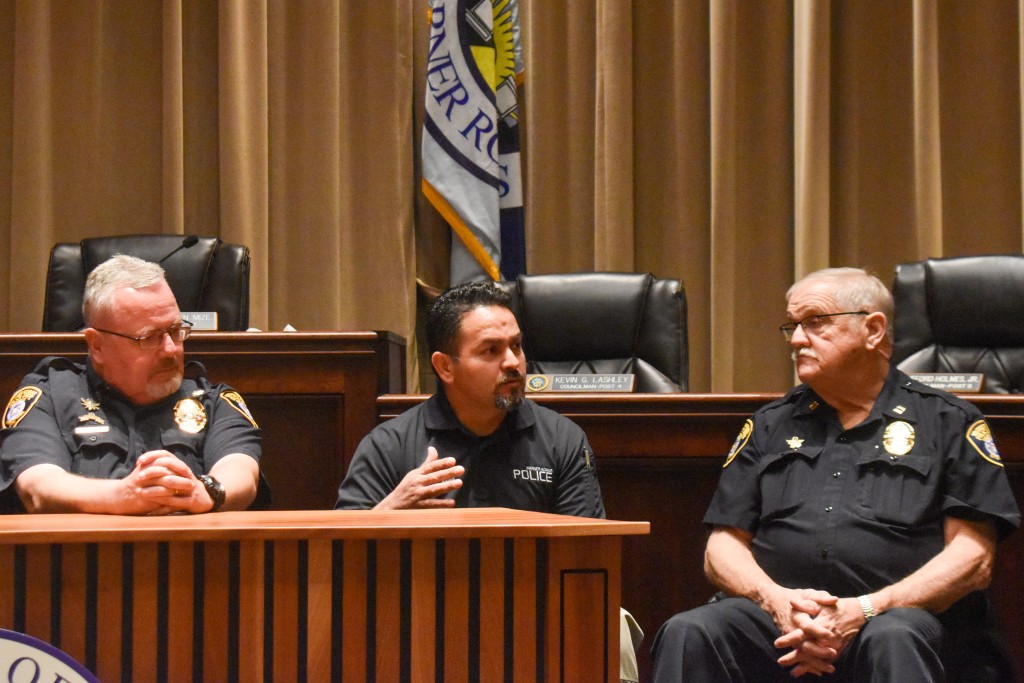
At the end of the meeting, Fisher shared their commitment to embrace every community, and he told the audience they are a significant part of it. He thanked attendees for attending the meeting.
“You’re very much a significant part of our community that we embrace, we’re proud of and part of what makes us special as a community. We don’t want you feeling as if you’re an outsider to it,” he said.
Before you go...
Thanks for reading The Houston Home Journal — we hope this article added to your day.
For over 150 years, Houston Home Journal has been the newspaper of record for Perry, Warner Robins and Centerville. We're excited to expand our online news coverage, while maintaining our twice-weekly print newspaper.
If you like what you see, please consider becoming a member of The Houston Home Journal. We're all in this together, working for a better Warner Robins, Perry and Centerville, and we appreciate and need your support.
Please join the readers like you who help make community journalism possible by joining The Houston Home Journal. Thank you.
- Brieanna Smith, Houston Home Journal managing editor
Paid Posts
Author
Related Articles

Perry International Festival reaches its fifth annual this weekend
The award-winning Perry International Festival will reach its fifth annual this Saturday. The festival will take place in Historic Downtown Perry from noon to 8 p.m.

Northside High School honors alumni and faculty inducted into Hall of Fame
Northside High School inducted select alumni and faculty into the school’s Hall of Fame on Saturday. The inductees included a few familiar faces around the community.
Houston County School Board Candidate Andy Thomas answering a call to serve
Andy Thomas is being guided by his faith to run for District 6 at-large. The General Election is on May 19.