
TWIGGS COUNTY — Rural communities are often the preferred location for hyperscale data centers. That includes an unincorporated area along the Twiggs and Bibb County line that could be the future location for a data center. But residents there are fighting back.
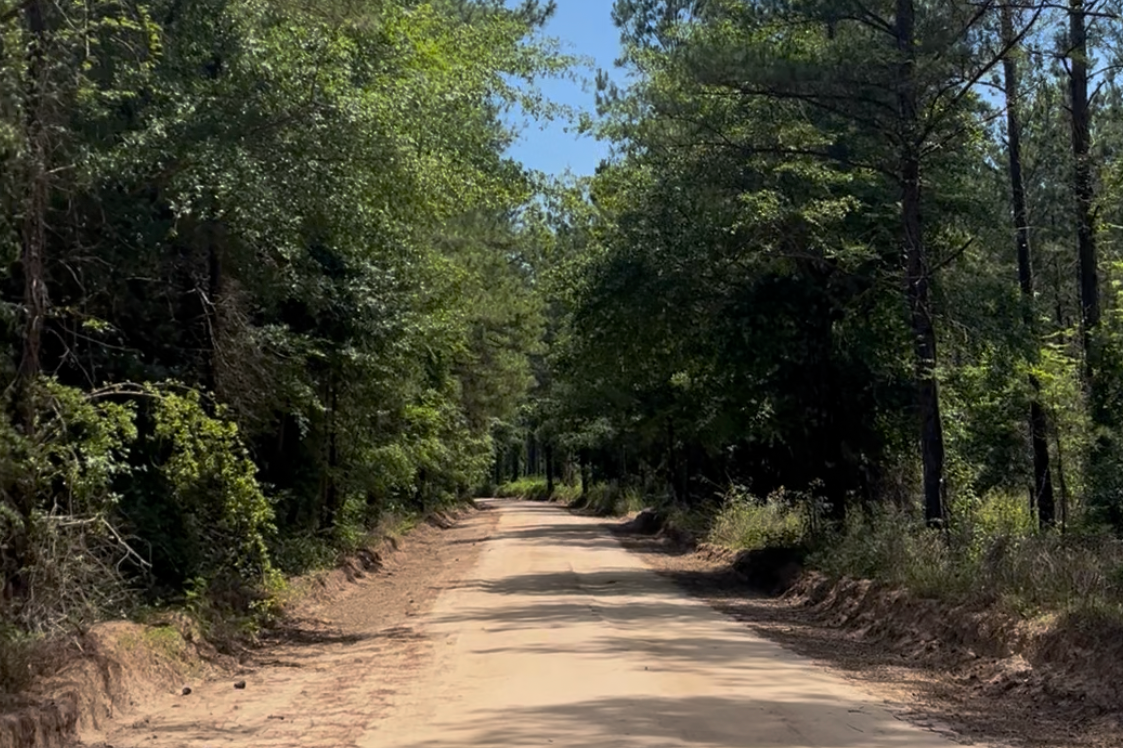
Located in Dry Branch about 20 miles southeast of Macon, the proposed site is home to dirt roads, large trees and thriving wildlife. But now, the undeveloped land could be cleared for a massive data center.
In July 2025, Thomas and Hutton, an engineering firm with offices throughout the southeast, and Eagle Rock Partners, a privately-owned project management company based in North Carolina, submitted a rezoning application to the Twiggs County Planning and Zoning Commission.
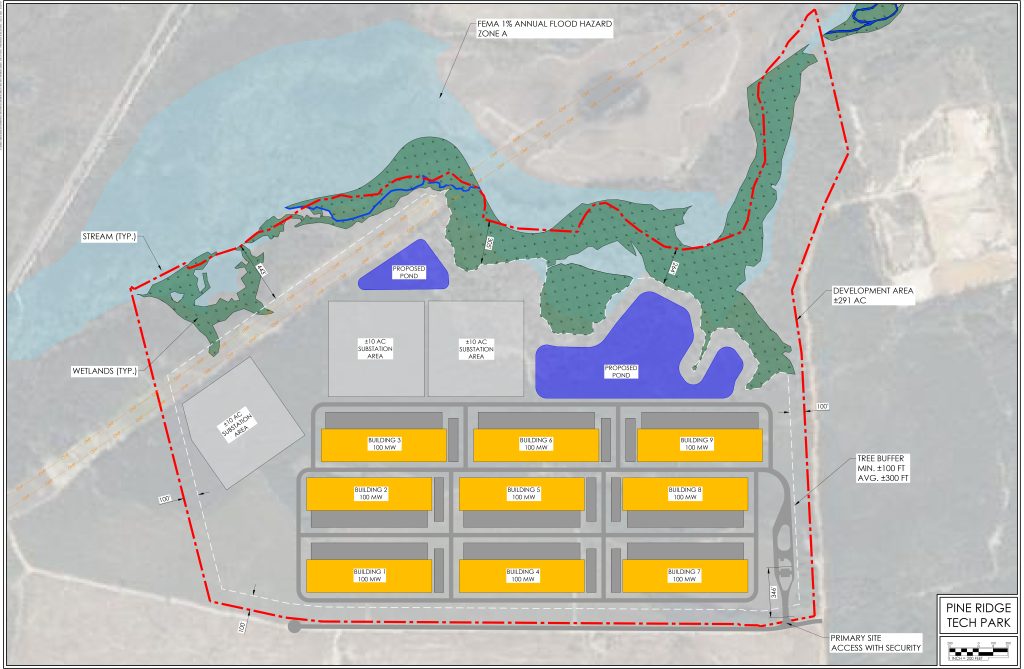
According to the site application obtained by the HHJ, 291.5 acres of property off Adams Park Road is being requested for rezoning. The development will be a $5 billion investment, and promises to generate about $6 million in tax revenue.
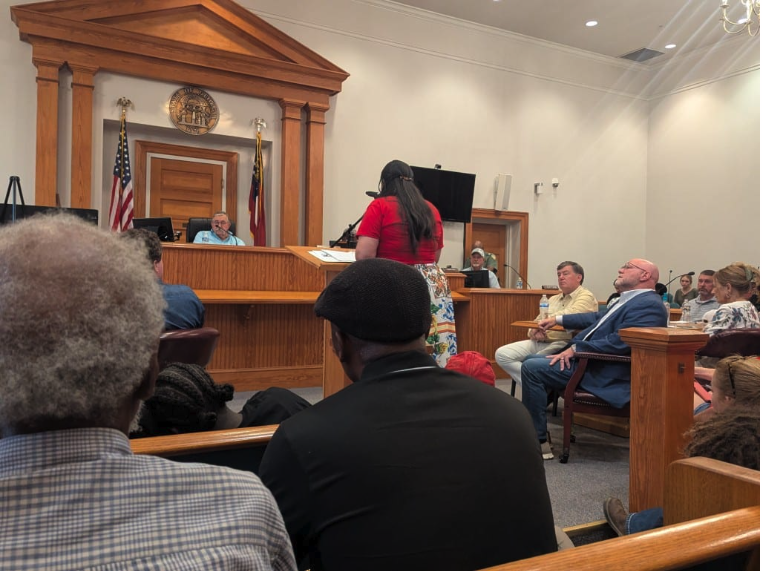
Twiggs County residents have been vocal about their opposition to the proposed site. According to public hearing minutes, 14 citizens spoke during a Twiggs County Board of Commissioners public hearing in September 2025.
Despite their objections, the commissioners unanimously approved the zoning application.
A week later, 10 residents filed a lawsuit at the Twiggs County Superior Court against the board of commissioners. The county won the first lawsuit, but residents have since filed more lawsuits.
According to court documents obtained by the HHJ, it is a heavily forested area of the county home to wildlife such as black bears and white-tailed deer. The Georgia Department of Transportation has spent millions of taxpayer dollars to protect black bears by installing tunnels and other safety measures along Highway 96.
According to the Atlanta Press Collective, in December 2024, the U.S. Department of Transportation awarded GDOT a $2.2 million grant for a pilot program to reduce wildlife collisions on state roads.
The area is also important to the Muscogee Nation, a Native American tribe concerned about the data center’s impact on sacred ancestral sites, the court documents say.
How would a Twiggs County data center impact residents
One lawsuit plaintiff is Paul Lubeck, who lives a mile away from where the data center will be located. He has been a county resident since 1997.
Lubeck said in an interview with the HHJ that the community is angry about the project. During the September 2025 public hearing, he said the courthouse was packed with concerned citizens. Lubeck said there were hundreds of people in the courthouse that night.
He said people were being turned away at the door, and others were lined up in the hallway.
“The county is just fired up, along with myself and my whole neighborhood,” he said.
His main concern about the data center is that it is on a looped system that cools the servers and networking equipment. It circulates water through sealed piping to absorb heat from the data modules, then rejects that heat to the outside air while keeping the cooling fluid for reuse.
Lubeck believes the loop systems could leak chemicals, which are poisonous to animals and humans. According to the Lake Powell Chronicle, liquid cooling has introduced “forever chemicals” known as PFAS. If closed-loop systems suffer a catastrophic leak, the chemicals can enter municipal wastewater systems that are unequipped to filter them
The area is not within the Jeffersonville city limits, meaning nearby residents rely on a well water system.
According to the Twiggs County Water Department, private water wells are used in Dry Branch since it is an unincorporated area. Water Operator Morgan Slay said they are about 100 to 150 feet, because the water pump is on the ground. Lubeck said that is the amount they need since it is sparsely populated.
Water Superintendent Tracy Jackson said county-owned water wells are about 380 feet deep because the water pump is in the ground.
Lubeck has read that looped water systems are supposed to be good for residents and won’t run out of water, but his neighbors are unsure.
“If my well goes, half of Twiggs County [water] goes. This side of Twiggs County will be without water if that happens. We don’t know if it will or it won’t. When it happens, your property is worthless,” he said.
He also notes concerns about rising power bills. According to the Georgia Public Service’s Data Center Fact Sheet, in 2022, Georgia Power estimated it would need to increase power generation by 400 megawatts over the next seven years. Due to the rapid increase in data centers, the estimate grew to 6,600 MW in 2023. Two years later, the estimate increased to 8,500 MW. Georgia Power currently deploys 22,000 MW statewide.
Lubeck is most concerned about the noise the data center will generate from its diesel generators. He described it as a jet plane sitting on an airfield ready to take off.
“We’ll be able to hear this 24/7 continuously,” he said.
Lubeck said developers told him and his neighbors that there would be 300 diesel generators.
“These are not little generators that you see in somebody’s driveway. These are monsters. We will be able to hear them continuously running,” he said. “The fumes from 300 generators…you won’t be able to go in your yard. You have to stay in the house while these things are running.”
Lubeck recently turned 70 and says he isn’t able to start over. If the worst-case scenario happens, he won’t be able to sell his home due to the data center’s impacts.
He shared that most of his neighbors are retired and cannot afford to move away. Lubeck believes the noise from the diesel generators would completely change their lives.
“We have people on this road that have cancer. There’s no way they could [move]. They’re just stuck here in their house 24/7. Their money is gone [due to medical bills] so they have to stay here. They can’t even move,” he said.
Now, residents are in a state of the unknown and kept in the dark. Lubeck said they don’t know whether they’ll have to run power lines across their properties or what else is planned.
“It’s all a secret. The commissioners kept everything a secret, and continue to,” he said.
Lubeck has met with the project’s engineer a couple of times, but said his story changes each time he speaks with him.
“It’s all about the big money,” Lubeck said.
The neighborhood’s plan now is to replace the county commissioners in 2028. Lubeck believes it will be difficult since the current commissioners are embedded in the community and are lifelong residents. However, he will help qualified individuals eager to listen to residents win their seats.
“This is my goal for the next two years. I’m retired and that is what I do in my spare time,” he said.
Twiggs Commissioner Chairman Ken Fowler didn’t respond to a request for comment.
Developer responds to concerns about the data center project
Eagle Rock Partners, one of the developers on the project, provided a statement to HHJ. The company said the proposed data center is designed to serve cloud and enterprise customers while creating a long-term tax base and several high-skilled jobs in the county.
“The project is planned as a multi-phase development so that facilities, power and infrastructure can be built out gradually in partnership with local and state authorities,” the statement reads.
The company decided the county was a perfect place for their project due to its unique combination of land and access to regional power and transmission networks. The proximity to Middle Georgia’s workforce and educational institutions was also a draw.
“[This is] an attractive location for long-term digital infrastructure investment.”
Through their development agreement with the county, they said they have covered issues such as power, water usage and local infrastructure.
Eagle Rock did not comment on the construction timeline due to ongoing legal matters.
Data centers in Georgia
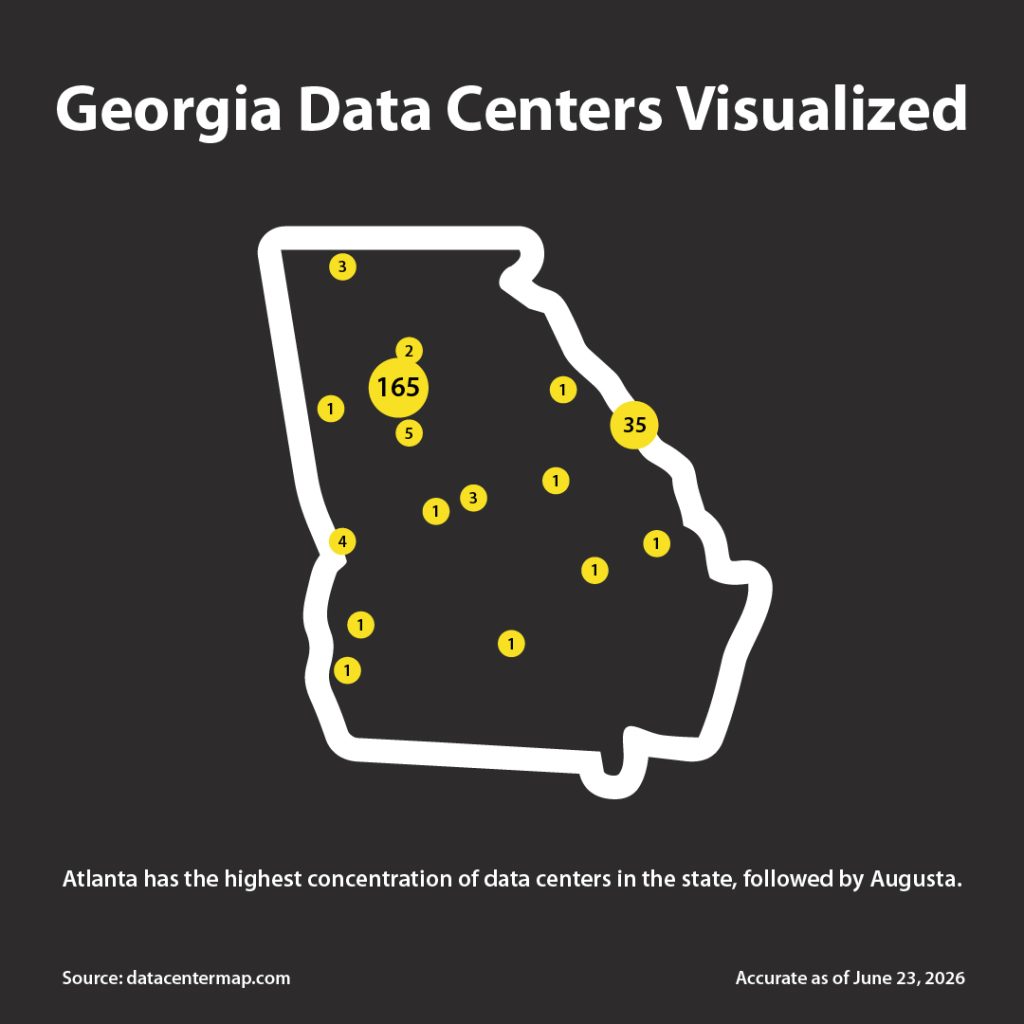
Currently, Georgia has the third-highest number of data centers.
The Data Center Map is a website that shows the number of data centers active, proposed or under development across the country. According to the site, there are 226 data centers in Georgia.
This is a breakdown of the number of data centers throughout the state.
- Atlanta – 165
- Alpharetta – 2
- Augusta – 35
- Columbus – 4
- Macon – 3
- Hampton – 5
- Dalton – 3
- Ocilla – 1
- Sandersville – 1
- Roberta – 1
- Washington – 1
- Carrollton – 1
- Blakely – 1
- Cuthbert – 1
- Statesboro – 1
- Vidalia – 1
According to local reports, there are three lawsuits against Columbia County where Augusta is located. The Columbia County Superior Court shot down the lawsuits to probe rezonings for data developments, according to an article by the Augusta Press.
Residents in rural communities continue to fight back against data centers that affect land and wildlife, but most importantly, their homes.
Before you go...
Thanks for reading The Houston Home Journal — we hope this article added to your day.
For over 150 years, Houston Home Journal has been the newspaper of record for Perry, Warner Robins and Centerville. We're excited to expand our online news coverage, while maintaining our twice-weekly print newspaper.
If you like what you see, please consider becoming a member of The Houston Home Journal. We're all in this together, working for a better Warner Robins, Perry and Centerville, and we appreciate and need your support.
Please join the readers like you who help make community journalism possible by joining The Houston Home Journal. Thank you.
- Brieanna Smith, Houston Home Journal managing editor
Paid Posts
Author

Related Articles
Rescue Ranch hopes to bring affordable spay and neuter clinic to Perry
A popular spay and neuter clinic is expanding to Perry. Officials hope for a fall 2026 opening.

What’s the buzz about a new takeout spot in Warner Robins?
Taste Good Restaurant kicks it up a notch with smash burgers and specialty dishes like this “salmon exquisite.”
Warner Robins Jody Town celebrates 5-year anniversary of historical marker
Several generations gathered over the weekend to honor the historic Jody Town community in Warner Robins.