
This is Reese: Air Base Wing Commander talks about leadership, inspiration
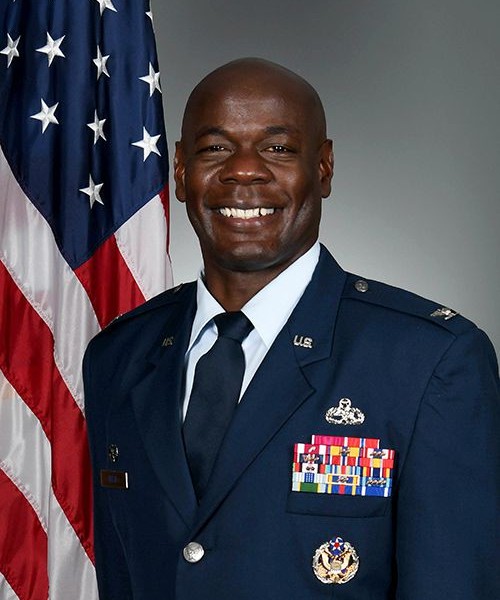
ROBINS AIR FORCE BASE, Ga.: Since July of this year, Col. Deedrick Reese has taken the reigns as Commander of the 78th Air Base Wing, directly commanding over 2,700 personnel across three groups, a communications directorate, operations support squadron, comptroller squadron and 17 wing staff agencies.
Reese has had an illustrious career since his start in 1999, spanning locations in South Carolina, California, Florida, Texas, Nevada, Virginia, the Pentagon, England, and Afghanistan.
Reese has several significant awards, including the Legion of Merit and Bronze Star, the Air Force Commendation, the Afghanistan Campaign, and the Meritorious Service Medals.
We sat down with Col. Reese to discuss his newest assignment, leadership style, and vision for Robins Air Force Base.
Smith: For some background, if you had to describe your job in a couple of sentences, what would that be?”
Reese: Well, I’ll start with one word, and that’s dynamic: just the diversity of missions across the Base and the number of personnel. There are several tenets to being an installation commander that make it a challenge but rewarding at the same time.
Smith: Could you dive deeper into those tenets?
Reese: With over 55 mission partners across the installation, each one of them has a different mission, which comes with a different problem set. So oftentimes, it’s different areas where I’m speaking with the mission partners and things they need, ranging from facility support, communication support, any other type of civil engineering type services, and also the base services itself, whether it be personnel, admin services, the base exchange, child care, youth care, morale, welfare and recreation.
It’s a very dynamic and diverse portfolio. I’m just really here focused on providing that world-class installation support, in a nutshell. I went around a few things, but that’s pretty much the gist of it.
Smith: Sounds good. So, going back to the beginning: fresh-faced, right out of high school, going into the military. What inspired you to want to serve in the Air Force?
Reese: You took me back just now. I’m from Charleston, South Carolina, and we’re all family in the neighborhood. The short and final approach for all aircraft coming into Charleston Air Force Base flew right over my house.
Without even knowing it, those seeds were planted early: very humble beginnings, growing up. I just really appreciated the little things, and we made little things the big things.
I just had my family here for Thanksgiving from Charleston and Columbia. It really brought us back to those moments and just growing up that way, just humble, really appreciating everything that life has to offer and the people in it.
I think that’s what carried me moving forward and really drew me towards the Air Force — growing up right there in Charleston. I didn’t know I had opportunities that existed. There were a lot of people involved in my life that pushed me in that direction. They knew better than I did and just made sure that I was presented with the opportunities.
That kind of mindset is where the next chapters of my life started from high school: learning what the rewards from studying and hard work with sports were and harnessing in on those capabilities. I earned a scholarship to the Citadel in Charleston. I was convinced by my family, ‘If you go too far, we won’t be able to see you play football.’ I was like, ‘That’s enough for me. So I’ll stay right here.’
At the time, I had no interest in going to the Citadel. I knew military college was very strict. But four years later, I had zero regrets, and I knew I wouldn’t be here if I didn’t make that decision. It was there at the Citadel that I was interested in joining the Air Force.
I’ll go back to those seeds that were planted early on that drew me towards the Air Force. Very simply put, joining the Air Force was security for me. I knew it was an opportunity. After four years of hard knocks in college and living that military life, I continued that on into the Air Force, and that’s how my career started.
Smith: After going through your previous experience, what did that look like before you moved to Robins Air Force Base?
Reese: Robins is my 14th assignment. By trade, my background is an aircraft maintenance officer. If I wasn’t in a staff position, I spent the majority of my career on the flight line with our airmen in the rough conditions, really generating the mission.
Having that experience throughout my 13 prior assignments, I didn’t know I had a connection to Robins Air Force Base while I was out there in the field. But once I got here, that connection was obvious and apparent: I spent most, if not all, of my career, receiving a product or service from Robins Air Force Base.
When I say product, I’m talking about actual aircraft out of the ALC: the C-130 Or C-17. I was deployed with JSTARS, supporting their mission. I was deployed with the BACN aircraft, supporting that mission. While I was out in the field, I had to reach back to Robins Air Force Base and speak with actual engineers here to prepare an aircraft and generate an aircraft that was needed for high-profile missions at the time.
Those things didn’t hit home until I came to the gates here at Robins Air Force Base. It gave me even more purpose, passion, and drive to support the missions here because I know the airmen on the other end, not by name, but I know them personally, and I know what Robins Air Force Base provides to them.
That in itself is what inspires me every day, what motivates me, what really fuels me to help our airmen, to help the 78th Air Base Wing really understand how important and critical the mission is here.
Smith: Absolutely. I did some research before we spoke, and I saw England on your resume. I saw Texas and Los Angeles. So it’s fascinating to know that much of that has come from our county here in Georgia.
Reese: Absolutely. I had no idea what really went on here at Robins Air Force Base. I just knew I needed something.
Smith: So how did it feel moving back closer to home?
Reese: It feels like home. Warner Robins, Houston County, and Macon all feel like Charleston, South Carolina. That has a lot to do with the community and the community’s support. When I’m off Base, I feel like I actually know everybody here without even knowing them. The first conversation is like we’ve been best friends all our lives. That means a lot.
For the first time in my career, 24 years, this is the first time I’ve felt like that in any assignment. That’s just another one of those motivating, inspiring factors of being here, and if I can do anything to help make us better and help make the community better, I’m all for it.
Smith: For sure. So you’ve been in the role since July; how has it been working for the Base?
Reese: It’s hard to believe it’s been five months. It almost feels like five years some days, but that’s only because, as I was talking earlier, it’s very dynamic and demanding at times, but rewarding to engage with airmen all the time. Not just uniformed airmen, I’m talking about all 23,000 of our airmen here on Base.
It has made those five months really delightful, and I’m having fun. Sometimes, I keep asking my staff if they are all in the same place that I am. I’m having a good time. I’m enjoying this, and I hope they are, too. It’s been challenging but rewarding in five months, and I didn’t expect anything less than that.
Smith: Yeah, I might get a little philosophical here, but I say the most challenging stuff is always the most rewarding, you know?
Reese: Absolutely. That’s where the growth is. If this were easy, anybody could do this, and we wouldn’t be needed in this job. The challenge is where the growth is, and we should embrace that. I tell my team, “Embrace the red, because that’s where the growth is. Let’s go get it.”
Smith: I like that. To clarify, what do you mean by “the red?”
Reese: Metrics are a huge thing for us. So, when we talk about numbers, we establish goals and things below and above the line. For whatever goal or metric we’re looking at, if it’s below the line — in the red — that’s where the work is. That is what I mean by that. Embrace it; let’s get after it and turn the red around.
Smith: It’s persevering and working through shortcomings. Talking more about your leadership style, looking over your resumé, you’ve got quite a few leadership roles that you’ve been in. So, in your eyes, what constitutes a great leader?
Reese: With leadership, it’s all about people, right? You manage processes, and you lead people. There are several leadership styles to emulate and different qualities, but I think one of the biggest qualities that most good leaders have is humility, being a servant leader.
There are a couple of things that I get up every morning and read up on or listen to that have to do with those foundational characteristics of leadership: just where are my blind spots and gaps in those areas, being emotionally aware of what’s going on with yourself, trying to read and feel what’s going on with the folks in your unit. That’s something that I really focused on and learned from leaders that I listen to and read.
Smith: What would you say your leadership style is?
Reese: Throw passion in there. Being in the Air Force has been a lot like my upbringing. I can tie a lot of similarities to it, from challenges to opportunities to people and connections, those types of things. I’m just passionate about being here, being the 78th Air Base Wing Commander.
You know, it’s something that’s humbling. I definitely didn’t see it coming throughout my career that I would be in this position. You better believe I’m fired up about it every day. My goal is to show up and give 100% every day.
Smith: So, from seeing that example, does that inspire the team to want to do the same thing?
Reese: That’s the goal. You always want people to do their best and give them the opportunity to do their best. And I’m committed to that.
I said at my Change of Command ceremony there are three things that I’m committed to, and that’s to organize, train and equip us to do the job that we’re here to do: give everyone the opportunity to be their best and remind us of why we are here, why we wear the uniform and why we serve. If those three things happen throughout the installation, especially within the 78th Air Base Wing, I consider that a success for the goals I set out to accomplish for us.
Smith: I like that, the concept of motivation. Speaking about your motivation, what motivates you to do what you do when you wake up in the morning?
Reese: It’s a work in progress, my morning routine, and I take it seriously. It’s a sacred time for me. I get up really early compared to others, usually around 4 a.m., if not earlier, and it’s all about addressing our pillars: mental, spiritual, physical, emotional, those types of things. That’s my focus first thing in the morning. If I don’t address those, I don’t think I can come here prepared to do what I’m asked to do as the installation commander.
I’m really focused and really disciplined in addressing those areas every morning, so as soon as I leave the house, I’m ready. It’s not showing up to work, wait until I have two cups of coffee, and don’t talk to me until 10 a.m. We’re all losing if that’s my attitude when I come in. That would be 23,000 other people who have the same attitude. If I can come in and have some model, I believe that is contagious; people pick up on that and want to try to do the same thing.
Sometimes, I talk to our younger airmen, our uniformed airmen, 18-to-20 years old, who just joined the military and are in that life transition. I remind them that not too long ago, I was in the same position. And I remember the transition into that. Getting up at four o’clock in the morning isn’t going to happen tomorrow. Doing the things that I do aren’t going to happen tomorrow, but it’s just those little things.
If you can focus on one thing at a time, get up five minutes earlier tomorrow morning and do something better before you come to work. Soon, those five minutes will turn into 10, 20, and 30. And the next thing you know, you have changed your lifestyle. You’ve created a healthy habit.
So, I try to use that in that way. Everybody gets wide-eyed when you throw out getting up early like that, but trying to break it down, connect, and make it relatable. I found that there’s some success in that.
Smith: Relatable and attainable. That’s cool; I like that. So, finally, I’m going to shift more towards the future. For your installation, for your wing, what does the future look like? What do you hope the future looks like at Robins Air Force Base?
Reese: We’re in transition. Robins is definitely preparing for the future. We’re preparing for the future fight, where our new mission partners are standing up. We have new units that are postured for the Base and the Air Force to counter some of the threats out there. So, the future of Robins Air Force Base is bright. It’s inspiring.
We’re preparing to continue on the legacy here, provide world-class installation support, and keep Middle Georgia the best place for our military folks. I don’t see the changes affecting who Robins Air Force Base is. Team Robins is here to stay, to continue to improve, and to be a part of the Air Force and DoD’s role. We’re that important.
That’s what I’m trying to prepare us for in this transition, making sure we have the foundation for our future built and ready.
HHJ News
Before you go...
Thanks for reading The Houston Home Journal — we hope this article added to your day.
For over 150 years, Houston Home Journal has been the newspaper of record for Perry, Warner Robins and Centerville. We're excited to expand our online news coverage, while maintaining our twice-weekly print newspaper.
If you like what you see, please consider becoming a member of The Houston Home Journal. We're all in this together, working for a better Warner Robins, Perry and Centerville, and we appreciate and need your support.
Please join the readers like you who help make community journalism possible by joining The Houston Home Journal. Thank you.
- Brieanna Smith, Houston Home Journal managing editor
Paid Posts
Author

Related Articles
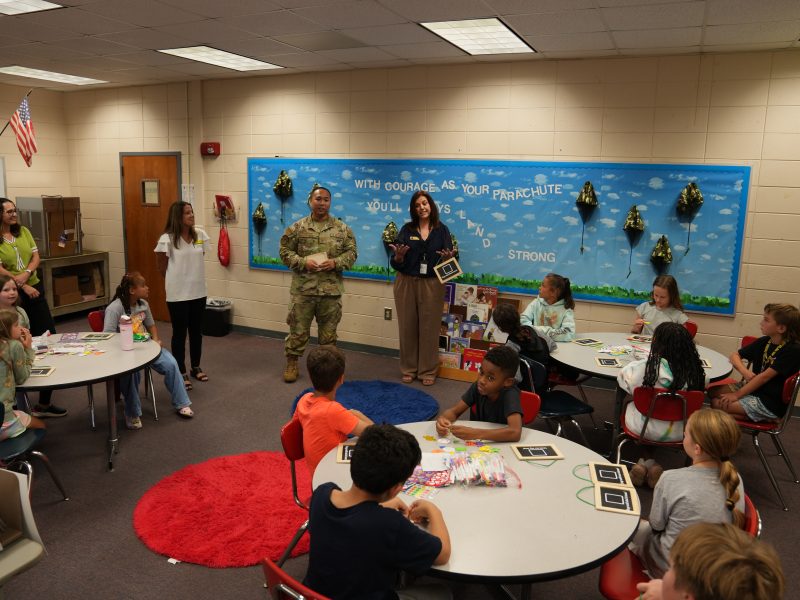
Robins’ School Liaison Program: setting students up for success
Ensuring children receive a quality education is vital for families, especially those in the military. At Robins Air Force Base, a special program serves as a beacon of hope, helping families navigate the challenges they face.
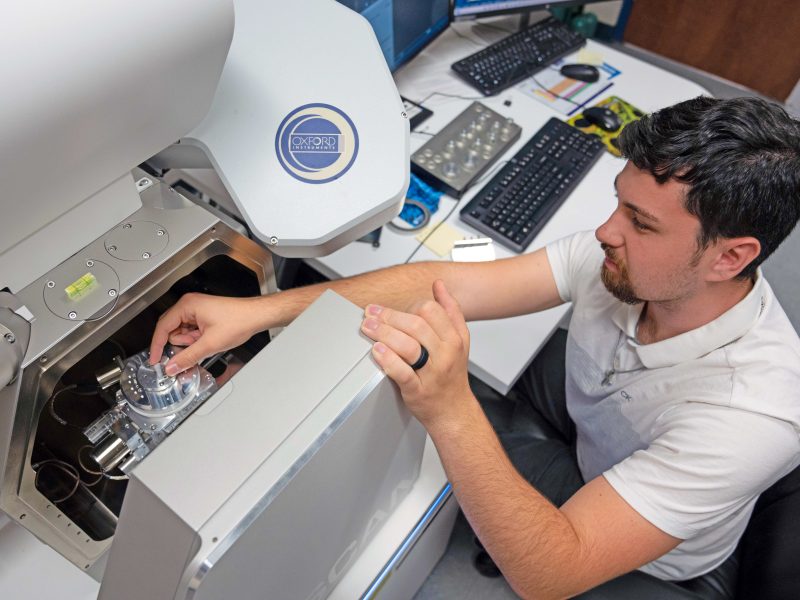
Testing… testing…: Robins First Article Test Lab ensures parts make the grade
From concept to construction, aircraft parts undergo a thorough process to ensure they are ready for the fight, including a stop at the First Article Test Lab.
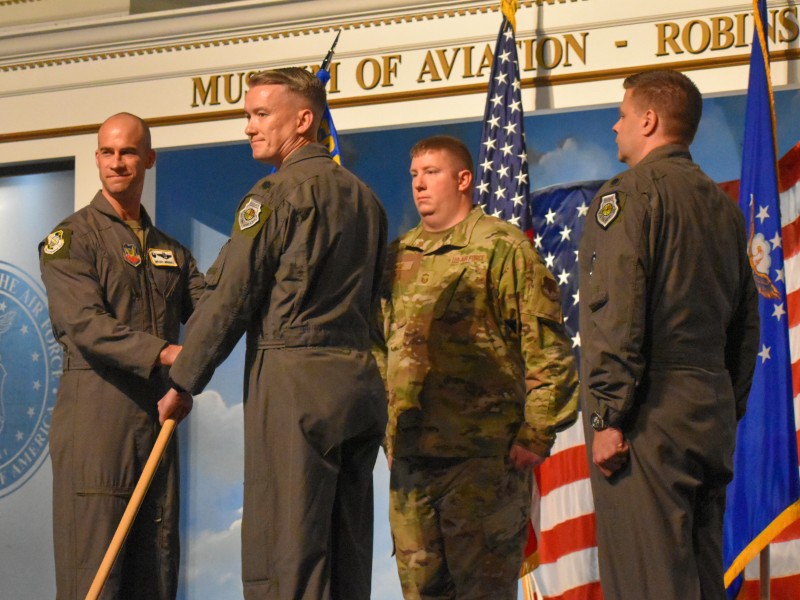
17th Electronic Warfare Squadron welcomes new commander, stands up two detachments
It’s a new era for the warfighter’s approach to electromagnetic technology at Robins Air Force Base, led by three new commanders.