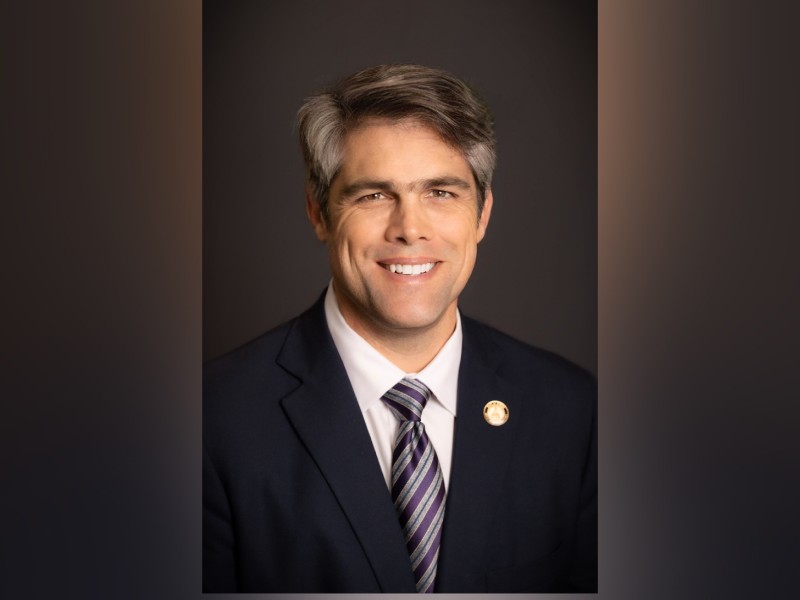
The greatest American playwright
He was born in 1945 the son of a white father and a black mother on “The Hill,” which was a black ghetto in Pittsburgh. Since he was the only black student at Central Catholic High School, threats and abuse finally drove him away. He dropped out of Gladstone High School in the 10th grade when a teacher accused him of plagiarizing a paper on Napoleon because it was “written too well.”
Rather than telling his mother that he had left school, he went to the library every morning and received his education through reading and on the street. He worked as a porter, short order cook, gardener and dishwasher before buying a typewriter for $20 and turning to his first love. That was poetry and theater. He co-founded the Black Horizon Theater and began to write plays.
In 1982, the National Playwrights Conference at the O’Neil Theater Center in Waterford, Conn., accepted his play “Ma Rainey’s Black Bottom” and he met director Lloyd Richards, who went on to direct his first six plays on Broadway.
“Ma Rainey” was voted best play of the year by the New York Drama Critics’ Circle. His second play, “Fences,” won him his first Pulitzer. “The Piano Lesson” was named Best Play of the Year by the New York Drama Critics’ Circle and earned him a second Pulitzer Prize.
He wrote a 10-play cycle that chronicles each decade of the black experience in the 20th century with each play focused on what he perceived as the largest issue to confront African-Americans in that decade.
August Wilson’s plays draw heavily on his own experience growing up in a black ghetto, where most of his plays are set. His characters are ordinary people whose histories, frustrations and aspirations Wilson astutely portrayed. He is considered by some critics to be the greatest American playwright.
CREATIVE SIGNS
In a podiatrist’s office: “Time Wounds all heels.” At a proctologist door: “To expedite your visit, please back in.” On a plumber’s truck: “We repair what your husband fixed.” On another plumber’s truck: “Do not sleep with a drip, call your plumber.”
On a church billboard: “Seven days without God makes one weak.” At a tire shop in Milwaukee: “Invite us to your next blowout.” On an electrician’s truck: “Let us remove your shorts.” In a non-smoking area: “If we see smoke, we will assume you are on fire and take appropriate action.”
On a maternity room door: “Push, Push and Push.” On a taxidermist’s window: “We really know our stuff.” At an optometrist’s office: “If you do not see what you are looking for you have come to the right place.” On a fence: “Salesmen welcome! Dog food is expensive.”
At a car dealership: “The best way to get back on your feet is to miss a car payment.” In a veterinarian’s waiting room: “Be back in five minutes. Sit and stay!” At the electric company: “We would be delighted if you send in your payment. However, if you do not, you will be.”
In a restaurant window: “Do not stand there and be hungry, Come on in and get fed up.” In the front yard of a funeral home: “Drive carefully, because we will wait.” At a propane filling station: “Thank heaven for little grills.” And finally, it is much easier to repent of the sins that we have committed than to repent of those we intend to commit.
TIMING
Many politicians of our time are in the habit of laying down as self-evident the proposition that no people ought to be free until they are fit to use their freedom. The maxim is worthy of the fool in the old story who has resolved not to go in the water until he has learned how to swim. If people are to wait for liberty until they become wise and good in slavery, they may indeed wait forever.
INDEPENDENCE
A gray haired woman bent over with arthritis and her arms loaded with two heavy paper bags came out of a supermarket and joined the line at the bus stop.
As the bus pulled up, a man standing behind her offered to help. She smiled and thanked him saying, “I better not. If I want help today, I might need it tomorrow.”
HHJ News
Before you go...
Thanks for reading The Houston Home Journal — we hope this article added to your day.
For over 150 years, Houston Home Journal has been the newspaper of record for Perry, Warner Robins and Centerville. We're excited to expand our online news coverage, while maintaining our twice-weekly print newspaper.
If you like what you see, please consider becoming a member of The Houston Home Journal. We're all in this together, working for a better Warner Robins, Perry and Centerville, and we appreciate and need your support.
Please join the readers like you who help make community journalism possible by joining The Houston Home Journal. Thank you.
- Brieanna Smith, Houston Home Journal managing editor