The ethical dilemmas of a trial attorney
Despite what is generally known, attorneys are probably the most regulated profession in the United States. In each state, we are governed by very specific ethical rules enforced by its highest court. These rules take the form of “canons” of ethics comprised of ethical rules, which are like laws, and ethical considerations, which are more like guiding principles. While there slight deviations from state-to-state (primarily in language), they are pretty much uniform. Attorneys are even required to study “ethics” in law school, pass a national ethics examination before being able to take the state bar examination, and have continuing education courses in both ethics and professionalism each year.
This can make representing a client in a jury trial, a complicated stew. In doing so, you are worried about what is going on with the jury, what they are thinking and feeling. You are trying to construct the wisest approach to achieve the best possible outcome, taking into account what the other side is pitching. And, then there are ethical and professional traps, which is the focus of today’s column.
An attorney has a role as an “officer of the court.” With this mantle comes a responsibility to never mislead or misrepresent facts or as to the law to the court. Thus, if you are making a legal argument, you are supposed to alert a judge to any legal opinions in contradiction to your position. In presenting evidence, we cannot knowingly introduce facts that have been barred. Most especially, we are not allowed to “suborn perjury” or permit a witness to testify as to facts we know are false.
This “higher” duty can sometimes clash with obligations owed to the client. Everything we do, everything we say, we have to keep the client’s best interests in mind. For example, if we are asking to withdraw in representing a client, we are barred from revealing communications with a client which might form the basis of our request. The classic conflicts, between an attorney’s “higher duty” and the obligations to the client, are troubling circumstances like if an attorney possesses a murder weapon or has information about a client planning to commit a crime.
These are theoretical conflicts. For a trial attorney, the thorniest ethical and professional every day issues concern case and trial strategy. Clients have wants, needs, and opinions which may or may not be grounded in a rational construct. Obviously, if the client wants you to make arguments or introduce evidence violating your role as an officer of the court, you decline doing so. This kind of disagreement can form the basis of an attempt to withdraw as the client’s representative.
Things becomes much more delicate, when a client wants you to pursue a trial theory you believe is contrary to their best interests. Attorneys are “Carnal the Magnificent,” all knowing and all-seeing. We may have an idea of the best course of conduct, an idea gleaned from training and experience. Certainly, we can project and surmise what a likely result will be, but we can never, ever promise a client a rock-solid result. Because the profession has taken such a public relations beating over the last couple of decades, the inherent trust clients used to have for their attorneys has been undermined. This puts a trial attorney in the unenviable position of having to persuade a client in the preferred strategy, before trying to persuade a judge or jury of its righteousness.
This can make for very stressful attorney-client relations, where an attorney has to use his or her best judgment about how much pressure to put on the client to settle or change strategy. We are blamed for a bad negotiation, as much as we are blamed for a bad result. Attorneys can help or hinder a settlement, but the client makes the ultimate choice.
This is probably the pickle Larry English found himself in representing Robert L. McCoy a decade ago. Mr. English was not his first attorney, as Mr. McCoy had fired his public defender before Mr. English, inexplicably, agreed to represent Mr. McCoy, in a death penalty case for the murder of three (3) family members, for only $5,000.00. Mr. McCoy is appealing his conviction and sentence to death, because he said that Mr. English overrode Mr. McCoy’s preferred strategy of contesting whether or not he was the murderer. He is asking that his conviction be reversed because Mr. English trial strategy was “ineffective,” not because it was unsound, because it was not what Mr. McCoy wanted it to be.
His appeal was recently argued before the Justices of the United States Supreme Court. They are struggling with what is the right thing to do. On the one hand, a citizen has a personal right to a trial and it is his or her personal decision whether or not to admit guilt. No trial attorney can admit a client’s guilt over the client’s objection. Yet, in defending a client against the near certainty of a death conviction, attorneys have to be mindful of atmospherics. And, losing all credibility, in arguing about the mechanisms of how three (3) people had their lives brutally cut short, may destroy any hope of convincing a jury to spare your client’s life.
The Supreme Court’s decision later this year may revolutionize attorney-client relations. Maybe the decision will only demystify the role of a trial attorney, however it may (or may not) add yet another layer of concern for trial attorneys in representing, in this context, an accused. This is one outcome we should all study. At the very least, it may turn up on more than a few law school syllabi and state bar examinations.
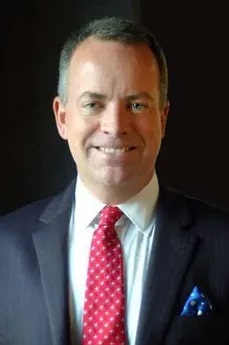
Local attorney Jim Rockefeller owns the Rockefeller Law Center and is a former Houston Co. Chief Assistant District Attorney, and a former Miami Prosecutor. Visit www.rockefellerlawcenter.com to submit confidential legal questions, and to review former articles and Frequently Asked Questions.
HHJ News
Before you go...
Thanks for reading The Houston Home Journal — we hope this article added to your day.
For over 150 years, Houston Home Journal has been the newspaper of record for Perry, Warner Robins and Centerville. We're excited to expand our online news coverage, while maintaining our twice-weekly print newspaper.
If you like what you see, please consider becoming a member of The Houston Home Journal. We're all in this together, working for a better Warner Robins, Perry and Centerville, and we appreciate and need your support.
Please join the readers like you who help make community journalism possible by joining The Houston Home Journal. Thank you.
- Brieanna Smith, Houston Home Journal managing editor