
The colorful art of peach crate labels
Labels weren’t just packaging; they were art.
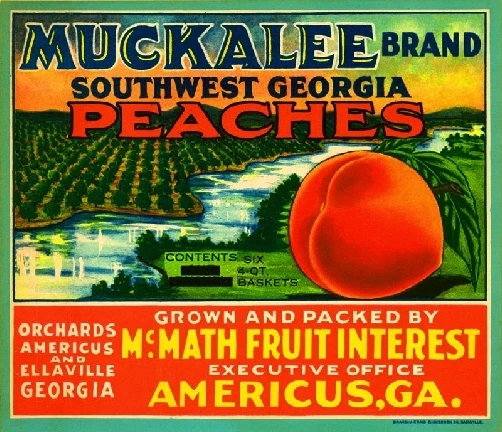
Take a trip back in time, past the fluorescent glow of today’s grocery stores, and imagine a bustling open-air market in the early 1900s. Amidst the chaos of vendors and shoppers, something bright and colorful catches your eye: a stack of wooden crates emblazoned with a vivid label featuring a tropical scene or a proud-looking animal.
This wasn’t just packaging; it was art.
Starting in the 1880s, these eye-catching paper labels became an essential part of the produce industry. Thanks to the expanding U.S. rail network, growers could suddenly ship their fruits and vegetables thousands of miles. The labels were a necessity, identifying the contents, the company, and the origin of the box. But they quickly evolved into an early form of branding and advertising, with commercial artists creating stunning, full-color lithographs to adorn the ends of wooden crates.
Growers needed a way to stand out. In a market where competitors’ produce might be displayed right next to theirs, a clever name and a dazzling image were key to catching a shopper’s attention. Brand names like “Snow Owl Apples” or “Blue Goose Pears” weren’t just text; they were accompanied by whimsical images of animals, majestic landscapes, or even stylized cowboys and bathing beauties. These labels transformed a simple crate into a miniature billboard, turning the mundane task of buying groceries into a more visually engaging experience.
But this vibrant era was short-lived. By the 1970s, pre-printed cardboard boxes had replaced wooden crates and their paper labels. The art form was considered obsolete, but that’s when a new chapter began. Discarded and unused labels, once just commercial waste, became valuable collector’s items.
Today, these vintage labels offer a unique window into American commercial art and history. While many of the artists remain anonymous, their work lives on. The most desirable labels are those that never made it onto a crate, remaining in pristine condition. The value of these pieces depends on their age, rarity, and, of course, their visual appeal.
Many people collect all kinds of these crate labels. Some specialize in a particular fruit, like our Georgia peaches, some collect only apple labels. Unfortunately, like most antiques and collectibles, prices have gone down in the last few years. Go onto eBay and search Georgia Peach crate labels and enjoy all the beautiful examples. Happy Collecting!
Before you go...
Thanks for reading The Houston Home Journal — we hope this article added to your day.
For over 150 years, Houston Home Journal has been the newspaper of record for Perry, Warner Robins and Centerville. We're excited to expand our online news coverage, while maintaining our twice-weekly print newspaper.
If you like what you see, please consider becoming a member of The Houston Home Journal. We're all in this together, working for a better Warner Robins, Perry and Centerville, and we appreciate and need your support.
Please join the readers like you who help make community journalism possible by joining The Houston Home Journal. Thank you.
- Brieanna Smith, Houston Home Journal managing editor
Paid Posts
Author

Related Articles

The Rise, Fall, and Enduring Legacy of Kodak: A Cautionary Tale of Innovation
We are working on an estate sale that has a wonderful selection of antique cameras and antique photos.

A friend like an oxpecker
I received an email from what appeared to be a high-ranking official in Houston County’s judicial system. It was someone I had emailed back and forth with on more than one occasion, so it didn’t appear conspicuous.

Never Ever Give Up
True competitors do not take losing lightly.