
The brave new world of marijuana
Dear Readers, Our legal relationship with marijuana continues to evolve. At the end of Prohibition, a bureaucrat wanted to save his job and begat “Reefer Madness,” scaring America. This strategy worked, and cannabis was lumped in with the likes of cocaine and heroin; the vilification of marijuana commenced.
Things are vastly different today, as marijuana is almost universally legal in one fashion or another. Presently, 24 of our 50 states, plus Washington, D.C. (almost exactly half), have legalized recreational possession of marijuana. Presently (there may be more), four more states – Florida, Idaho, Nebraska and South Dakota — have ballot initiatives scheduled for November for voters to add them to this roster. All told, 38 states (the vast majority) permit marijuana to be medically prescribed.
Marijuana is a “cash” crop, nationally the sixth biggest with a bullet, trailing only corn, soybeans, hay, wheat, and cotton. This does not include the value of harvest in states where it is permitted only to be grown for medical purposes. The top 4 state producers are (in order) California, Colorado, Michigan, and Oregon. It is also the number one cash crop in New Jersey, Alaska, and Massachusetts.
We have 11 states that permit cultivation of marijuana for medical or personal use. There are an additional 13 states that permit cultivation for strictly medical purposes. None of this discussion of marijuana as a cash crop includes hemp cultivation, or “marijuana-light,” devoid of any cannabinoid. Hence, when it comes to the cultivation of marijuana in one form or another, it’s also almost universally grown in one form or another, even if there is a healthy minority of states in which marijuana lacks any level of legality.
There has never been any hard evidence of marijuana’s danger – except for the pulmonary consequences of inhalation. Now, its illegality has bred a criminal drug culture and all that entails, but one of the quixotic results of marijuana being so harshly criminally categorized is that there have been almost no medical studies about marijuana.
Despite all the statutory changes at the state level, the criminal classification of marijuana at the federal level has hampered studying the medical pros and cons of marijuana. The same is true of marijuana’s economic atmospherics. Because of federal law, every aspect of marijuana production and distribution cannot be underwritten by the financial industry. There are also tax consequences for being able to claim deductions on income.
This means that the “dam” in the legalization of marijuana is dependent on federal law, and it is breaking wide open. The Drug Enforcement Administration (DEA) has started the process to reclassify marijuana as having a less dangerous drug status, from a Schedule I drug to a Schedule III (think steroids). In May, 18 Senators proposed a bill to codify these changes. This is also significant for state classification as many states link their own law’s drug classification to DEA’s determination.
If this happens, a universe of possibilities opens for medical studies. Instead of relying on anecdotal data, scientists, ethicists, and doctors can start to rationally consider the benefits (and deficits) of medical uses for marijuana – hard data. There are so many anecdotal stories about marijuana being a benefit for people suffering from maladies like Multiple Sclerosis and Cancer – maybe not cures, but amelioration of symptoms. We would benefit from scientific analysis of its efficacy.
Similarly, being reclassified as a Schedule III drug will have financial consequences. Parallel to the steps put in motion by the DEA, Congress is crawling towards financial reforms. The Safe Banking Act, formally the Secure and Fair Enforcement (SAFER) Banking Act, was first introduced in 2023. It is designed to set rules and structure to loosen economic restrictions with respect to marijuana production and distribution. It passed in the House and successfully cleared the Senate Banking Committee. It has, thus far, failed to pass the entire Senate.
The current Senate Majority Leader, Chuck Schumer, is a major proponent of these reforms. His goal is to “marry” the DEA reclassification idea with financial reforms. Many fear any changes, concerned about children, marijuana saturating our society, and local crime increasing. The proposed financial banking reforms are attacked from a slightly different perspective, that they will lead to money flowing to the drug cartel. These are all serious issues, requiring sober assessment. The hope is Congress can avoid falling into a hysterical rhetorical trap.
We are clearly inexorably moving towards a different legal relationship with marijuana. The coming election will give us a clearer picture.
Warner Robins attorney Jim Rockefeller is the former Chief Assistant District Attorney for Houston County and a former Assistant State Attorney in Miami. Owner of Rockefeller Law Center, Jim has been in private practice since 2000. E-mail your comments or confidential legal questions to ajr@rockefellerlawcenter.com
Before you go...
Thanks for reading The Houston Home Journal — we hope this article added to your day.
For over 150 years, Houston Home Journal has been the newspaper of record for Perry, Warner Robins and Centerville. We're excited to expand our online news coverage, while maintaining our twice-weekly print newspaper.
If you like what you see, please consider becoming a member of The Houston Home Journal. We're all in this together, working for a better Warner Robins, Perry and Centerville, and we appreciate and need your support.
Please join the readers like you who help make community journalism possible by joining The Houston Home Journal. Thank you.
- Brieanna Smith, Houston Home Journal managing editor
Paid Posts
Author

Related Articles
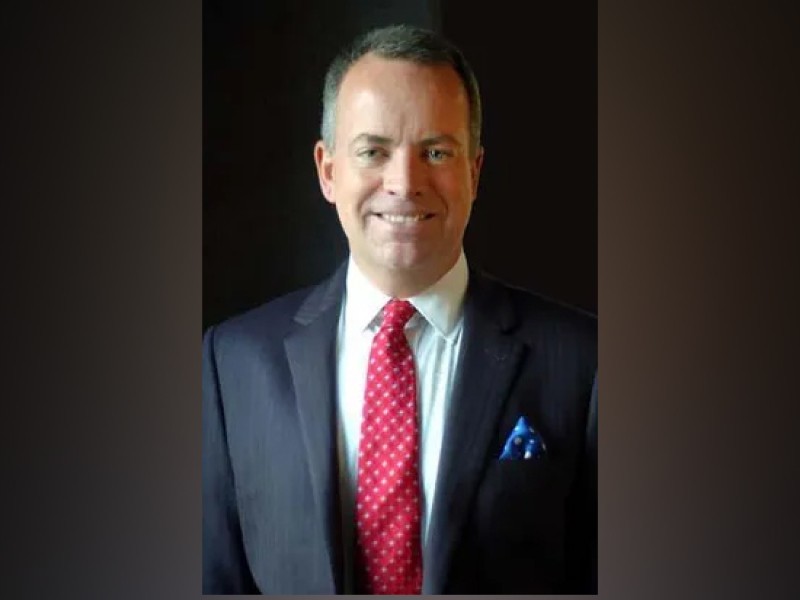
Does using forever chemicals mean forever liability?
Part-time citizen legislators have to become experts on a variety of topics, some of which have long-term consequences for our own health and the state’s.

‘Toon’ in for February — Jim Balletto
February’s opinion comics from Jim Balletto.
A variety of dying expressions
Several months ago a younger relative of mine, Wiley Kimbrough, was sore after returning from a hiking adventure that lasted several days.