Syrian sugar high
Almost four years ago, President Obama put us in a foreign policy “no-man’s land” concerning the Syrian Civil War. First, he declared a “red line,” with respect to use of chemical weapons on them, and then he tried to reach a permanent diplomatic solution. Clearly, it didn’t work.
President Trump responded to the latest civilian tragedy by ordering surgical air strikes against the Syrian Air Force. Ponder that for a moment. It feels good for America to strike at a brutal tyrant who sentenced his own people to death by chemical warfare. But, an American president unilaterally ordered air strikes against a sovereign nation — one step short of outright war.
There was no NATO or UN Security resolution backing our president. Congress did not authorize it; there was no attack on U.S. soil or interests. We just bombed because we were angry and appalled by the atrocities.
The wisdom of this action or the long-term policy implications…that is for foreign policy experts. The legality of the bombing campaign, however, is a legal matter. And one that definitely merits closer inspection after the afterglow of self-satisfaction has passed. President Trump’s use of cruise missiles is at least on questionable constitutional grounds. Congress declares war. Congress controls presidential authority by the power of the purse. In Congress, the decision to attack Syria should (arguably) have initiated.
In the past, presidents sought congressional authority before putting our troops in harms way. Faced with mortal threats from European imperialist powers, American-Indian Nations and Barbary pirates, successive presidents went to Congress first before acting. Ironically, the genesis of a more “imperial” interpretation of presidential authority probably began with President Andrew Jackson’s undeclared war against Native Americans. Abraham Lincoln waged the Civil War for almost three months without Congress’ approval, suspended habeas corpus and even issued the Emancipation Proclamation without first going to Congress.
When World War II waged, the last time Congress formally declared war, President Roosevelt danced on the edge of the Constitution, trying to prop-up Great Britain as Hitler and Nazism threatened freedom and humanity around the world. At home, because of the “America First” propagandists and their German (if not outright Nazi) sympathizers, he had his hands tied until that fateful day of Japan’s sneak attack on Pearl Harbor. Making Congress’ act of war against Japan a foregone conclusion, Hitler, misreading American skittishness, promptly declared war on the U.S. three days later.
In response to the Vietnam quagmire, Congress passed the “War Powers Resolution” to clip presidential authority and inoculate us against “another Vietnam.” In doing so, Congress told future presidents, before bringing military forces in “imminent involvement in hostilities,” there had to be a declaration of war, specific authority or an emergency. Respecting Congress, presidents have sought authority to use military might with the Gulf War, Afghanistan and Iraq, all sanctioned ahead of time.
However, modern presidents have also appropriated even greater war-making power from treaties and the United Nations. The Korean War, Bosnian War, Haitian peacekeeping and even President Obama’s decision to intervene in Libya were all made under the umbrella “political cover” of UN authorizations.
In theory, then, President Trump have asked for congressional authorization before we bombed Syria. There was no emergency; President Bashar al-Assad has been worse for years. Our activities in Iraq against ISIL and drone Navy SEALS attacks against terrorists are (in a stretch) authorized by the post-9-11 authority given by President Bush to retaliate against Afghanistan and, then again, Iraq itself. Presidents Obama and Trump have used the thin reed of these “old” congressional resolutions to justify anti-terrorist missions in places like Pakistan, Libya and Yemen.
Most of us applaud the surgical military decisiveness because bad men and women are being removed from the battlefield. The same is true for President Trump’s “measured response” to Mr. Assad’s criminal use of chemical warfare on his own people. Congress is missing from all of this, which is a dangerous trend.
Syria is a problem, a humanitarian disaster. But this is also true of South Sudan, Congo, Yemen and other hot spots. In 2013, President Obama had constitutional indigestion about using our war machine to punish Mr. Assad for gassing civilians. Congress had no stomach for any policy debate, the rest of the world stood idly by, as it has since the beginning of Assad’s full descent into despotism, so President Obama passed on acting unilaterally.
President Trump decisively took a different position. The White House will issue public pronouncements justifying the bombing campaign. It is not. This lazy intellectualism is how we devolved into a Vietnam conflict and sapped the will of our great republic. It is how we tear up the Constitution and abandon the delicate sharing of power crafted by our Founding Fathers.
Ultimately, we may need to get over the sugar high of Tomahawk missiles and demand Congress fulfill its duty. Our Constitution is clear on this responsibility. Arguably, the world today is very different from 1787, making Congress’ sole war-making authority a bit anachronistic. Even so, we are supposed to have three working branches of government and one is missing in action. Allowing a president to supersede Congress is a dangerous precedent.
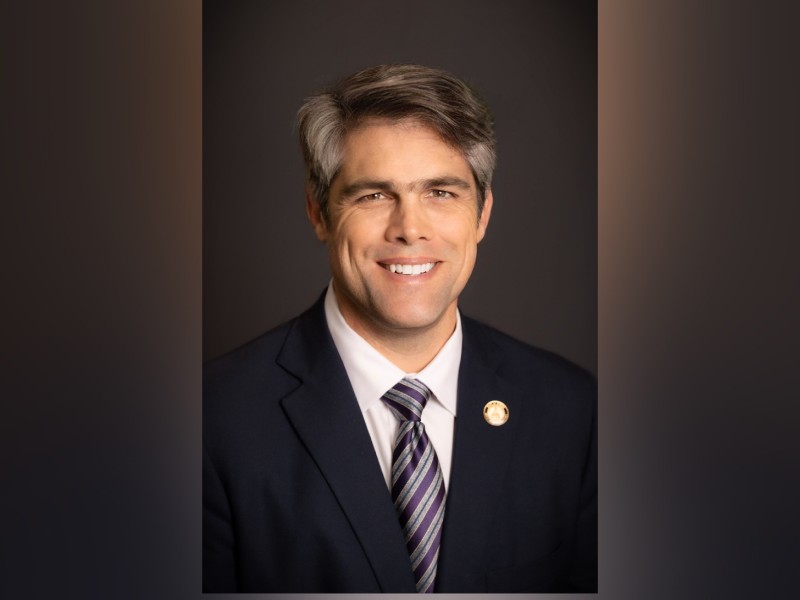
Local attorney Jim Rockefeller owns the Rockefeller Law Center and is a former Houston County chief assistant district attorney and a former Miami prosecutor. Visit www.rockefellerlawcenter.com to submit confidential legal questions and to review former articles and frequently asked questions.
HHJ News
Before you go...
Thanks for reading The Houston Home Journal — we hope this article added to your day.
For over 150 years, Houston Home Journal has been the newspaper of record for Perry, Warner Robins and Centerville. We're excited to expand our online news coverage, while maintaining our twice-weekly print newspaper.
If you like what you see, please consider becoming a member of The Houston Home Journal. We're all in this together, working for a better Warner Robins, Perry and Centerville, and we appreciate and need your support.
Please join the readers like you who help make community journalism possible by joining The Houston Home Journal. Thank you.
- Brieanna Smith, Houston Home Journal managing editor