
Sunflowers for the Garden
Helianthus annus is the scientific name for the group of plants that includes an old American favorite – the sunflower. Named for the Greek sun god, Helios, the legend tells us that they turn their faces to the sun as it rises and sets. When other garden flowers have been dried by searing winds and heat and drought conditions in many parts of the country, the sunflower keeps blooming brilliantly.
Strong growth and heat loving qualities have made sunflowers a mainstay of American rural landscapes for over a hundred years. In 1903 they were named the state flower of Kansas. They bloom in English gardens where they are known for resisting London smog. Van Gogh immortalized them in his painting, and French King Louis XIV used them as a symbol of his reign. One of my favorite paintings, it so happens, features sunflowers in a vase on a mantle, and was painted by an aunt of mine. Today sunflowers are available in many forms and colors, and gardeners are appreciating them for their qualities in cut flowers arrangements, used as dried flowers and for edible seed.
Through breeding, sunflowers have become quite diverse in appearance and size, so that now there are varieties that grow short enough for flower borders and even patio and container growing.
Sunflowers have two basic growth patterns: straight stems (non-branching) and branching. Non-branching types are those which typically produce one large flower at the end of each stem. Succession planting will be necessary for a continuous garden display. Branching types are generally shorter and bushier, and produce many smaller flowers along the stem. Another category of sunflowers includes pollen-free flowers versus flowers with pollen.
I recently counted over 50 varieties of sunflowers the other day in a reputable seed catalog with flower sizes ranging from three to eight inches and heights from one foot to fourteen feet. Colors ranged from red, yellow, orange, white, bronze, green, purple, chocolate, and a great number of color combinations involving these hues.
Giant single-stemmed varieties such as “Mammoth Russian” and others are notoriously shallow-rooted, being very tall and top heavy. They will benefit from both early staking and deep watering. Deep and regular watering will encourage root growth to help anchor plants. Without these, strong winds or rain will topple them.
Sunflowers are heavy feeders. A fertilizer high in nitrogen will help them grow leaves and stems early in the summer, followed by a high potassium fertilizer when the flowers are in bud, to develop bigger and better flowers. Nitrogen application should be reduced at flowering.
Although all types of sunflowers are virtually pest and disease free, powdery mildew can be a problem. Mulching around the base of the plants will keep water from splashing on foliage and help to minimize mildew.
Seeds of any sunflower can be planted directly in the soil after the last spring frost. Blooms will appear two and three months after planting, depending on the variety. Because some varieties of sunflowers lose their lower leaves as they grow, sometimes revealing coarse, prickly stems, they should be used as background planting or planted where they will be viewed from a distance.
The sunflower is certainly an excellent choice for your garden – try some this year!
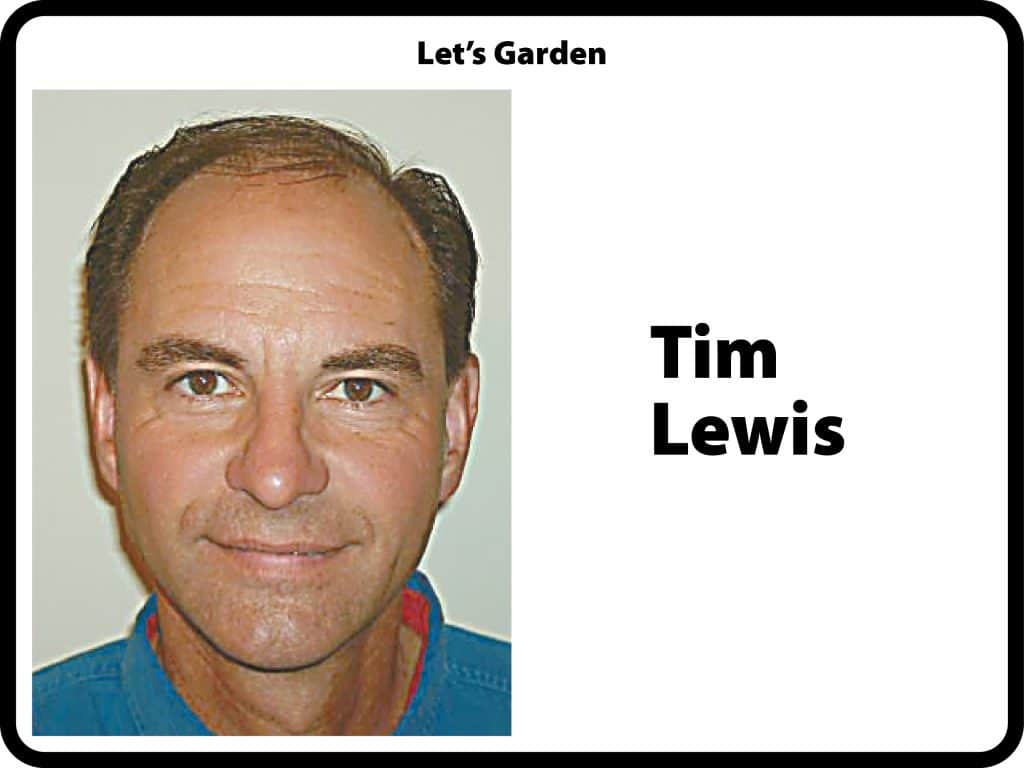
Tim Lewis is a Georgia Green Industry Association Certified Plant Professional, gardening writer, former Perry High School horticulture instructor, and former horticulturalist at Henderson Village and Houston Springs. He and his wife, Susan, own and operate Lewis Farms Nursery located on Hwy 26 two miles east of Elko, where he was born and raised. He can be reached at (478) 954-1507 or timlewis1@windstream.net.
Before you go...
Thanks for reading The Houston Home Journal — we hope this article added to your day.
For over 150 years, Houston Home Journal has been the newspaper of record for Perry, Warner Robins and Centerville. We're excited to expand our online news coverage, while maintaining our twice-weekly print newspaper.
If you like what you see, please consider becoming a member of The Houston Home Journal. We're all in this together, working for a better Warner Robins, Perry and Centerville, and we appreciate and need your support.
Please join the readers like you who help make community journalism possible by joining The Houston Home Journal. Thank you.
- Brieanna Smith, Houston Home Journal managing editor
Paid Posts
Author

Related Articles

Thanatophobia could happen to you
I’m not picking on the Tax Assessors today. Instead I’m writing about thanatophobia.

‘Toon’ In for March — Jim Balletto
March’s comics from Jim Balletto.

Time to listen, think and choose
Qualifying has completed. Candidates have declared. Communities must make a choice.