
State Congress approves Georgia Early Literacy Act
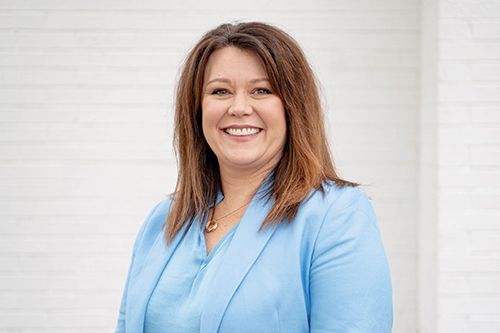
ATLANTA, Ga. — In the final days of the 2023 Congressional Session, Georgia’s Congress put into law House Bill 538: The Georgia Early Literacy Act. The bill is intended to improve reading education for students in kindergarten through third grade. Local Rep. Bethany Ballard, who sponsored the bill, described what it’s meant to do.
“The intent is to get kids reading at grade-level,” Ballard said. “We’re right at half of our third graders who don’ read at grade-level in our state, and if you are not reading at grade-level by the third grade, you are less likely to graduate, you’re less likely to be gainfully employed and you are more likely to end up in jail.
“Third grade is kind of a make or break year in a child’s education.”
This new act, according to Ballard, is intended to return reading education to a systematic approach, focused on phonetics and structured literacy.
The bill achieves this by mandating required education for teachers on how to teach reading. The State Board of Education will develop a “uniform standard for measuring literacy,” and approve “high-quality instructional materials” for teachers to use in their classes for reading education. Students in K-3 classes will be screened three times a year to ensure they are making progress in literacy, while students who fall behind will be provided a “reading intervention plan” by their school to get the student back on track. This bill also works to ensure that students with dyslexia are identified quickly, and that teachers are provided the tools to assist them educate dyslexic students to read.
The education of teachers starts with the Department of Education. The department will work directly with the University System of Georgia, the Professional Standards Commission, the Office of Student Achievement, Georgia’s Regional Education Service Agencies and other literacy experts to develop training programs for educators. As the bill states, these training programs are intended to “promote teachers’ knowledge and skills for teaching all students to read, including students with dyslexia.”
Later in the text, the bill notes that each public school and local school system will have the burden of providing “instructional support,” to their educators via onsite teacher training. According to Ballard, funding for these programs will come from grants, from each school’s funding and from assistance provided by the Georgia Department of Education and the State Board of Education.
By July 1, 2025, the Department of Education will require all teachers to be trained to teach reading with a “developmentally appropriate evidence based” approach.
By January 1, 2024, the Georgia Board of Education is expected to approve “high-quality instructional materials.” By Dec. 1 of that same year, local boards are expected to do the same. Ballard said these materials are evidence-based curriculum designed to “get every child reading.”
“For years we taught [reading] with a very systematic approach, and then we got away from that because, I think, we kind of outsmarted ourselves,” Ballard said. “We know that those foundational principals we used forever are indeed the ones that worked.
“The state board will have the discretion to determine what they believe is a high-quality instructional material, and then the local schools will choose from that.”
By July 1, 2024 and August 1, 2024, the State Board of Education and the Department of Education respectively are required to provide a list of approved “universal reading screeners.” These reading screeners, according to Ballard, are just assessments — sentences and word groups that allow educators to assess where a student is in their reading comprehension, if they’re on track, ahead or behind.
Students in K-3 classes will be screened three times a year. The information gathered by the screening will be shared with the parents or guardians of each student, as well as the department of education for analysis.
Finally, this bill mandates that any students that is shown to be falling behind in their reading education by these screenings shall be provided a “tiered intervention plan,” a set of practices or remedial tasks students will be assigned to get back up to speed.
“Right now we don’t really measure our kids’ reading progress until the end of 3rd grade,” Ballard said. “If they’re behind, we don’t really measure them and tell them they’re behind until they’re really behind.
“What this bill aims to do is put those screening assessments earlier, kindergarten, first grade, second grade, so if a child is a little bit behind in kindergarten, we can go ahead and fix that. The teacher can intervene and give them some extra help before they’re very behind.”
In a companion bill to GELA, Georgia Congress created the Georgia Council on Literacy — the group will work to “review the conditions, needs, issues and problems related to state literacy outcomes,” and then provide recommendations for legislation to make those outcomes greater.
This new council will contain 30 members, all of whom will be appointed by the governor, the president of the senate and the speaker of the house of representatives.
This council will be abolished Dec. 31, 2026.
Concluding her interview with The Journal, Ballard described some of the impact she expects this bill will have on Georgia’s students:
“We want to see our kids reading,” Ballard said. “When kids are assessed, we want to have all of our kids reading at grade-level — that is the ultimate goal. I firmly believe that is an achievable goal.”
To read the bill in full, visit https://www.legis.ga.gov/legislation/64710. According to Ballard, the bill’s full effect won’t be apparent until the state sees the first group of students make it from kindergarten through third grade under the program.
HHJ News
Before you go...
Thanks for reading The Houston Home Journal — we hope this article added to your day.
For over 150 years, Houston Home Journal has been the newspaper of record for Perry, Warner Robins and Centerville. We're excited to expand our online news coverage, while maintaining our twice-weekly print newspaper.
If you like what you see, please consider becoming a member of The Houston Home Journal. We're all in this together, working for a better Warner Robins, Perry and Centerville, and we appreciate and need your support.
Please join the readers like you who help make community journalism possible by joining The Houston Home Journal. Thank you.
- Brieanna Smith, Houston Home Journal managing editor
Paid Posts
Related Articles
CRU Lounge shooter sentenced to 15 years in prison
Katlyn Green was convicted of aggravated assault in April and sentenced on May 5.

Houston County set to increase water usage rates in July, Chairman explains
Starting July 1, 2026, Houston County will increase water usage rates by 25 cents as part of their three-year water adjustment plan.

Perry author releases novel inspired by South Georgia: About ‘finding yourself’
Bo Hunter, a Perry-based author, is dipping into the past for a humorous and introspective look at identity, perseverence and nostalgia with his debut release.