
Silicon Ranch brings lambing and solar energy to Houston County
The Houston Solar Project owned by Silicon Ranch seen off I-75 South, has brought the breeding of sheep during lambing season and solar energy to Houston County.
ELKO — As you drive on I-75 South, you may notice several solar panels on the right. That is the Houston Solar Project owned by Silicon Ranch.
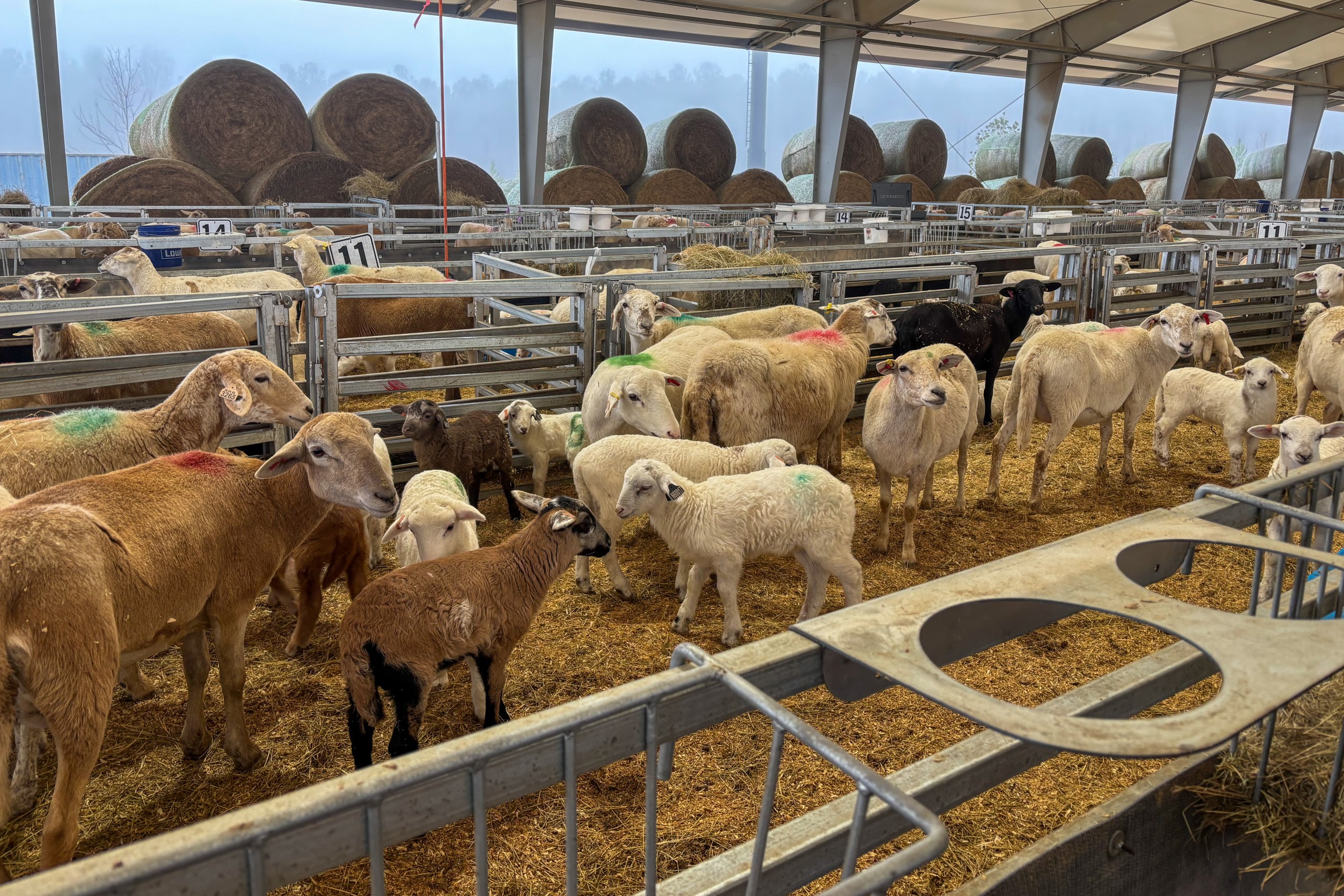
Houston Solar also has its own lambing barn, where they house and breed sheep during lambing season.
Director of Agrivoltaics Operations Jim Malooley said that sheep used to be a big part of all farms in America.
“Back then, food was coming off of farms that were diverse ecosystems as they weren’t hyper-specialized in monoculture,” he said. “As agriculture shifted over the past six decades, we saw production get centralized in these large organizations that do one product, they do it very efficiently, but maybe not to the highest quality standard.”
Contrary to the average sheep, Houston Solar’s sheep do not have much wool.
“They are hair sheep, they shed and that’s a carry over from their Caribbean ancestry,” he said.
Ranch Manager for Houston Solar Jack Mason said the births they see during lambing season daily come in waves.
“We’re kind of in a dip right now and we’ve counted about four or five each morning as they have a 17-day cycle, and you’ll see a dip, a peak and then another dip,” he said.
In the lambing barn, dogs are also roaming around. Mason said they are the sheep’s guardians.
“It’s good to have [dogs] in here to set their presence and protect them from coyotes and bobcats,” he said.
According to Malooley, the biggest killer of sheep in the country is a microscopic parasite, the Barber’s pole worm. He said it can be a threat to any species.
Overall, Silicon Ranch is breeding Southeastern sheep. Malooley said it’s because they cannot bring back sheep to the Southeast due to health concerns
Malooley and others involved with Houston Solar are passionate about sheep production.
“We’ll collect the data, work until 10 o’clock at night in freezing weather, take lambs into the office and sleep on the futon because we’re passionate about sheep production and agriculture,” he said. “If we can be part of the solution and we can collect data on a large sample size, we can move the needle faster, we can work together.”
The sheep are a main part of keeping the grass cut below the solar panels. Malooley said there is so much opportunity to improve the land under the solar panels.
“We hear about regenerative agriculture, diverse ecosystems, cleaner water, less chemical inputs and relying on working with nature by moving in the same direction as natural processes would instead of the monoculture of I’m going to fight everything so that I can have this one thing,” he said. “We’re embracing all of the unknowns in the soils, forages and the chaos that’s there, it turns out there is some rhythm in the chaos.”
Malooley said the ranch has proven the case for vegetation management while helping them learn which sheep are right for land management. He said they did not mow the grass under the panels at all last year as it took the sheep about four or five grazes.
“Everything occurs under the panels. [Sheep] have their lambs, they feed out there, but we only house them for as short amount of time as we can just collect the information that we need,” he said. “During lambing time, we give them big areas and they find their own space, lay down, develop a bond with their lambs and after a couple days they venture further. We seek to replicate and make this successful in the field.”
Malooley said their goal is to actively develop long-term careers. He said he spends about a week a month in Georgia to check up on their three ranches in the state.
“Once folks get trained, they’re able to do not just what the folks before them did, but then improve on it and they take the torch,” he said. “Our organization has lots of successive teaching so we’re always learning and teaching all the time.”
Chief Commercial Officer of Silicon Ranch Matt Beasley said the location of Houston Solar is the optimal location due to grid proximity and transmission availability.
The site being off I-75 also contributes to its uniqueness. Beasley said this site can power over 11,000 homes.
“Beyond that, we really wanted a community we could work with and having a welcoming community matters so much to us,” he said.
Beasley said he and Silicon Ranch were disappointed their proposed expansion for another location in Houston County was denied by the Board of Commissioners. However, he said they are constantly developing new sites across the state of Georgia.
Before you go...
Thanks for reading The Houston Home Journal — we hope this article added to your day.
For over 150 years, Houston Home Journal has been the newspaper of record for Perry, Warner Robins and Centerville. We're excited to expand our online news coverage, while maintaining our twice-weekly print newspaper.
If you like what you see, please consider becoming a member of The Houston Home Journal. We're all in this together, working for a better Warner Robins, Perry and Centerville, and we appreciate and need your support.
Please join the readers like you who help make community journalism possible by joining The Houston Home Journal. Thank you.
- Brieanna Smith, Houston Home Journal managing editor
Paid Posts
Author

Related Articles

Houston County set to increase water usage rates in July, Chairman explains
Starting July 1, 2026, Houston County will increase water usage rates by 25 cents as part of their three-year water adjustment plan.

Perry author releases novel inspired by South Georgia: About ‘finding yourself’
Bo Hunter, a Perry-based author, is dipping into the past for a humorous and introspective look at identity, perseverence and nostalgia with his debut release.
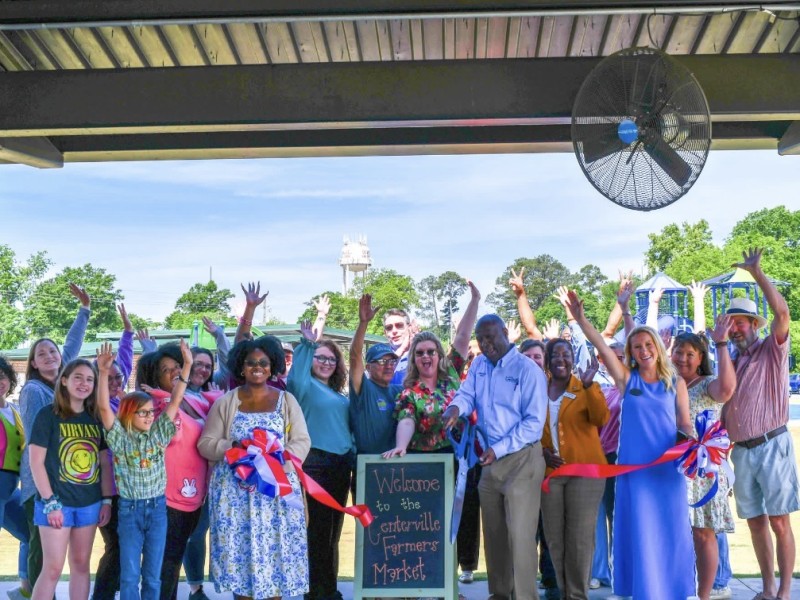
Centerville Farmer’s Market returns this Friday
The Centerville Farmer’s Market will begin on Friday, May 8 at Center Park. It will be from 9 a.m. to 1 p.m.