
Sheriff’s Office warns of law enforcement phone scams
Scammers use real names and fake numbers to impersonate the sheriff’s office and demand money to settle alleged active warrants, the office says.
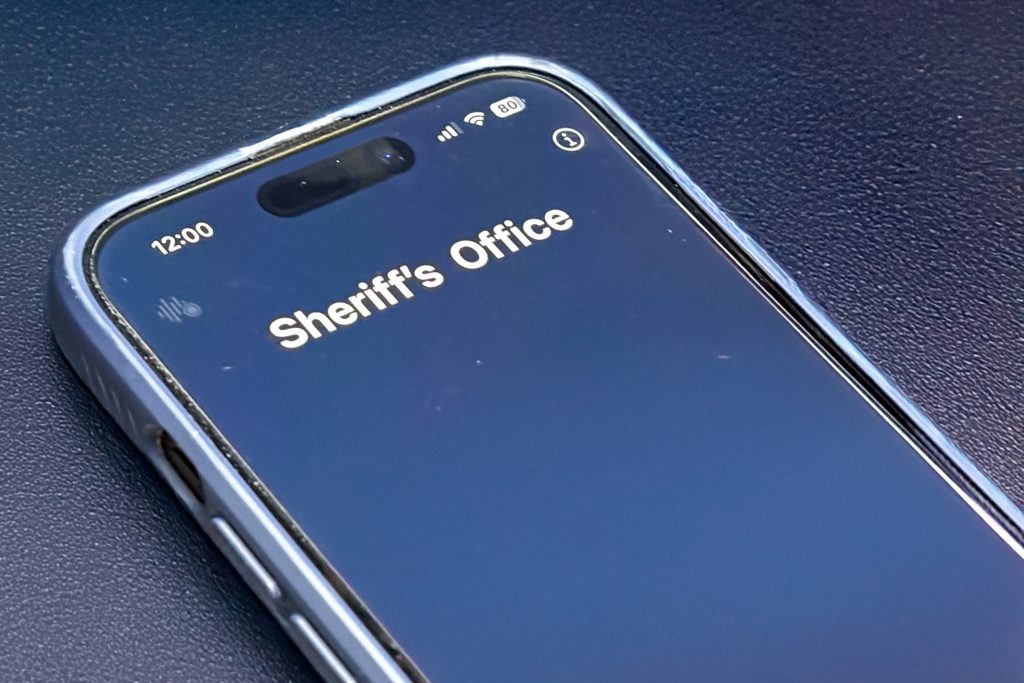
HOUSTON COUNTY— An unfamiliar number pops up on your phone, displaying “Houston County Sheriff’s Office.” When you answer, a stern voice claims to be a deputy, warning that there’s a warrant out for your arrest.
Panic sets in—but there’s a way out. Pay a fine now, and the issue disappears. Except, there’s just one problem: the sheriff’s office says it’s a scam.
As explained by Sheriff Matt Moulton, scammers often use technology to make the phone call seem legitimate. They will inform the victim there is a warrant for missing jury duty, failing to pay a traffic citation, failing to pay pandemic-era business loans or failing to take a DNA test. Scammers will then tell the victim to take cash to kiosks and purchase bitcoin or prepaid gift cards.
Moulton said the sheriff’s office will never conduct business this way. If someone has an arrest warrant, deputies will make contact in person.
“The Houston County Sheriff’s Office, nor any other law enforcement agency, will ever contact someone and tell them that they have a warrant for their arrest. We just don’t do that, and we will never ask for any type of payment or fine payment over the telephone. We’ll never ask you to go and purchase Bitcoin or any other type of crypto currency to make an electronic transfer of a fine amount. That is not the way law enforcement does business,” he said.
Moulton said the elderly are a common target and scammers will often use social media to find legitimate representatives to impersonate. Moulton said his name has been used, and Sgt. Joe Middlebrooks has been a common “caller” as well. Scammers will often advise against paying the fine in person at the sheriff’s office.
“They’ll say, ‘No, if you go there, they’re gonna take you straight to the jail. You won’t have the opportunity to pay the fine ahead of time.’ So, people tend to shy away from coming here because they don’t want to go to jail,” Moulton explained.
Moulton said the scam calls can erode trust in law enforcement, especially towards those who scammers are impersonating, like Middlebrooks, who has been a dedicated employee for almost 30 years.
“When you receive a phone call from somebody that’s impersonating [Middlebrooks] and telling you that you have a warrant and that you need to pay this money, if they fall for that and they pay that money, the next time Joe Middlebrooks may actually call about something, they may be hesitant to talk to him,” Moulton said.
Moulton said most of the calls originate from overseas; The office has tracked calls to Kenya and the Middle East. Domestic scam calls most likely come from the prison system.
However, one case was traced to Atlanta, where the victim lost $22,000. Scammers claimed the victim had missed jury duty.
“They had driven down here, and they actually met her in the parking lot of the sheriff’s office on Carl Vinson Parkway. It was on a Sunday afternoon, and a female approached her car, took the cash, gave her a receipt, and told her that the warrant will be removed from the system, and thanked her for cooperating,” Moulton said.
After taking her first payment of $14,000, the scammers called back and told the victim she had an unpaid traffic citation for $8,000. They again met her in the parking lot and took payment.
If faced with a call like this, hang up the phone and do not give any sensitive information, Moulton advised.
“If they believe there may be a scenario where they do have a warrant, they can come to the sheriff’s office with a picture ID, and we will check to see if they have a warrant. If they do, then we’ll advise them at that time that there is an active warrant, or we’ll tell them that it’s not a warrant. But what we’re seeing is 99.9% of these calls are scam calls,” he said.
Moulton said scammers who are caught are prosecuted to the fullest extent of the law, but financial loss and emotional toll on victims can be lasting. Moulton reported some victims are embarassed to report falling for a scam, but inquiries to the sheriff’s office have been consistent, with more than 10 calls a day.
If a caller claims to be law enforcement and demands money, it’s a scam—every time. Anyone seeking more information can follow the Houston County Sheriff’s Office on Facebook or call (478) 542-2080.
Before you go...
Thanks for reading The Houston Home Journal — we hope this article added to your day.
For over 150 years, Houston Home Journal has been the newspaper of record for Perry, Warner Robins and Centerville. We're excited to expand our online news coverage, while maintaining our twice-weekly print newspaper.
If you like what you see, please consider becoming a member of The Houston Home Journal. We're all in this together, working for a better Warner Robins, Perry and Centerville, and we appreciate and need your support.
Please join the readers like you who help make community journalism possible by joining The Houston Home Journal. Thank you.
- Brieanna Smith, Houston Home Journal managing editor
Paid Posts
Author

Related Articles

Genesis Joy House founder Margaret Queen-Flowers remains walking in her purpose | Remarkable Women
This week’s Remarkable Woman is Dr. Margaret Queen-Flowers who created a safe haven for homeless female veterans.
Houston County Habitat for Humanity celebrates home dedication for the Roberson family
The Houston County Habitat for Humanity hosted a ribbon-cutting for Megan Roberson’s new home, the non-profit’s latest community build.
Operation ‘Rockin’ Robins’ leads to 24 arrests connected to sex trafficking, commercial sex buyers
A months-long operation, “Rockin’ Robins,” targeted sex traffickers and commercial sex buyers and led to 24 arrests.