
She Means Business: Dr. Anjali Patel Nagar – breaking barriers in the medical field
Houston Healthcare Family Medicine Residency Faculty and Osteopathic Director Dr. Anjali Patel Nagar shares her story.
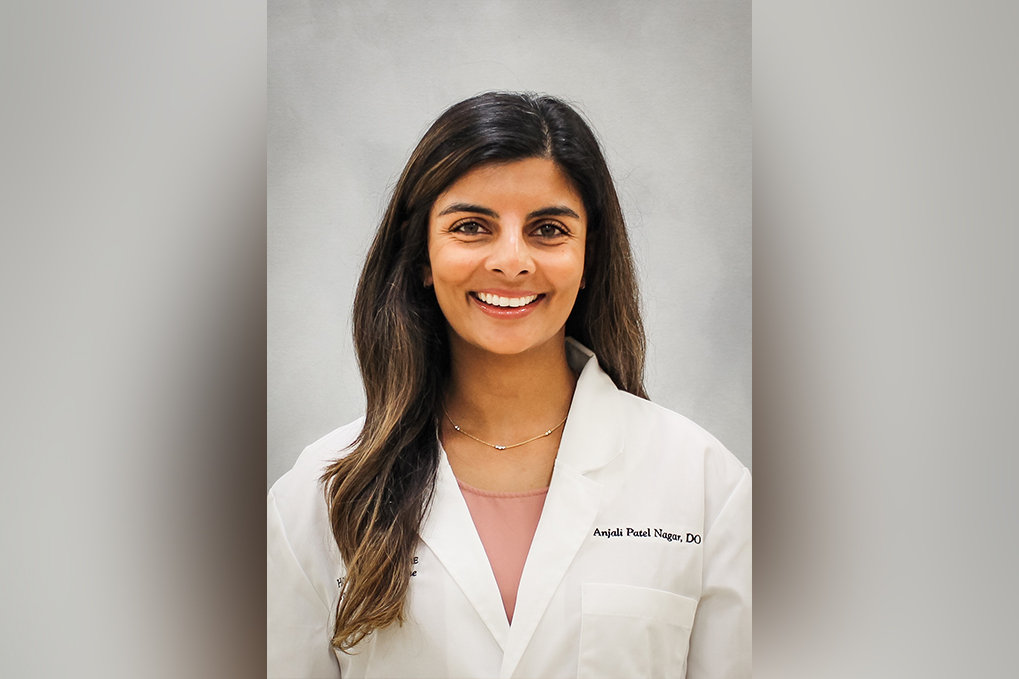
WARNER ROBINS – Women’s History Month would not be complete without recognizing women in our community breaking barriers, one of them being Houston Healthcare Family Medicine Residency Faculty and Osteopathic Director Dr. Anjali Patel Nagar.
Nagar was born and raised in Ann Arbor, Michigan. Diagnosed with Amniotic Band Syndrome, she was born with one hand, but her parents instilled in her not to let it hold her back or be viewed as a difficulty. She became active in Indian classical dancing, attended swim classes, joined the swim team and eventually was on the soccer team as well.
She enjoyed Indian classical dancing the most; she started at five years old and danced for 12 years. Eventually, she became certified in teaching Indian classical dancing around the time she graduated from high school. In her culture, this is considered a big deal, she said.
She attended Michigan State University for undergrad and medical school. In college, she was admitted to the direct medical scholar’s program and joined a competitive Indian dance team: the Michigan State Raas team, where they competed nationwide.
After receiving her undergraduate degree, Nagar went on to attend the Michigan State College of Osteopathic Medicine. Shortly after, she met her husband during a trip to Iceland and he was joining the Air Force during that time. He was stationed in Okinawa, Japan during her residency in Chicago.
Nagar and her husband moved to Oklahoma City after she graduated from her residency. There, she joined a federally health-qualified center called Variety Care, which she described as a major health organization that helps underserved patients who can’t afford insurance.
While working at Variety Care, Nagar re-learned Spanish to communicate more effectively with her patients. She also spearheaded efforts to bring Telehealth services to the center, allowing patients to receive care over the phone and online.
Eventually, her husband was stationed in Warner Robins, where she interviewed at Houston Healthcare.
“I felt right at home and I just felt like this is the place I need to be at,” she said.
Since she had the experience, Nagar applied for an outpatient clinic opportunity. Physician Recruiter Manager Michelle Colson told her about a faculty position available and asked her if she wanted to join.
Nagar was unsure at the time due to her recent graduate status and doubted her candidacy. However, she said she liked the challenge and decided to try it out.
“It’s been the best decision I’ve ever made. Working and teaching the residents at Houston Healthcare, working with them and just making sure we graduate great physicians that will take care of all of our friends and family in the community has been such a blessing,” she said.
Working in the outpatient side of care, she also works in residents’ didactics education and with marketing on social media. She also helps with incoming resident recruiting and serves as the Osteopathic Program Director.
Nagar shared that her parents and her doctor motivated her to pursue the medical field and family medicine. When she was born, her parents, who immigrated from India and Uganda, did not know she had one hand due to a lack of access to ultrasounds.
Confused by her condition, her parents met frequently with a primary care physician, who helped build confidence in them to take care of her. He then gave Nagar the confidence to be the person she is today.
As Nagar grew up, she worked with orthopedics to get a prosthetic hand, which helped her become more independent. She realized how impactful being a physician can be.
A lifelong learner, Nagar enjoys tackling the challenging aspects of the field. She said family medicine physicians must know everything about their patients, as they may not be able to afford specialists, such as a cardiologist, nephrologist, ENT or endocrinologist.
“Being a family physician, you need to know every single thing in order to take care of the patient who can’t afford or have access to more care, which is a lot of our patients in this community,” she said.
Nagar’s favorite part of the job is getting to know her patients, especially as a family physician. She described the physicians as the anchor for their patients, one of her favorite aspects of the job.
“We are the ones that they see first. I’m not only their physician but I’m also their social worker. I’m also their care manager, I’m also a friend. I’m also a family member to some of them. I might be the only person that they talk to,” she said.
Nagar likes walking into the room and truly knowing the patient, their history, their family and what they have gone through. She said one of her patients asked about occasionally drinking alcohol, not just as their doctor, but also as their friend.
“Just having that relationship with patients I think is what makes this job totally worth it,” she said.
Nagar shared that more females are becoming physicians and entering the medical field, but need to work more to be taken seriously. She praises these jobs and emphasizes their importance, but many believe she is either a medical assistant or nurse.
Nagar mentioned the assumption that the physician is an older male; many do not expect her when she walks into the room.
Nagar shared another instance of doubt placed on her. When she was in her third year of medical school, an anesthesiologist told her she could not intubate patients with one hand.
“I took that with me. If you tell me no, I use that as fire to prove people wrong,” she said.
Nagar went into the intubation lab and practiced on simulated patients, developing a technique with a glidescope. She told the anesthesiologist to give her one chance and she intubated 10 patients.
During her residency, amid the COVID-19 pandemic, many physicians were afraid of the virus, but Nagar said care is necessary, offering help whenever intubation was needed. She said many nurse practitioners called on her to do the procedure.
“I think that was one challenge that I can remember back and will never forget,” she said.
As Osteopathic Program Director, she is in charge of leading the Osteopathic Medicine residency program. For that, two hands were also needed.
In medical school, she and her professor created new techniques to treat patients with her left hand. Now, she is looking forward to teaching others.
“I used it as an adaptation to create new techniques that I want to actually present at a conference,” she said.
Nagar advises those born with physical limitations to not take it as a challenge but use it as a tool to help.
“God made us in a certain way and wanted us to prove to others that this is not a handicap. It’s something that we were given and it’s a gift. Use it in a way that’s going to help you and empower you to do whatever you want to do. Don’t let it stop you,” she said.
She welcomes anyone interested to talk with her, offering support to those going through similar challenges.
“It’s helpful to have a mentor, so I would love to help anyone that needs it,” she said.
Before you go...
Thanks for reading The Houston Home Journal — we hope this article added to your day.
For over 150 years, Houston Home Journal has been the newspaper of record for Perry, Warner Robins and Centerville. We're excited to expand our online news coverage, while maintaining our twice-weekly print newspaper.
If you like what you see, please consider becoming a member of The Houston Home Journal. We're all in this together, working for a better Warner Robins, Perry and Centerville, and we appreciate and need your support.
Please join the readers like you who help make community journalism possible by joining The Houston Home Journal. Thank you.
- Brieanna Smith, Houston Home Journal managing editor
Paid Posts
Author
Related Articles

Department of Justice reaches $3 million settlement with various Georgia Boards for alleged violations of the Servicemembers Civil Relief Act
The DOJ has reached a $3 million settlement with 42 Georgia Boards to resolve allegations that they did not recognize the Servicemembers Civil Relief Act.
Lori Johnson hoping to continue putting students and faculty first while serving on the Board of Education
Lori Johnson is running for reelection for Board of Education District 2 and hopes to continue her commitment to the students and faculty of the Houston County School District.

Warner Robins shooting leaves two injured, police say
Law enforcement also found and detained a suspect.