
Robins Air Force Base hosts biannual training to support the United States Secret Service
Robins Air Force Base recently completed the United States Secret Service Communications Management and Control Activity training class.
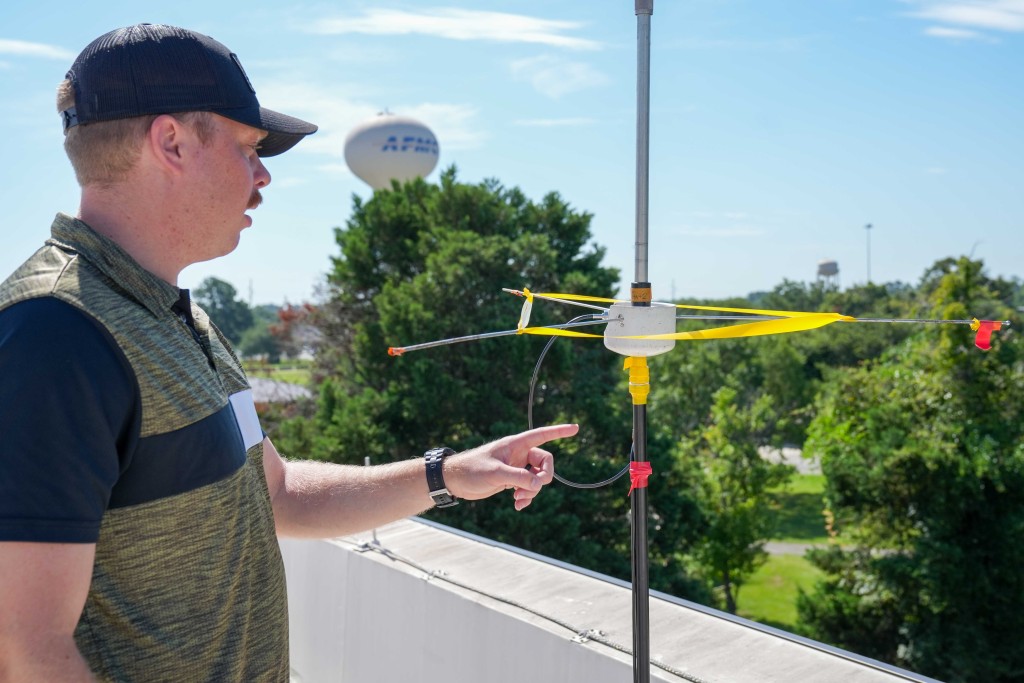
WARNER ROBINS – Robins Air Force Base recently completed its biannual United States Secret Service Communications Management and Control Activity training class, where personnel are trained to use Secret Service equipment.
Every two years, RAFB hosts the class, and attendees from all over the country are trained on how to use the Secret Service’s equipment.
Section Chief of the Protective Communication section at the 51st Combat Communication Squadron, Sergeant Gregory Parks, oversees the training on base. For two weeks, RAFB hosted the class, which consisted of Airmen, Sailors and Army soldiers.
According to Parks, 29 students were on base, where teams plan and determine required radio, video surveillance, and security systems. Of those students, there were 13 in the Army, two in the Navy, and 14 in the Air Force. Three Secret Service personnel were instructors and lead evaluators. Air Force personnel who have been involved in training in the past served as the cadre for their team.
Parks said teams trained on how to make Cat5 cables and RF cabling. Additional topics they were trained on included general familiarization and antenna setups.
He also shared that RAFB is the only Air Force staging area that supports the Secret Service through communication management and control activity. This is a division within the Defense Information System Agency. The agency’s purpose is to provide support to all events, excluding those related to presidential and vice presidential activities. Parks said they support all dignitaries, both foreign and domestic, who come to the United States for events such as the United Nations General Assembly or the Army’s 250th parade.
The Communications Management and Control Activity also supports the Secret Service’s protective mission, as the agency is tasked with protecting the President and Vice President, former Presidents and their families, and visiting heads of state.
The reason the training is held every two years is to ensure RAFB has enough personnel to support the program. Parks shared that this is due to recent rapid fluctuations in personnel, including Permanent Change of Station and constant relocation. He said holding it biannually keeps the number of people necessary to support Secret Service events.
However, Parks shared that there have been discussions about hosting the class less frequently than every two years, but as of now, they are still hosting it biannually to ensure they have the necessary personnel for their mission.
RAFB has been the only venue for the training for approximately eight years. This is due to the base being the largest permanent party staging area, meaning they have 16 personnel who are permanently assigned to support the Secret Service. Parks explained that the Army and Navy have fewer total numbers that support the service. He said the Air Force provided the bulk of the personnel for missions. This means they use RAFB’s facility to host the in-classroom portion of the training. Parks also shared that they have facilities around the base for the external field portion of the training.
Parks described the training as intense, especially with the Georgia heat. Students must learn how to set up radio antennas on rooftops. He shared that they chose multiple different kinds of rooftops to allow them to think critically on the spot and identify a good location for an antenna to get good reception. He said they are responsible for ensuring the antenna works, as local law enforcement depends on receiving information from it.
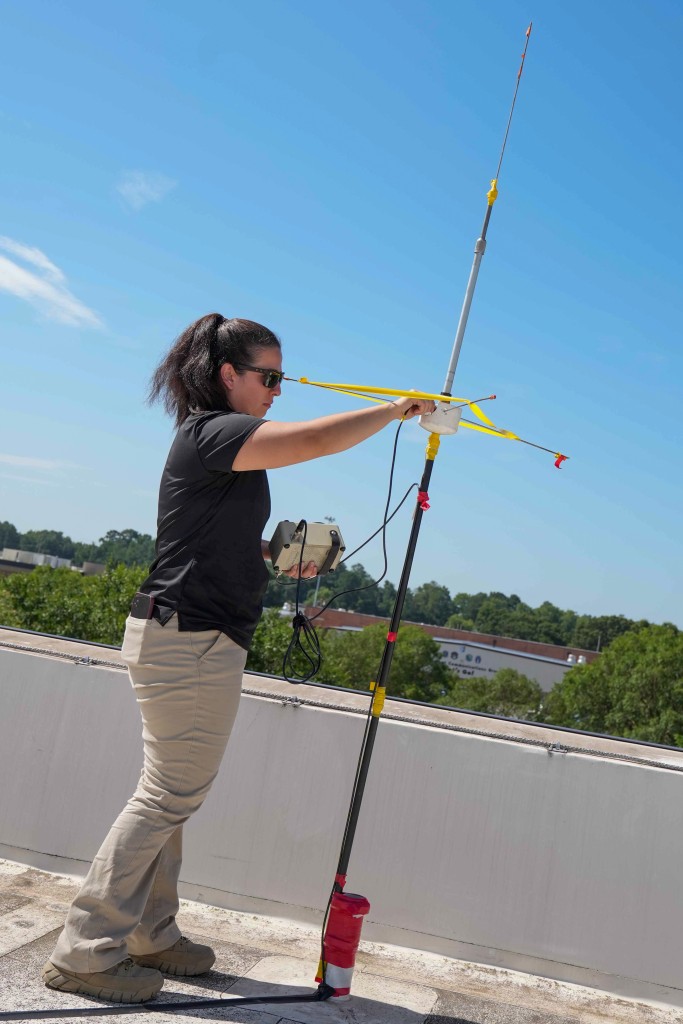
“We focus on other things like attention to detail, making sure that the areas that we set up with the radios look nice and neat because that way the Secret Service agents that are sitting there aren’t getting caught on cords or ripping their uniforms on zip ties, things like that,” he said.
Parks explained that the familiarization training they give them with the radios enables them to be able to set up a scan list and channels they want to prioritize so they can listen. He said when they are in the field with agents, they don’t have as much depth on radios as those who are already trained.
“Our responsibility is to be able to provide that support in case agents need assistance with their radios so that we can make sure the protection details are doing what they need to do,” he said.
Parks said he enjoys being part of this training class, and it is taxing to put it together. He shared that he had to start preparing the class early in January and February to ensure all the necessary facilities and locations were available for the class to take place.
Parks enjoys having people from different branches of the military work together in an interagency environment, where they utilize their diverse skills and perspectives to collaborate effectively. Parks said when the Department of Homeland Security is involved, it is no longer the Department of Defense. In the past, the Marines have also attended training because every branch has to provide support; otherwise, the Secret Service would not be able to conduct protection details.
“We’re vital and crucial to ensuring that they have the infrastructure and radio capabilities that they have for their mission,” he said.
If something changes suddenly, Parks hopes students have learned that listening is the most critical: no matter what they’re doing, as long as they listen to the instructions given, they follow them to the closest detail, pay attention to detail, make things look like they need to be and remain professional, they can always get the mission done for the Secret Service.
Before you go...
Thanks for reading The Houston Home Journal — we hope this article added to your day.
For over 150 years, Houston Home Journal has been the newspaper of record for Perry, Warner Robins and Centerville. We're excited to expand our online news coverage, while maintaining our twice-weekly print newspaper.
If you like what you see, please consider becoming a member of The Houston Home Journal. We're all in this together, working for a better Warner Robins, Perry and Centerville, and we appreciate and need your support.
Please join the readers like you who help make community journalism possible by joining The Houston Home Journal. Thank you.
- Brieanna Smith, Houston Home Journal managing editor
Paid Posts
Author

Related Articles
$5 million budget increase proposed for Warner Robins. Here’s what it’s going to.
Cities statewide are preparing spending plans for fiscal year 2027, including Warner Robins.
No rate increases, vape shop regulations proposed at Perry city council meeting. Here’s what we know
Perry City Council heard the proposed FY 2027 operating budget and a new set of regulations impacting future vape shops.

Water rates and sales tax to increase in Houston County. What to know about the FY2027 budget
Houston County’s FY27 budget has increased 13%, most notably connected to rises in the water fund and sales tax.