
How Robins AFB’s Comptroller Squadron turns resources into readiness
Money flows through the Comptroller Squadron and affects every Airman at RAFB and beyond.
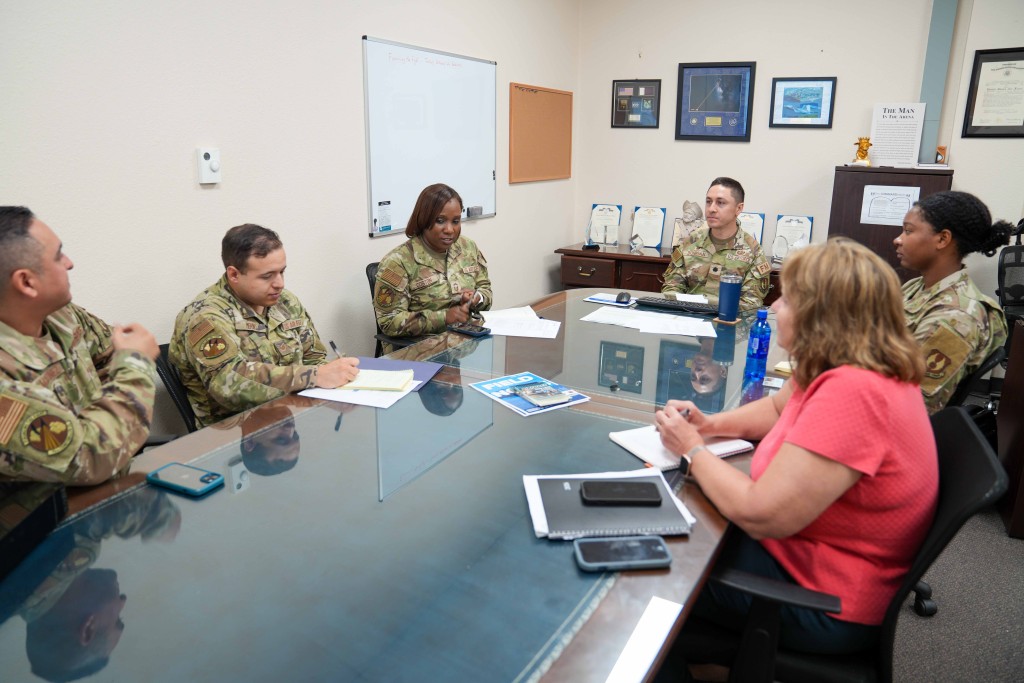
ROBINS AIR FORCE BASE — On most days at Robins Air Force Base, the work of the 78th Comptroller Squadron is nearly invisible. There are no roaring engines or aircraft taking off from their offices.
Yet, as Commander Lt. Col. Thomas Donigan likes to put it, nothing at Robins happens without their work.
“Our motto is ‘Financing the fight,’” he said. “Nothing happens without resources and money, and all those dollars come through our squadron.”
Behind that motto is a team of military and civilian professionals who quietly keep the installation running: paying people, funding operations, and making sure every taxpayer dollar is spent legally and effectively.
More than just paychecks
If you ask around the base what finance does, you’ll probably hear about travel vouchers. That’s exactly the misconception the comptroller squadron wants to change.
“The biggest misconception is that we just pay travel vouchers,” said Senior Master Sgt. Traci Coston, senior enlisted leader for the squadron. “Our job is multifaceted, and each and every one of our Airmen can serve in every role within our unit.”
At Robins, the comptroller squadron services 54 mission partners across the installation. Their responsibilities include:
- Military pay for approximately 7,000 military members
- Civilian pay for about 14,000 civilian employees
- Accounting and budgeting for the 78th Air Base Wing and its mission partners
- Audit support to ensure the base can account for how funds are used
The squadron’s reach touches almost everyone on the installation.
Turning resources into readiness
When the leadership at Robins talks about “readiness,” they’re usually referring to the ability to deploy Airmen, launch aircraft, sustain operations, and respond to crises. For the comptroller squadron, readiness is measured in another currency: dollars and decisions.
“We turn resources into readiness,” Coston said.
In practical terms, that means carefully aligning money with mission. On any given day, comptroller Airmen and civilians are deciphering commanders’ priorities and translating them into funded actions that are legal, timely, and properly documented.
“Day to day, it’s understanding commander’s priorities and taking those dollars and resources and actualizing those priorities,” Donigan said. “Behind the scenes, there’s dozens of different financial systems and laws and regulations that the members need to know and work through, and they do that with expertise.”
That expertise is what allows commanders to execute their mission sets with confidence that the financial foundation is solid.
When crisis hits, finance goes to work
The squadron’s impact becomes especially clear during emergencies and large-scale operations.
When Hurricane Helene hit Moody Air Force Base, Robins’ comptroller squadron formed a team and went down to support the response.
“All family members got evacuated and they were taken care of financially while they were away at their safe havens,” Coston said. “Making sure that the emergency responders had the finances to take care of themselves while they were needed on site.”
Beyond natural disasters, their work directly supports deployments and operations downrange. Donigan pointed to recent efforts resourcing security forces members supporting Operation Southern Spear and members deploying for Operation Enduring Freedom.
“Whether it’s overseas operations or readiness across the base, all those financial documents eventually flow through our office,” he said.
Safeguarding taxpayer dollars
The squadron’s responsibilities extend beyond internal readiness. They also help ensure accountability to Congress and the American public.
Part of that work runs through the accounting office, where every funding document is checked to ensure it meets three standards: proper purpose, time, and amount.
“Part of the certification of their funds through our accounting office is to ensure that the correct purpose, time, and amount is being used,” said Deputy Comptroller Annette Eustis. “The line of accounting lines up with the requirements on the funding document.”
The comptroller squadron also plays a key role in the Air Force-wide effort to achieve a “clean” financial audit.
“We are actually required by Congress to get this by the end of 2028,” Eustis said, referring to the Financial Improvement and Audit Remediation (FIAR) initiative. The goal, she explained, is to be able to follow every document “from the appropriation bill all the way down to the outlays from Treasury.”
That audit trail doesn’t cover just financial transactions; it also includes inventory, real property, and other assets. The point, she said, is to demonstrate that the Air Force is being a good steward of public funds.
An economic engine for Middle Georgia
The effects of the squadron’s work are also felt far beyond the gates of Robins.
Every other year, Robins publishes an economic impact analysis that highlights just how much money flows through the base into the local community. Donigan noted that the most recent report showed about $13.5 billion in funding associated with the installation.
While the comptroller squadron focuses on internal financial operations, its work helps ensure that those billions of dollars are properly managed: supporting jobs, businesses, and opportunities throughout Middle Georgia.
Building experts behind the numbers
The people who work in the comptroller squadron don’t just process numbers. They develop a wide range of skills over their careers.
Customer service is foundational, Coston said, but it’s only the beginning. Team members also build strong analytical, computer, and briefing skills, along with a deep understanding of how the Air Force operates and what commanders need to carry out their missions.
Professional growth is structured and deliberate. Eustis and Donigan described a variety of training and development opportunities, including:
- Formal financial management courses such as Basic, Primary, and Defense Financial Management Courses (BFMC, PFMC, DFMC)
- A joint-level Financial Management certification
- Annual Individual Development Plans (IDPs) reviewed by supervisors to align training with career goals
Robins also offers a unique environment where financial professionals can rotate through different organizations, including the Air Force Sustainment Center, Life Cycle Management Center, Reserve Command, and other partners.
When paychecks are on the line
If there is ever a moment when finance’s impact becomes personal, it’s when paychecks are at risk.
During a recent government shutdown, members across the Air Force faced uncertainty about their pay. At Robins, comptroller Airmen worked long hours with higher headquarters and the Secretary of the Air Force’s office to ensure that 77 newly accessed members, who were still being paid manually, didn’t miss a paycheck.
On the civilian side, once funding resumed, the team was able to get about 97% of employees paid within three days, rather than waiting for the next scheduled pay period, even as they battled old, unreliable systems and weeks of backlogged time records.
Those efforts underscored what Coston and Eustis already knew well: behind every Airman and civilian is a family depending on that income.
Why it matters
Inside the military, the work of the comptroller squadron might first be felt as something simple: pay arriving on time, travel being reimbursed, or supplies getting funded. But step back, and a larger picture comes into focus: a team that turns resources into readiness, supports crisis response and combat operations, and safeguards billions of taxpayer dollars.
Outside the military, the squadron’s work is a quiet assurance that the public’s money is being handled responsibly, with the systems and documentation in place to prove it.
“Every single day they do the wartime mission,” Donigan said. “Our Airmen are in the fight behind the scenes, making sure those [forces] are ready and able to execute.”
At Robins Air Force Base, the fight may be financed from an office, but its impact is felt wherever Airmen are called to serve.
Before you go...
Thanks for reading The Houston Home Journal — we hope this article added to your day.
For over 150 years, Houston Home Journal has been the newspaper of record for Perry, Warner Robins and Centerville. We're excited to expand our online news coverage, while maintaining our twice-weekly print newspaper.
If you like what you see, please consider becoming a member of The Houston Home Journal. We're all in this together, working for a better Warner Robins, Perry and Centerville, and we appreciate and need your support.
Please join the readers like you who help make community journalism possible by joining The Houston Home Journal. Thank you.
- Brieanna Smith, Houston Home Journal managing editor
Paid Posts
Author

Related Articles

Is Middle Georgia at risk of cyclospora? Department of Public Health provides insight into national outbreak
A cyclospora outbreak has been identified in five states, but cases in Georgia have not been linked to the outbreak.
Houston County has a new wellness check program that prompts the 911 center to take action
Houston County is getting an update to its wellness check system that will make it easier for vulnerable residents to get help when needed.

Houston Home Journal — July 25, 2026
Data Center Moratorium; Cyclospora in Georgia; This is Robins