
Robins’ 5th CBCSS Combat Readiness School teaches, releases ‘multi-capable’ airmen
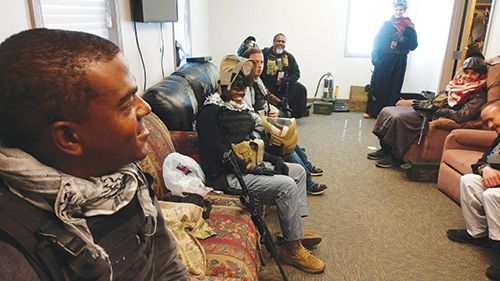
Robins Air Force Base features the 5th Combat Communication Support Squadron Combat Readiness School (CRS) that equips airmen with the pre-deployment knowledge necessary to survive dangerous situations in hostile territories around the globe.
Staff Sgt. Tyler Grim, Team Leader One with the CRS, said he is in charge of running a group of instructors for the school, while those instructors go on to lead squads of students during the learning process.
“Our purpose is to provide various training for our airmen before they’re deploying to a hostile environment and to accomplish the Air Force goal of creating multi-capable airmen,” Grim said.
He said airmen that come through the school are trained in many different specialties involved throughout military service.
“Traditionally, if we have a radio troop, they’re an expert on the radios — and if we have a vehicles troop, they’re an expert, on say, their forklift” Grim said. “And the new goal of creating multi-capable airmen — which is our mission — is to make it so our radio troop can hop in a forklift and unload an aircraft, and so that our radio troop can also walk over and complete medical duties as needed on the battlefield.”
While the CRS offers quite a few different courses, their main one is called “Field Craft Hostile.”
This two-week course is often a pre-requisite for airmen before they deploy to certain combat zones, Grim said.
A typical course can include topics such as land navigation, weapons, small unit tactics, building clearance, radios and communications, convoys, vehicles, dismounted patrols and an Air Force Level One Hand-To-Hand Combat Certification, among other things.
The CRS typically consists of 12 to 13 instructional staff, and that is divided into three different instructor teams.
Four individuals make up the CRS Support Staff, including: a registrar to handle administration duties, signing up airmen for the school and communicating with the Logistics Division; two Leadership Master Sergeants handle “big-picture” operations; and one civilian director, who critiques the course curriculum, focuses on instructional principles and assists the instructors in progressing in their teaching skills.
He said their Field Craft Hostile Course saw 400-500 students last year, while all the school’s courses combined saw around 2,000.
“Last year was our first year that we stepped up our game and became a mobile training team,” Grim said. “So over last summer, we were brought up by a base in South Dakota, and we actually stepped off — and we provided a week-long exercise to their entire base; so that week alone we trained about 1,000 members.”
The specific certifications featured at the Robins CRS are provided at only two other locations, including a base in Guam and Fort Dix in New Jersey.
Volunteers play a critical role in some exercises carried out by the CRS, Grim said.
“In order to carry out our training, we train up the students on what they need to do — but then we give them as close to real-life practical evaluations as we can,” he said. “So, in order to do that, we need volunteers to come out and play as opposition forces.
“So, we’ll get volunteers basewide and even from the local community to come out, and we’ll dress them up in certain garb and we’ll kind of give them scenarios: ‘This is how we want you to act; this is what we want ou to do.’ And then they’ll go out and engage with our students so the students can have as close to real-life action as we can give them.”
Grim said he was previously stationed in Alaska before coming to Robins.
“I came into this support squadron to be a vehicle control officer and working the logistics side of house,” Grim said. “And then when I was at Leadership School, I met one of the instructors here, and we became buddies — and he thought I would be a good fit for the schoolhouse.”
From there, Grim interviewed for the position and was hired on with the CRS.
Sometimes the CRS will develop curriculums specific to certain units that come to the school for their respective training.
“We do create specific training exercises for the different units based on what they’re looking to ramp up on,” Grim said.
The CRS brings in students from around the around the globe, but Grim said many come from Europe, the South Pacific and all over the United States.
HHJ News
Before you go...
Thanks for reading The Houston Home Journal — we hope this article added to your day.
For over 150 years, Houston Home Journal has been the newspaper of record for Perry, Warner Robins and Centerville. We're excited to expand our online news coverage, while maintaining our twice-weekly print newspaper.
If you like what you see, please consider becoming a member of The Houston Home Journal. We're all in this together, working for a better Warner Robins, Perry and Centerville, and we appreciate and need your support.
Please join the readers like you who help make community journalism possible by joining The Houston Home Journal. Thank you.
- Brieanna Smith, Houston Home Journal managing editor
Paid Posts
Related Articles
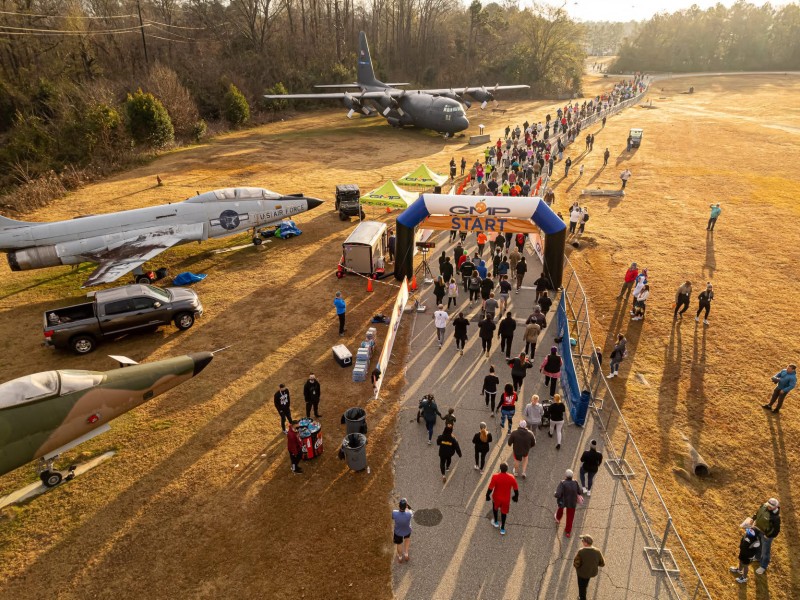
Museum of Aviation’s Run for Aviation race and fundraiser reach huge milestone
In this month’s This is Robins, we highlighted the Museum of Aviation’s Run for Aviation race and fundraiser as it reaches its 30th annual this weekend.
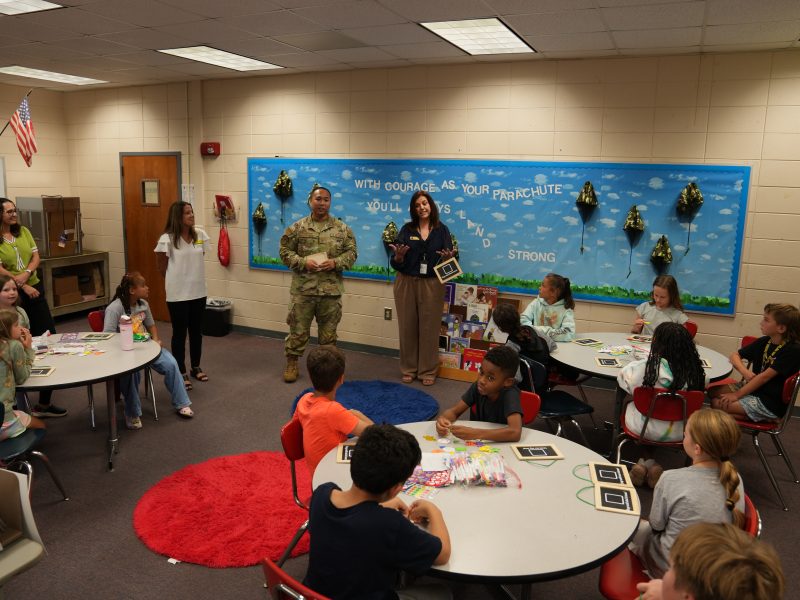
Robins’ School Liaison Program: setting students up for success
Ensuring children receive a quality education is vital for families, especially those in the military. At Robins Air Force Base, a special program serves as a beacon of hope, helping families navigate the challenges they face.
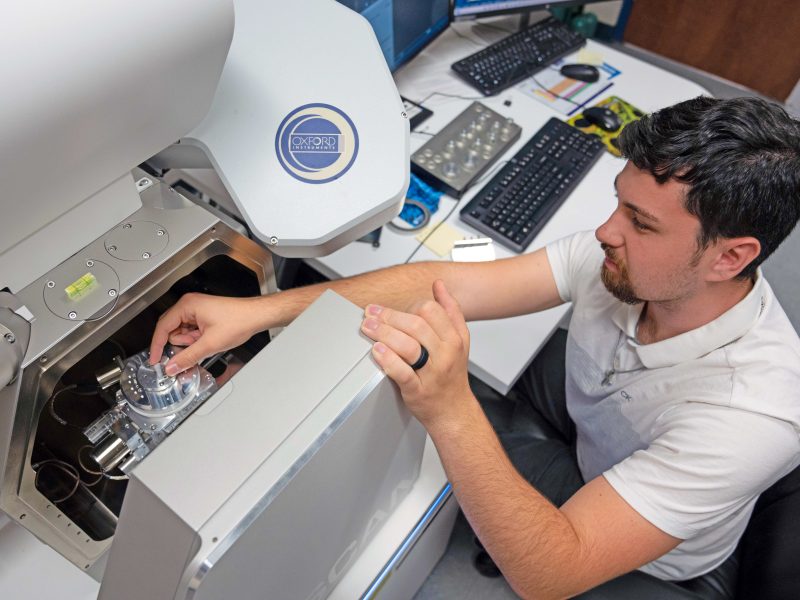
Testing… testing…: Robins First Article Test Lab ensures parts make the grade
From concept to construction, aircraft parts undergo a thorough process to ensure they are ready for the fight, including a stop at the First Article Test Lab.