Protecting the rights of the accused
Dear Readers, 50 years ago, the United States Supreme Court issued two landmark decisions in the same term designed to protect the rights of the accused. In Gideon v. Wainwright, the Supreme Court ordered that every person accused of a crime is entitled to state-paid court appointed attorney. And, in Brady v. Maryland, the Supreme Court also held that the State must turn over all exculpatory evidence to a defendant. These are truly cornerstones of our criminal justice system, which remains true only so long as this foundation remains strong.
It seems that we might be forgetting the lessons of our past. In Florida, the legislature is frustrated with the delays in having death sentences carried out. Florida is actually second to Texas (far and away the national leader) in the number of executions since 1979, when the death penalty was reinstated. Florida is actually the only state where a jury recommendation for death need only be by a simple majority (7-5). Currently, 405 people are on death row in Florida (five of whom are women). According to proponents of a new law, the “Timely Justice Act,” 155 of them have been there for more than 20 years and 10 more than 35 years, and the average wait is 13 years.
The good part of this new law is that it is designed to set some standards for attorneys representing those subject to capital punishment. But, it also requires the Florida Supreme Court to annually report to the legislature the number of appeals pending more than three years. And, it sets forth hard deadlines and rules to, as proponents see it, prevent frivolous and time-wasting appeals.
Unfortunately, what the “Timely Justice Act” fails to recognize is that Florida’s capital justice system has an ugly side. Since 1973, according to the Death Penalty Information Center, guess which state leads the nation in exonerations of those wrongfully sentenced to death? Florida, by a pretty wide margin (Illinois is a fairly close second, but Texas has had half as many as Florida in third place).
In Brooklyn, the exact reason why it is so dangerous to cut-off appeal routes or curtail rights is in stark relief. Det. Louis Scarcella had his hands in 50 murder case from the 1980s and 1990s. He relied upon a crack-addled prostitute, who almost inconceivably supposedly witnessed the same man kill two different people. Just based on her testimony, Robert Hill was convicted of murder (he was acquitted of one of the murders). Later she testified in the trial of his stepbrothers. One of them died in prison and the other spent 21 years in prison.
As a result of doubts about his tactics, the Brooklyn District Attorney’s Office “Conviction Integrity Unit” is reviewing 50 murder cases run by Det. Scarcella.
Recently, the United States Supreme Court let stand a Louisiana decision that it was constitutional for an accused to rot in jail for five years without an attorney. That is correct, Jonathan Boyer spent five years in jail, staring at a possible death penalty conviction, without an attorney because the state had run out of money to pay his attorneys. Seven years after being arrested, he was convicted and sentenced to life in prison.
The State of Louisiana said this was permissible because this was just a “funding crisis” and, therefore, not the State’s fault.
Finally, we await the results of a court of inquiry in Georgetown, Texas. A former prosecutor, (frighteningly, he is now a judge), Ken Anderson, may be charged with a crime for withholding evidence that resulted in Michael Morton being wrongfully convicted of bludgeoning his wife to death in 1987. Anderson hid a bloody bandana from Morton’s defense attorneys. It turns out that, after finally being tested 25 years later, DNA not only cleared him, but another man (who was in prison for subsequently killing another woman) was the Morton’s wife’s killer.
Half-a-century ago, the Supreme Court added to the protections of the potentially innocent. Today, we seem fixated on taking these rights away for expediency. Lessons from the past suggest this is unwise.
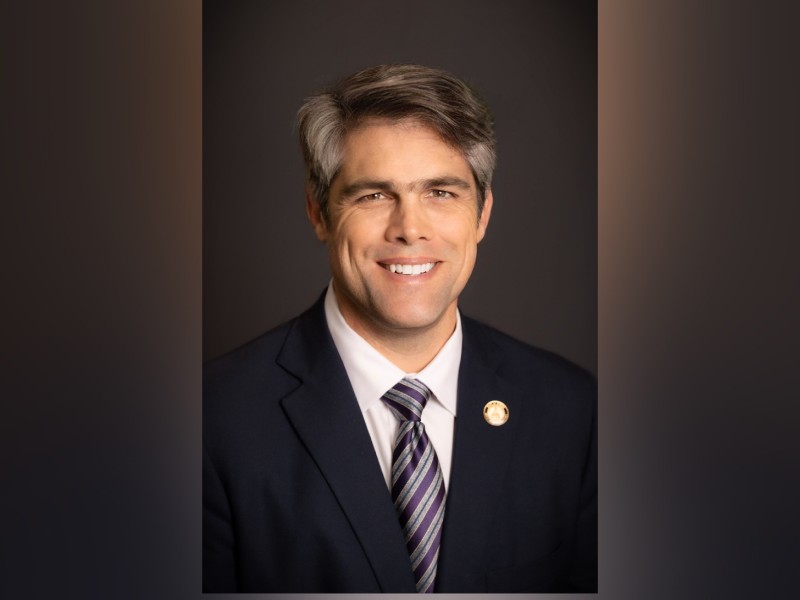
Local attorney Jim Rockefeller owns the Rockefeller Law Center and is a former Houston Co. Chief Assistant District Attorney, and a former Miami Prosecutor. Visit www.rockefellerlawcenter.com to submit confidential legal questions, and to review former articles and Frequently Asked Questions.
HHJ News
Before you go...
Thanks for reading The Houston Home Journal — we hope this article added to your day.
For over 150 years, Houston Home Journal has been the newspaper of record for Perry, Warner Robins and Centerville. We're excited to expand our online news coverage, while maintaining our twice-weekly print newspaper.
If you like what you see, please consider becoming a member of The Houston Home Journal. We're all in this together, working for a better Warner Robins, Perry and Centerville, and we appreciate and need your support.
Please join the readers like you who help make community journalism possible by joining The Houston Home Journal. Thank you.
- Brieanna Smith, Houston Home Journal managing editor