Privilege explained
Dear Readers,
There is a battle in Washington over a claim of Executive Privilege asserted by Donald Trump, and those advising him at the end of his Administration. This is being raised even though he is not a sitting president and the actual president, Joe Biden, is waiving it as to January 6 investigation by Congress.
You might wonder about the legal ramifications of a “privilege,” particularly since Steve Bannon, for one, is charged with a crime for evading his subpoena. There is a myriad of them, though, not all are recognized by every jurisdiction; often using one means there is something to hide.
The oldest privilege is the attorney-client, which states back to the 17th Century. It was originally a privilege belonging to the attorney, but in current jurisprudence (and for some time) only the client can waive it. In fact, there is an evidentiary question on how far a conservator (for someone mentally incompetent) or an estate administrator (for the deceased) can go in waiving it.
Fundamentally, this privilege shields communications between an attorney and a client and it is sacrosanct. An attorney has to be very, very careful about what they say or do that is not explicitly authorized by the client or former client, even in defense of allegations of misconduct by the attorney.
The next oldest is the priest-penitent privilege which has its roots in the 19th Century here and in England. New York was the first state to recognize it in 1813. It used to have a cramped view of what constituted a “priest.” Today, just about any spiritual guidance and conversation are protected.
In many religions, (like the Catholic Church) the confessional and spiritual guidance given, only the penitent has the right to waive it. The Catholic Church recognizes the seal of the confessional as between God and the pertinent, a higher obligation than could be imposed by man’s law. Try to get a Catholic priest to say what was said in confessional and the Vatican will defend his silence.
The modern companion to the attorney-client privilege is something called the “work-product privilege.” It was first recognized by the United States Supreme Court in 1947 in a case called Hickman v. Taylor. This privilege still belongs to the attorney rather than a client. It protects the attorney’s “work product,” things like case notes, interview statements, trial strategy … etc., from disclosure to someone else (not the client).
A patient-doctor or medical privilege, and a sister privilege for mental health, allow a patient to shield from outside scrutiny communications with a doctor/therapist; the more recent statute (HIPAA) protects diagnoses and treatment. This is also a fairly modern development, whether by statute or case law.
In Georgia, the mental health privilege is very, very strong. For example, in child custody cases, it is not entirely clear who holds the privilege. If a judge orders therapy or evaluation, it is a “slam dunk” that the communications are NOT privileged. Otherwise, the primary custodian (the final decision maker on medical issues) certainly can waive the privilege on behalf of the child. What is not entirely clear, is what rights a non-custodial parent holds. While the intent of the privilege is to protect the privacy of the child/patient, it would seem that some type of judicial override should be permitted.
The mental health privilege has had some tragic and ironic twists and can be raised by the therapist, even as a shield from prosecution. Remember, there is no such privilege in Federal Court, so if you can bring your lawsuit there, no worries. But, if your case is in a Georgia Court, a psychiatrist does not need to disclose the chart of a deceased patient, who allegedly committed suicide because of physician malpractice!
What is also not clear is if a “negative inference” can be drawn by a fact-finder for blocking production. A “negative inference” is when you assert a privilege, there is an assumption you are hiding something. Some privileges you can’t do this, namely when you are asserting the 5th Amendment against self-incrimination in a criminal context. Others you can, like the 5th Amendment asserted in a civil context.
What all these privileges above have is a “crime exception.” The privilege stops at the point of someone, including the patient, being harmed. Hence, therapists are “mandated reporters” and have to report possible child abuse to the authorities. Lawyers are officers of the court, which means they cannot allow themselves to harbor knowledge of ongoing criminal activity. This why an attorney cannot question a client in court, if there is actual knowledge of perjury. It is also why the government is free to listen to Michael Cohen’s sinful recordings, while acting as a lawyer for Donald Trump, as they are about criminal activity.
This brings us back to the Executive Privilege. Its antecedents stretch back to the first presidency, when George Washington refused to provide requested documents to the House (but, gave them to the Senate), Thomas Jefferson sought to have a subpoena to testify in Aaron Burr’s trial squashed, and Andrew Jackson’s refusal to provide documentation of his statements made about the Second Bank of the United States. During the McCarthy Era, both Presidents Truman and Eisenhower refused to let Congress go rummaging in the Executive Branch.
The privilege crystalized when Richard Nixon was trying to keep Congress from learning everything about Watergate. Chief Justice Warren Burger ended up defining the privilege as a fairly narrow one, encompassing White House officials, and protecting national security interests. Hence, it could only be asserted by a sitting president, and no ex-president (until now) has claimed it. And, if it even still exists for Donald Trump, it certainly should not shield an outside advisor like Steve Bannon from cooperating with Congress’ investigation into January 6.
There are hot passions on either side of the Congressional inquiry into January 6. Yet, even if you believe it is all about partisan politics, the power of Congress to issue subpoenas must be respected. In the end, a claim of privilege to frustrate its efforts is both curious and harmful to Congress’ power as a co-equal seat of power. This is a dangerous theoretical expansion of a narrow privilege.
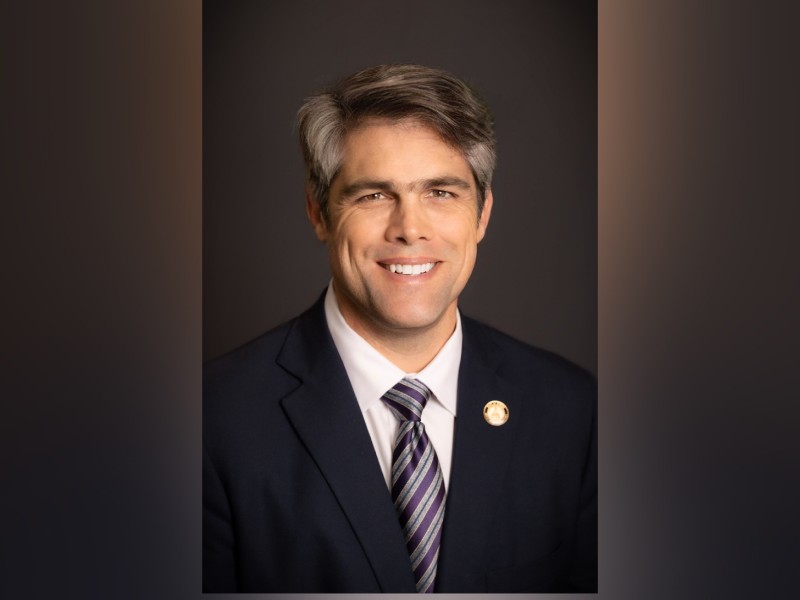
Warner Robins attorney Jim Rockefeller is the former Chief Assistant District Attorney for Houston County, and a former Assistant State Attorney in Miami. Owner of Rockefeller Law Center, Jim has been in private practice since 2000. E-mail your comments or confidential legal questions to jim@rockefellerlawcenter.com.
HHJ News
Before you go...
Thanks for reading The Houston Home Journal — we hope this article added to your day.
For over 150 years, Houston Home Journal has been the newspaper of record for Perry, Warner Robins and Centerville. We're excited to expand our online news coverage, while maintaining our twice-weekly print newspaper.
If you like what you see, please consider becoming a member of The Houston Home Journal. We're all in this together, working for a better Warner Robins, Perry and Centerville, and we appreciate and need your support.
Please join the readers like you who help make community journalism possible by joining The Houston Home Journal. Thank you.
- Brieanna Smith, Houston Home Journal managing editor
Paid Posts
Author