Privacy of criminal investigations
It is astounding how many legal issues have percolated during this year’s presidential election. From voting rights, to complaints of “rigged” elections, to hacked emails and allegations of sexual assault, we have had it all.
Looming over all of this has been Hillary Clinton’s ridiculously stupid decision to use a private email server to conduct official state department business. We thought all of this had been put to bed in July, when the FBI director, James Comey (a Republican, by the way), roasted Secretary Clinton for her server, yet cleared her of any crimes.
My understanding is that Director Comey’s key determination is that there was no evidence Secretary Clinton intentionally passed classified information on to individuals lacking security clearance.
Some have talked about how David Petraeus had been punished far worse for doing much less. As you may recall, he had shared documents marked secret and top secret with his biographer/mistress Paula Broadwell. When this was discovered, he was forced to resign as CIA director and convicted of a misdemeanor. That is criminal intent.
In contrast, Director Comey described Secretary Clinton’s actions as “reckless.” And, it was. Under certain circumstances, recklessness can substitute for “criminal intent,” but generally speaking, you need to have evidence of “criminal intent” to charge someone.
For example, murder requires specific intent to kill, where criminally negligent homicide only requires the commission of a reckless act causing death.
According to what we learned in July, the FBI could not find any evidence of intent to violate our security laws. Clearly, Secretary Clinton was concerned that her emails at the state department would eventually be used against her by her political opponents. Still, her paranoia (even if prescient) did not justify her stupidity. But, this also did not mean she committed a crime (according to the FBI), as she did not share state secrets with unauthorized persons.
Which brings us to Director Comey’s recent letter to Congress about Huma Abedin’s (Clinton aide) emails found on her husband’s (Anthony Weiner) laptop. These emails were discovered during an unrelated investigation into Weiner’s allegedly improper emails sent to a minor. Once they were found (which may have been several weeks ago), a warrant was needed to access Ms. Abedin’s emails. Supposedly, the FBI has just obtained that warrant and can now legally look at her emails, which may take a while.
The words Secretary Clinton and emails in the same sentence just sound bad — and the media goes crazy.
Yet, there is nothing explicitly illegal with Ms. Abedin having emails on a laptop, even one shared with her creepy husband. The issue, again, is intentionally sharing state secret emails with someone lacking a security clearance.
Right now, we know almost nothing; we know there are some emails – that’s it. We do not know if they were sent or received through Secretary Clinton’s infamous Westchester home-server; we do not know if they were sent to or received from Secretary Clinton; we do not if any of them involve any level of security. We just don’t know.
This creates a problem for Director Comey. Criminal investigations are never supposed to be conducted in public. You deliberate, gather facts, assess facts and make a decision if a crime has occurred; all conducted privately and outside prying eyes. Leaks from investigations happen. There are always law enforcement agents with “axes to grind,” willing to talk to the media, and the media greedily seeks out those malcontents with loose lips.
Supposedly, Director Comey was trying to get out in front of some dissension in his ranks by releasing the letter to Congress . . .11 days before an election. There are Department of Justice rules designed to maintain the sanctity of an investigation, requiring that secrecy be maintained. There are many reasons to work in private. One, you don’t want potential targets to know anything you know. Knowledge is leverage. Another, you do not want to sully a person’s reputation just because there is an investigation.
This violation of DOJ professional rules, the aura of the unknown in the middle of a presidential vote (people are already voting in many states), just feels wrong. These emails may be the “smoking gun” Secretary Clinton’s enemies have been searching for during the past four years. That is not the point. The point is that criminal investigations have the ability to reformulate an election. We lived through a Hoover-FBI bent on meddling in politics. Not one of our bright and shining moments.
Director Comey needs to fix this, not because he is a partisan hack, but because criminal investigations are revealed at the end, not at the beginning, and he has violated that professional rule by sending Congress a letter.
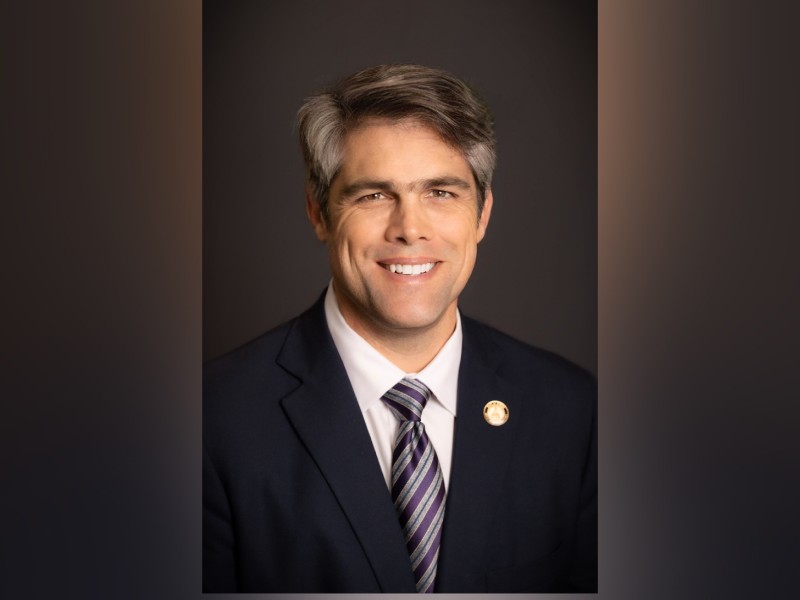
Warner Robins attorney Jim Rockefeller is the former chief assistant district attorney for Houston County and a former assistant state attorney in Miami. Owner of Rockefeller Law Center, he has been in private practice since 2000.
Email your comments or confidential legal questions to ajr@rockefellerlawcenter.com.
HHJ News
Before you go...
Thanks for reading The Houston Home Journal — we hope this article added to your day.
For over 150 years, Houston Home Journal has been the newspaper of record for Perry, Warner Robins and Centerville. We're excited to expand our online news coverage, while maintaining our twice-weekly print newspaper.
If you like what you see, please consider becoming a member of The Houston Home Journal. We're all in this together, working for a better Warner Robins, Perry and Centerville, and we appreciate and need your support.
Please join the readers like you who help make community journalism possible by joining The Houston Home Journal. Thank you.
- Brieanna Smith, Houston Home Journal managing editor