Presidential Immunity
Dear Readers, Last week, legal nerds were treated to oral arguments from the D.C. Circuit Court of Appeals on Donald Trump’s claim of Presidential Immunity. Whether a lawyer or just an interested layperson, it was fascinating.
Oral appellate arguments are seemingly “pro forma” – until they aren’t. The issues are well-briefed. They might include”amicus briefs” (friend of the court) from interested non-parties on matters of great importance, prompting an examination of alternative terrain. While this seems like reading a play (knowing the outcome) and watching it performed, oral arguments have utility, particularly as they portend a result from the bench’s questioning of litigators.
Indeed, an amicus brief muses about the Circuit Court’s jurisdiction to hear the appeal. District Court Tonya Chutkan’s lower court opinion held Mr. Trump was not clothed in immunity from criminal prosecution in the January 6th federal criminal case. Any case can have an error considered at the end of the case. In criminal cases, a criminal defendant has a minimal right to an “interlocutory appeal,” halting the trial procedures. You need clear statutory or Constitutional authority to stop a criminal case in its tracks for an appellate heat-check of a trial court decision.
The amicus brief argues that Mr. Trump has no right to appeal at this stage of the proceedings. The three judges hearing the case questioned the parties about this, even if their briefs were silent on the issue. In response, each appellate attorney wanted the Circuit Court to reach the so-called “merits” of the appeal.
Appellate courts often seek the most straightforward path to dispense with an appeal. This narrows the ability of future litigants to plow through a jurisdictional exception. Look for some discussion of lack of jurisdiction to make its way into the ultimate judgment, probably to limit anyone from doing this in the future.
The judges honed in on the appellate issues through their questions. This caused Mr. Trump’s immunity argument to come more into focus. In a nutshell, his attorney (John Sauer) argued that a President is immune from criminal conduct for acts committed as a President unless (and until) an impeachment results in a Senate conviction.
This was ironic, as during the January 6th Impeachment trial, one of Mr. Trump’s attorneys (Bruce Castor) argued that the reason the Senate should acquit his client was he was on his way out the door in a week post-presidency; he could be prosecuted for any crimes. He said, “After he’s out of office, you go and arrest him … the DOJ knows what to do with those people.”
This put Mr. Sauer in a legal box. In response to questioning, he tried to explain how he could maintain an immunity stance when Mr. Trump’s Impeachment Team said it was inapposite. He demurred as he deflected and stuck with his impeachment argument.
This itself was problematic. Article I, Section 3 (Senate Powers), Clause 7 of the Constitution is the “Impeachment Judgment” clause. It essentially limits the Senate’s ability to punish any federal official to removal and future bar from office; this is not unique to a President. This limiting language is not a “Get out of Jail Free Card” for criminal acts, just on the Senate.
As Judge Florence Pan phrased it, “Can a President be criminal prosecuted for ordering Seal Team Six to murder a political opponent?” Mr. Sauer refused to give a “Yes” or “No” answer, even when pressed for one. He only repeated his idea that you needed an impeachment. This led Judge Pan to observe that, since he was conceding a former President could be prosecuted, the ultimate legal issue is whether or not Mr. Sauer correctly interpreted the Impeachment Judgment clause.
Mr. Sauer cannot be correct. A President could commit all kinds of mischief, murder of political opponents, bribery, or public disclosure of national secrets, never be impeached, and be immunized from justice. Claims of a slippery slope of abuse of prosecutorial function are debunked by the jury system (Grand Jury and Petit or trial Jury) and judicial review.
We can expect a speedy result denying the claim of immunity. The Supreme Court might (or might not) decline to accept an appeal – it takes four justices to accept. You should listen to the argument yourself and understand what is being proposed – a President is King, and we cannot bring them to justice without a successful impeachment. This is not the American Experiment.
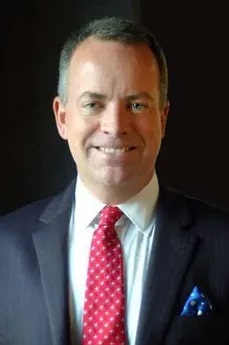
Warner Robins attorney Jim Rockefeller is the former Chief Assistant District Attorney for Houston County and a former Assistant State Attorney in Miami. Owner of Rockefeller Law Center, Jim has been in private practice since 2000. E-mail your comments or confidential legal questions to ajr@rockefellerlawcenter.com.
HHJ News
Before you go...
Thanks for reading The Houston Home Journal — we hope this article added to your day.
For over 150 years, Houston Home Journal has been the newspaper of record for Perry, Warner Robins and Centerville. We're excited to expand our online news coverage, while maintaining our twice-weekly print newspaper.
If you like what you see, please consider becoming a member of The Houston Home Journal. We're all in this together, working for a better Warner Robins, Perry and Centerville, and we appreciate and need your support.
Please join the readers like you who help make community journalism possible by joining The Houston Home Journal. Thank you.
- Brieanna Smith, Houston Home Journal managing editor
Paid Posts
Author