
Plasma companies studying potential treatment for COVID-19
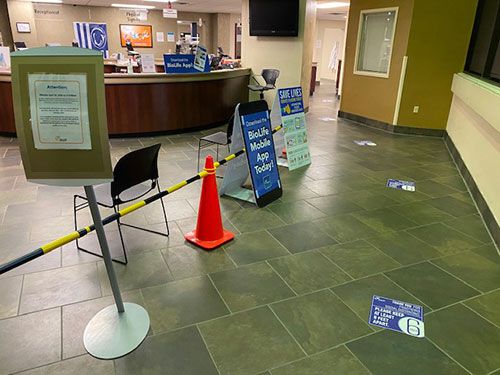
World-leading plasma companies, including Takeda Pharmaceutical Company, of which BioLife is a part, have formed the CoVIg-19 Plasma Alliance to develop a potential plasma-derived therapy for treating COVID-19, collaborating across key aspects such as plasma collection, clinical trial development and product manufacturing. The alliance will begin immediately with the investigational development of an anti-SARS-CoV-2 polyclonal H-IG, to be known as CoVIg-19, with the potential to treat high-risk COVID-19 patients and potentially prevent pulmonary disease in health care workers at increased risk of infection.
According to a definition provided by BioLife Plasma Services, plasma is the liquid portion of the blood that carries blood components throughout the body. Many of these blood components are missing for people who suffer from a range of rare, chronic and life-threatening diseases. As a nationwide pandemic named COVID-19 began to spread across the United States and beyond, the need for a new kind of hero called “convalescent plasma donors” has been on the rise.
On behalf of BioLife Plasma Services in Warner Robins, Cara Scharf of W20, a leading agency for analytics-driven, digital-first health care marketing and communications based in New York, provided information on just how crucial convalescent plasma donations are in these unprecedented times.
According to the Georgia Department of Public Health, as of noonday on Monday, April 27, there were a reported 215 confirmed cases of COVID-19 in Houston County. Of those confirmed cases, 13 have died. Of the remaining 198, some are still being treated, while others have fully recovered from the disease. Because the recovered individuals have developed immunity—or antibodies—against the pathogen that caused the disease, BioLife is encouraging them to donate. These individuals make up the convalescent plasma donors that are desired.
The immunity is the basis for developing a therapy that, when administered to high-risk individuals, may help their immune systems respond to the infection and increase their chance of recovery. Healthy individuals who have not been exposed to COVID-19 do not have this immunity.
The information provided by Scharf goes on to explain the two core approaches to using convalescent plasma to fight COVID-19—each serving a different need. The more direct of the two is the approach of gathering convalescent plasma donations and making transfusions available to patients. A different approach is to use the plasma in larger scale to make a potential treatment called a polyclonal hyperimmune globulin (H-Ig), which concentrates the antibodies into a medicine through the manufacturing process.
This results in a more consistent and reliable concentration of antibodies, meaning it can be delivered in lower volumes, and therefore would likely take less time to administer to patients than plasma itself. H-Ig also has a longer shelf life, which permits easier storage and shipping for any outbreaks in the future. Both these attributes also make H-Ig relatively easy for hospitals to manage and administer this life-saving medicine to patients.
While the general population of COVID-19 survivors may not be aware, the donation of their plasma could lead to a potential treatment for COVID-19. When plasma is donated, the donors become the essential first step in a journey to develop a potential treatment. Even though no one can predict the results of clinical trials, a seven-step quick overview of the intended plan was provided by Scarf.
Step 1: Plasma Donation – Patients who have recovered from COVID-19 donate their plasma, which contains antibodies that could help the immune system fight the new coronavirus. The proteins found in plasma are the most important ingredients in making potential treatment.
Step 2: Potential Treatment Made – Plasma collected from individual patients is pooled with plasma collected from other COVID-19 recovered plasma donors. It is then processed and concentrated into a liquid that contains a high level of antibodies. This plasma-derived therapy then needs to be tested to determine if it is safe and effective.
Step 3: Clinical Trials Begin – Assuming sufficient plasma is collected; the potential treatment in clinical trials and testing may start as early as June. The studies will look at whether the therapy could treat patients who are at risk for serious complications from COVID-19.
Step 4: Trial Results Analyzed – Scientists will collect and carefully analyze all the data from the clinical trials to determine if the potential treatment is both safe and effective.
Step 5: Potential Treatment Approved – If the U.S. Food and Drug Administration (FDA) determines that the potential treatment is both safe and effective, it could be approved for specific uses in the United States related to treating patients who are at risk for serious complications from COVID-19.
Step 6: Manufacturing – Assuming the potential receives approval from the FDA, the Alliance intends to manufacture the therapy on a larger scale and distribute it to hospitals and other health care settings and health care providers.
Step 7: Potential Treatment Available – The treatment will then be ready for use. The timing for this depends on may factors, but if the work of the Alliance is successful, the potential treatment could be available this year, making it one of the earliest potential treatments.
BioLife Plasma Services is part of Takeda, a global values-based, R&D–driven pharmaceutical company that produces and delivers Plasma-derived therapies among other specialty medicines. For more information, please visit PPTAGlobal.org or DonatingPlasma.org.
HHJ News
Before you go...
Thanks for reading The Houston Home Journal — we hope this article added to your day.
For over 150 years, Houston Home Journal has been the newspaper of record for Perry, Warner Robins and Centerville. We're excited to expand our online news coverage, while maintaining our twice-weekly print newspaper.
If you like what you see, please consider becoming a member of The Houston Home Journal. We're all in this together, working for a better Warner Robins, Perry and Centerville, and we appreciate and need your support.
Please join the readers like you who help make community journalism possible by joining The Houston Home Journal. Thank you.
- Brieanna Smith, Houston Home Journal managing editor
Paid Posts
Related Articles
Lori Johnson hoping to continue putting students and faculty first while serving on the Board of Education
Lori Johnson is running for reelection for Board of Education District 2 and hopes to continue her commitment to the students and faculty of the Houston County School District.

Warner Robins shooting leaves two injured, police say
Law enforcement also found and detained a suspect.
Anya Turpin promoting Perry, reflects on purpose, parenthood | Remarkable Women
Turpin, the executive director of Visit Perry, brings several qualities to the role that align with her experience as a woman.