
Jody Town lives on through the memories of those who called it home
Former baseball stars and residents share what the historic Jody Town neighborhood in Warner Robins meant to them.
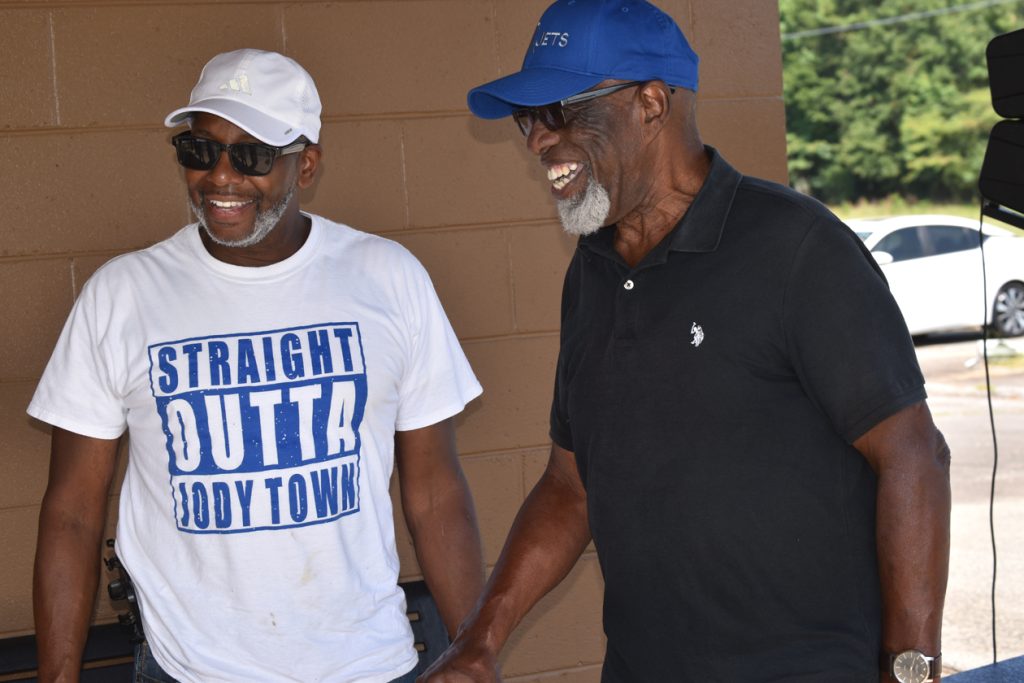
Willie Frank Scott – a baseball legacy
If not for the state of a nation. Not a good thing. Meaning: The difficulty for a Black man to break into the major leagues in the late 40s and 50s. If not for that, and to some extent the scouts turning a blind eye, you might have seen Willie Frank Scott’s name in lights. In the “show,” the big leagues, the majors.
Case in point. Scott once faced off against a major leaguer in rehab, Gene Rattler of the Cincinnati Reds. Scott hit three home runs off of him.
Scott was born and raised in Jody Town. Jody Town had a ballfield, a makeshift, “where they got some wood, some two by fours, and somebody built a grandstand. Basically, just a sandlot,” he said, but one that became “my stomping ground. That’s where I was raised up at,” he said.
At 15 he played in the adult league, for the Warner Robins Jets. (Today, he is the oldest living member of the team.) “I worked when I got older, having a job and all,” he said, “but I would come to this ballpark when I got off work and practice baseball.
“And this ballpark was the only entertainment you had when you worked all week and we had a ballgame Saturday and Sunday.”
He pitched and played first base. His record as a pitcher? He’s a little foggy on that, but he does remember one time striking out 18 in one game. Home runs? He doesn’t remember how many he hit but he knows he hit “a lot”. And they weren’t just playing against scrubs, Scott said. “We were playing guys that played in the major league. And they got out and formed a league because they were trying to make it back (to the major leagues).
“And we were playing those kinds of teams. I played against guys that just got released by the Dodgers, Mets, Minnesota, and they were trying to get back.
“Matter of fact, we had a guy come down here from the Mets and we played a team called the Indianapolis Clowns. And the Indianapolis Clowns were supposed to be real good, like the Globetrotters. They were going to clown around. Well, they couldn’t clown around that night, because we beat them pretty good.”
Scott went on that the land they played on was “privately owned.” A little complaining, however, and a bit of negotiating, got them some lights. From there on, he said they played throughout the week, and then again on the weekend. They also added uniforms and bought their own bus for away games. “Professional but not professional,” he said.
Scott got his first look from a scout when he was 15. He was from the San Francisco Giants. “I was sitting there in the grandstands,” he said. “He had seen me out there and working out and all and he said, ‘Can you run?’ I said, ‘I run as fast as I can.’ But at the time Willie Mays was in his prime. They were looking for another Willie Mays.” (Note: Others who did get a shot locally were Cal Daniels, Eddie Solomon and Danny Cox.)
A second hope came when he was 22. He went to a tryout at a Mets camp.
“Man, I would hit the line drive off the wall. And they come running over there, but once they found out how old I was, they all dropped their head.”
Another promised he would put him in the draft, but he said he heard nothing back.
“So really, I was before my time and behind my time. And that’s how I missed out. But I played with some guys that played in the American League and they asked me how long I had been out. I said I never played for the American League and they couldn’t believe it.”
Scott still made his mark on the world. He worked at Boeing for a while. He went into the Air Force in ’77, then went to work on Robins Air Force Base, which is where he retired, as a sheet metal mechanic for the C-130 and C-130 gunship.
Still, Jody Town and its ballfield will always be his field of dreams.
“I just loved this community. And they would come out and watch and support us. It was a great place to live. And to play.”
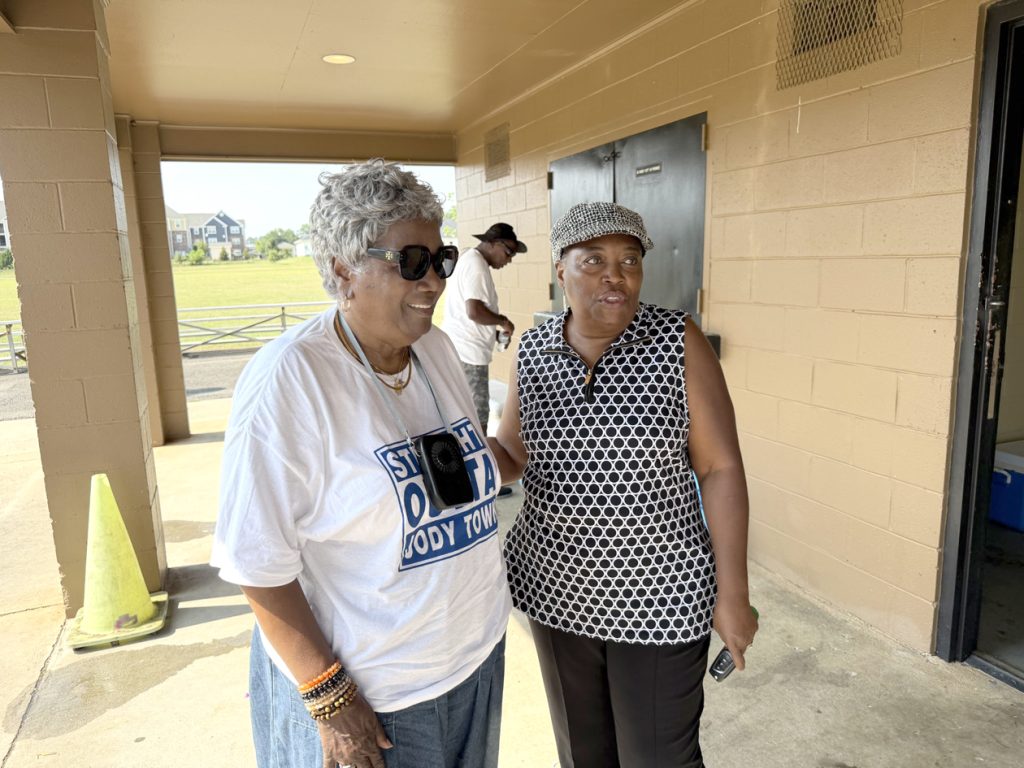
Juanita Edmonds-Duke – Memories of Jody Town
Juanita Edmonds-Duke points her weathered and wrinkled finger northeast – about 200 yards in that direction from where’s she’s sitting at Memorial Park. In her mind it’s the finger of a child. A youngster with enough memories of growing up in Jody Town to fill an ocean.
“My house used to be right down beyond those bushes right there,” she says. “And that street was named after my father, Simon Street.” She begins to see and catalog the rest in her mind while calling them out. “Next to it was Garman Street and you had Washington (Street). That’s First Street,” she says, pointing to the one that runs parallel with the railroad tracks. And Second (Street) and Third (Street) and I think Leroy (Street) was up there.” Amanda Street, Lindwood Street and West Street allude her at the moment, but as she says, “I’m 82 and I’m not going to remember it all.
“And we had everything that you needed. We had our own stores. We had all the contractors. We had a barbershop. We had our churches.
“Now, First Baptist Church is the only thing that I remember that’s left. But it was not on Garman Street at that time. I think it was on Leroy Street or one of those streets up there.
“Anyway, we had this park.” Memorial, but it belonged to the residents of Jody Town. Long before the Warner Robins Recreation Department came along, it was built by them, maintained by them, enjoyed by them – to include a ballfield and watermelon patches and blueberry and blackberry bushes and plum trees and “Tigers Cage”, a very small room they used to “cram” in and dance.
“You know, everything. It was a very close-knit community. One of those where you could, if you didn’t have bread, you could go to your neighbor’s and ask for bread. That kind of neighborhood where everybody knew everyone else.
“It was a community and we lost it.”
Lost it, she goes on to an “urban renewal project” in the early 70s. Led by former Mayor Homer J. Walker and behind a federal grant of $1,004,000 dollars – the total allocated for it was $1,250,000, according to an old newspaper article – they “just took it down,” she says. “They moved the people. They moved people over to the states (streets with state names, which still exist today). And most of the people on Simon and Garman, most of them owned their own land.
“So, they sold it. I mean, they bought it. They bought our property and gave us an opportunity to buy somewhere else. In other words, they broke up Jody Town. That’s all they did, was broke up Jody Town, and did what they wanted to do with it.”
And what they wanted to do with it, she goes on, was nothing. “Look at it,” she says. “You can see for yourself. They didn’t do much of nothing with it.”
On the other hand, she goes on, “It’s amazing what has happened to the people who grew up down there.”
Case in point: Her. She says she was one of the first involved in integration in Warner Robins in high school. (Her father was in the military. He served in World War I or II, she says. Her mother taught in a number of schools in and out of the county.) After graduation she went on to get a degree at Fort Valley State University, then worked for the Extension Office “for a while”, until settling in as a contracting officer for Robins Air Force Base. She spent 30 years in that role – retiring six or seven years ago, she says – providing what was needed for building, recreation, “all those kinds of things.”
She raised four “beautiful” children. Three of them went into the military. Two became officers – one of which retired as a colonel and the other a major.
Another example of the Jody Town legacy, she gives: Her uncle. He, William Davis, was a Tuskegee Airman. “You can even find his story at the Museum of Aviation.
“This just shows you how important it is for everybody to come back (for the reunion). This is an unbelievable group of folks. I mean, their legacies are something else (to behold).”
Before you go...
Thanks for reading The Houston Home Journal — we hope this article added to your day.
For over 150 years, Houston Home Journal has been the newspaper of record for Perry, Warner Robins and Centerville. We're excited to expand our online news coverage, while maintaining our twice-weekly print newspaper.
If you like what you see, please consider becoming a member of The Houston Home Journal. We're all in this together, working for a better Warner Robins, Perry and Centerville, and we appreciate and need your support.
Please join the readers like you who help make community journalism possible by joining The Houston Home Journal. Thank you.
- Brieanna Smith, Houston Home Journal managing editor
Paid Posts
Author

Related Articles
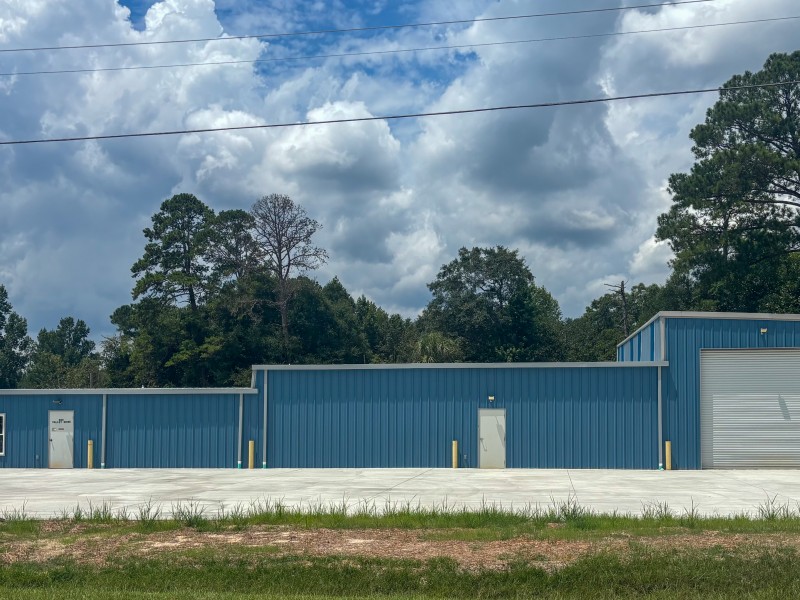
Rescue Ranch hopes to bring affordable spay and neuter clinic to Perry
A popular spay and neuter clinic is expanding to Perry. Officials hope for a fall 2026 opening.
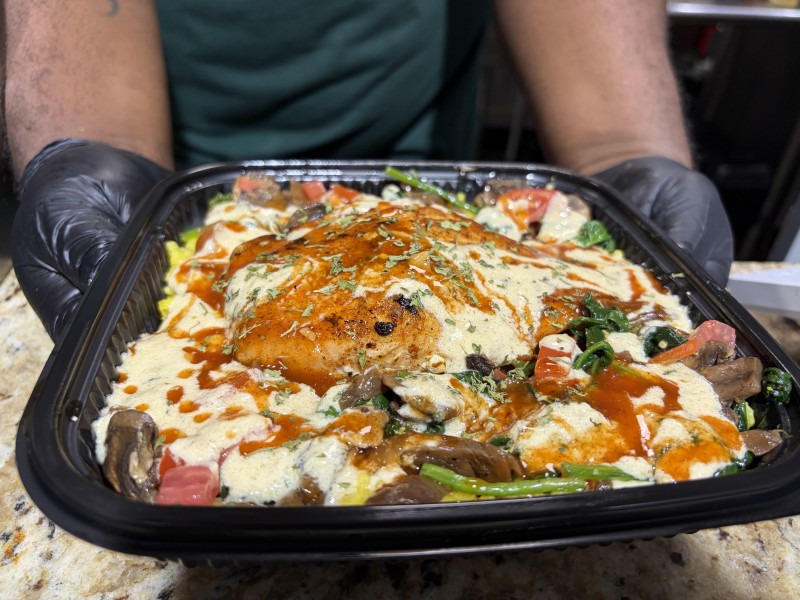
What’s the buzz about a new takeout spot in Warner Robins?
Taste Good Restaurant kicks it up a notch with smash burgers and specialty dishes like this “salmon exquisite.”
Warner Robins Jody Town celebrates 5-year anniversary of historical marker
Several generations gathered over the weekend to honor the historic Jody Town community in Warner Robins.