
Local doctors answer COVID-19 questions
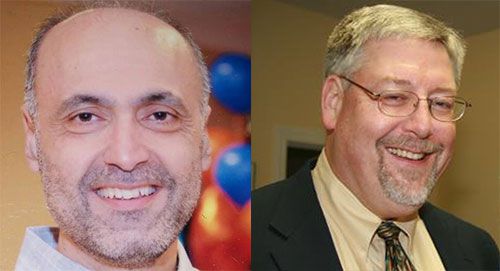
Former Warner Robins mayor and council member Chuck Shaheen and International City Medical Consultants, hosted a teleconference with local physicians, Dr. Maher Abdulla and Dr. Scott Edenfield.
The community had an opportunity to dial in and ask questions, and according to Shaheen, over 200 people dialed in.
“I am very grateful to Dr. Abdulla and Dr. Edenfield for taking time to help inform our community during this pandemic,” Shaheen said. “They, along with the other doctors, nurses, health care workers, first responders, police officers, firefighters and more, are truly on the frontline. Those here in Houston County have always provided the best care to our community, and we hope this teleconference will help inform the community better.”
Both doctors began with an opening statement. Edenfield said that it seems most people think it’s not that serious, but Edenfield said that’s not true; that it, in fact, is a “bad, bad situation.”
“It’s (COVID-19) hit worse in other areas than what we have experienced here in Warner Robins, but I will say that we have gotten plenty of illness here. Some people are downplaying the social isolation, social distancing, but that’s exactly what we need to be doing right now. You have to keep away from others, minimize the asymptomatic transmission of the virus from person to person. About 25% of infected patients/people are asymptomatic walking around spreading COVID-19 to others around them. Luckily, 80% of people, if infected with COVID-19, will have mild to moderate symptoms, and most will not require hospitalization. The other 20% will be sicker, with shortness of breath, severe cough, and a number of those will require hospitalization.”
Edenfield went on to say that about 5% of people will get extremely ill from COVID-19, and the latest number of those 5%, 1.4% will die. Edenfield also said that if one were placed on a ventilator, most would not survive. He said there is only a 20% chance of surviving from a ventilator.
“Why it hits some harder than others, we really don’t know,” Edenfield said. “However, people with
diabetes, heart disease, autoimmune disease, and high blood pressure seem to be more susceptible and less able to combat the virus. You hear them say, ‘flatten the curve.’ What they mean is we’re going to see a spike of cases, and the goal is to lower it. If we don’t, this illness hits all at one time and will overwhelm our ability to take care of the sick; it’s going to overwhelm the hospitals and their ability to ventilate people. If we spread that out, we can take care of the people better.”
Abdulla began by stating that four out of five patients with COVID-19 have gotten it from somebody or someone who did not know they were sick, and that is where the danger resides.
“We don’t have mass testing for this virus in the United States,” Abdulla said. “All effort is being put toward having more tests available. But once we know the denominator, which is how many people are carrying this virus, we will materialize the expense of the disease. I know that people who complain or show symptoms or signs—or both—of this infection, overwhelm ICUs, med stops, emergency rooms and even doctors’ offices. Everyday we discover that we did not know anything about this infection. There is a lot to be known, a lot to be studied, and a lot to be changed in terms of our knowledge of this virus. It is very sickening, it does kill without a doubt, and it is much more serious than influenza. A vaccine is needed to stop this virus from killing more people. We need time to survive in it, so that we can develop a herd immunity, which is immunity humans develop when a lot of them get this infection; this way, if another turn or cycle hits, the impact on the population will be a lot less intense and fatal. Hopefully, we will do well, and this infection will get under control in a timely fashion.”
The first question was, “Does anyone know for sure how COVID-19 was caused or got started?” Both Abdulla and Edenfield said no one really knows at this time, but many theories are out there.
“Recently the president announced support for the use of Hydroxychloroquine to treat COVID-19, is this proven to be effective treatment?”
Edenfield said there are no long-term double-blinded studies to prove the efficiency of the medication.
“This is kind of the emergency situation, and when that happens, some of the things we normally do, we push to the side. A lot of these are case reports, but they are doing more specific trials for the drugs; initial data might not be double-blinded,” Edenfield said. “The data, however, is strong enough to where it is standard procedure, if someone is admitted to our hospital (Houston Medical Center) who is highly suspected of COVID-19 positive, we automatically start on those drugs.”
One person said they were scheduled for an eye operation in April, but it may be scheduled for May, and wanted to know if the pandemic will remain the same.
“I think we are going to have a problem, in my opinion, until the hot weather settles in well,” Abdulla said. “We are sure that the coronavirus is heat sensitive in general. We are not sure if this COVID-19 will subside in the summer itself. We hope we should have passed the peak and a lot fewer cases are reported, and less fatalities as well. Maybe in August and September we will get a good break. I hope so, but I believe in the fall we will have another increase in numbers all over again. We hope before too long to have the vaccine, but it takes almost 18 months to produce a successful vaccine.”
Majority of those who called in were inquiring if getting a flu shot or wearing cloth masks were good ways to practice prevention. Both Abdulla and Edenfield agree that getting a flu shot is never a bad idea, but it has nothing to do with preventing COVID-19. In regard to the masks, Edenfield said that the only mask that really helps is the N-95 surgical mask, which is in short supply.
“The homemade cloth masks may give one a false sense of security,” Edenfield said. “The cloth may block some of the airborne particles, but not all.”
“The best practice of prevention is to practice good hand washing and not touching your face,” Abdulla said. “We know for sure, the virus does survive in droplets, on surfaces like steel and plastic, and has a shorter life on cardboards. You have to wash your hands as much as you can, learn how to do it, use soap and wash for at least 20 seconds. Also adhere to keeping the six-foot distance, and if you do not have to leave your home, please stay at home. You do not have to go shopping because you are bored. It’s a gloomy situation; try to restrict yourself by keeping activities indoors until the clouds are clear. Prevention is key.”
“I don’t think we know when things will be back to normal,” Edenfield said in closing. “Officials are looking for that sweet spot in regard to when it is safe to open things back up and not expect a huge spike in cases. I have no idea of when that will be, and to be even more honest I would have to criticize our governor. I don’t know what he was thinking; he probably had some information that we don’t have access to. I think he missed it from a medical point of view. He should have put down a shelter-in-place a long time before he did. His inaction probably will lengthen our pain. I just don’t agree. He should have done something quicker than he did. The governor in Ohio is the gold standard for all governors, he jumped right on it when there were only a few cases of the disease, but it has been limited because of his action.
If you missed the teleconference from Tuesday, Shaheen said the recording of it is available online at https://www.youtube.com/watch?v=Uavn33ai8tw&feature=youtu.be&fbclid=IwAR2jsDCcQgL9x4ZdSS-V7f6FfeE08rr1tfjwtj0ApiWi0wFKu5t4J8VN8lo.
HHJ News
Before you go...
Thanks for reading The Houston Home Journal — we hope this article added to your day.
For over 150 years, Houston Home Journal has been the newspaper of record for Perry, Warner Robins and Centerville. We're excited to expand our online news coverage, while maintaining our twice-weekly print newspaper.
If you like what you see, please consider becoming a member of The Houston Home Journal. We're all in this together, working for a better Warner Robins, Perry and Centerville, and we appreciate and need your support.
Please join the readers like you who help make community journalism possible by joining The Houston Home Journal. Thank you.
- Brieanna Smith, Houston Home Journal managing editor
Paid Posts
Related Articles

Hawkinsville man sentenced for trafficking methamphetamine in Houston County
Draymond Brooks of Hawkinsville was sentenced to 30 years with the first 15 years to be served in prison for trafficking methamphetamine in Houston County. Brooks also has to pay a $200,000 fine and will be banished from the county.

Young entrepreneur set to open Brass Tap in Warner Robins this summer: ‘A community investment’
A 24-year-old entrepreneur is venturing into a career in business by bringing a new community spot to his hometown.
Centerville Councilwoman Velicia Lowe believes empowered women empower women
Centerville Councilwoman Velicia Lowe shared what womanhood means to her, and how she remains a leader in her community.