
Lasers prompt Robins AFB eye protection team to ensure pilots are safe
The Laser Eye Protection team consists of two bases united in one mission: protecting pilots from lasers.
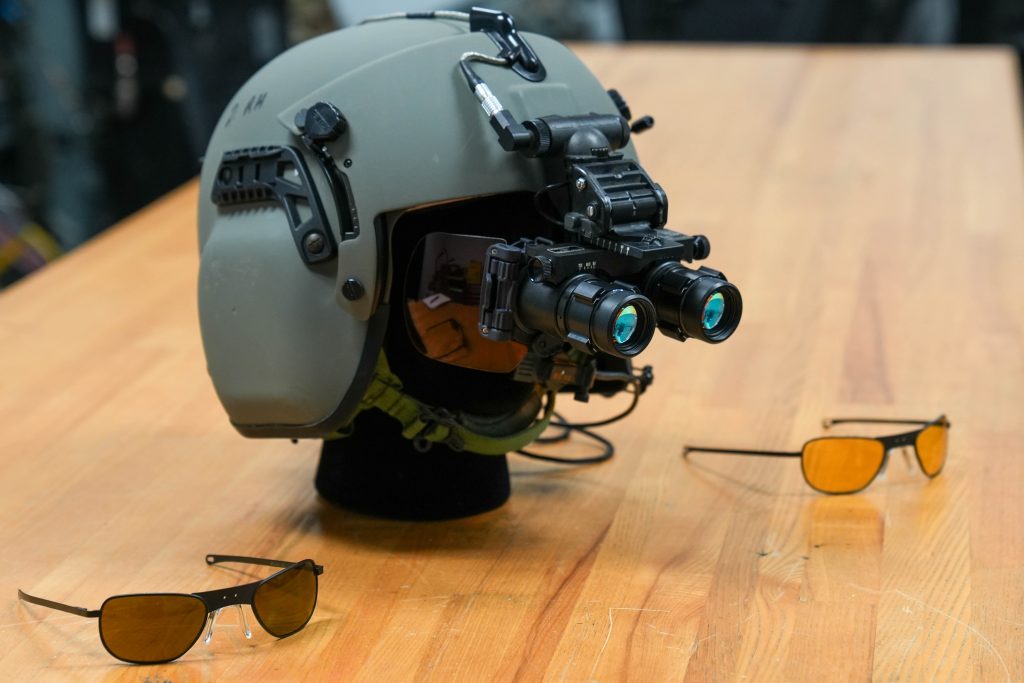
ROBINS AIR FORCE BASE — Pointing a laser at an aircraft is a federal crime that can lead to five years in prison and a $250,000 fine. Yet it still happens often at Georgia airports.
There have been 92 reported laser attacks on aircraft in Georgia so far in 2026, according to the Federal Aviation Administration. Most incidents happen around the Atlanta, Augusta and Savannah areas. In total, the agency has reported nearly 2,800 laser strikes nationwide so far just this year.
High-powered lasers can be debilitating. That’s why Robins Air Force Base partnered with Wright-Patterson Air Force Base to protect pilots.
Protective eyewear for crews operating Air Force aircraft worldwide was upgraded in 2023 by the Air Force Life Cycle Management Center. The AFLCMC says it aims to send over 42,000 devices to units by 2027, and over 45,000 by 2029.
Wright-Patterson and Robins are distributing a kit that includes glasses for daytime and nighttime, and visors designed to fit under night vision goggles.
The devices provide both laser and ballistic protection.
Kevin Frost, an AFLCMC mechanical engineer, and Eric Miltner, an operations specialist, say the new devices filter more wavelengths of light while increasing instrument visibility.
“The new technology helps address any upcoming things outside of what’s already a threat to help protect from that,” Frost said.
The duo works for Robins as an integrated product team. Wright-Patterson is responsible for device acquisition and testing, while Robins is responsible for program sustainment.
Frost ensures devices comply with safety standards. Miltner’s pride and joy is the technical manual he developed, which outlines how the devices must be used and maintained.
“We work hand in hand. We deal with all equipment already in the field. [Wright-Patterson] goes out to get new technology and new equipment. They do a lot of the initial groundwork to get the equipment working with contractors, and we’re here to make sure the program is carried out and it has everything it needs,” Frost said.
Frost has always been interested in engineering, and Miltner started working in technical ordering. For Miltner, working directly with customers is fulfilling, and Frost is happy to provide an essential service.
“It’s neat to work on multiple different pieces of equipment, especially equipment that goes to our air crew and protects them and ultimately protects all of us. It’s rewarding to be able to provide the service to the people that are protecting us, and knowing that it works and helps them do their job,” Frost said.
Miltner says a common misconception is that eye protection for lasers must be worn all the time.
“Ground-based lasers lose their effectiveness when the planes are at altitude,” Miltner said, “When they’re taking off and landing is when you’re supposed to wear [laser eye protection] because that’s where the threat of getting lasered is highest.”
Takeoff and landing are the highest risk scenarios, according to Frost and Miltner, so providing protection during those times is paramount for mission readiness.
“Flying at altitude is equally as important, but [take off and landing] are the instances where things can really go wrong,” Frost said. “Having that added layer of protection helps keep the air crew safe, keep everyone in the air and get them back home.”
Overall, both Frost and Milner say the technology, the partnership and their work is key.
“We’re protecting pilots’ eyes, so they can do their mission,” Miltner said.
Before you go...
Thanks for reading The Houston Home Journal — we hope this article added to your day.
For over 150 years, Houston Home Journal has been the newspaper of record for Perry, Warner Robins and Centerville. We're excited to expand our online news coverage, while maintaining our twice-weekly print newspaper.
If you like what you see, please consider becoming a member of The Houston Home Journal. We're all in this together, working for a better Warner Robins, Perry and Centerville, and we appreciate and need your support.
Please join the readers like you who help make community journalism possible by joining The Houston Home Journal. Thank you.
- Brieanna Smith, Houston Home Journal managing editor
Paid Posts
Author

Related Articles

Houston Home Journal — July 4, 2026
Happy Independence Day from the HHJ!
Elko man charged with animal cruelty after neglecting dogs. Here’s how the law protects animals in Houston County
Houston County Animal Control share what happens after a person is charged with animal cruelty, and how they aim to keep residents informed.

AI literacy, drone technology among other skills taught at Academy of Innovation beginning this fall
Here’s an inside look at Houston County School District’s Academy of Innovation starting this upcoming school year.