
Houston County Animal Services shares steps homeowners can take to manage wildlife
Houston County Animal Services share ways homeowners can deal with wildlife after a rise in animal nuisance calls.
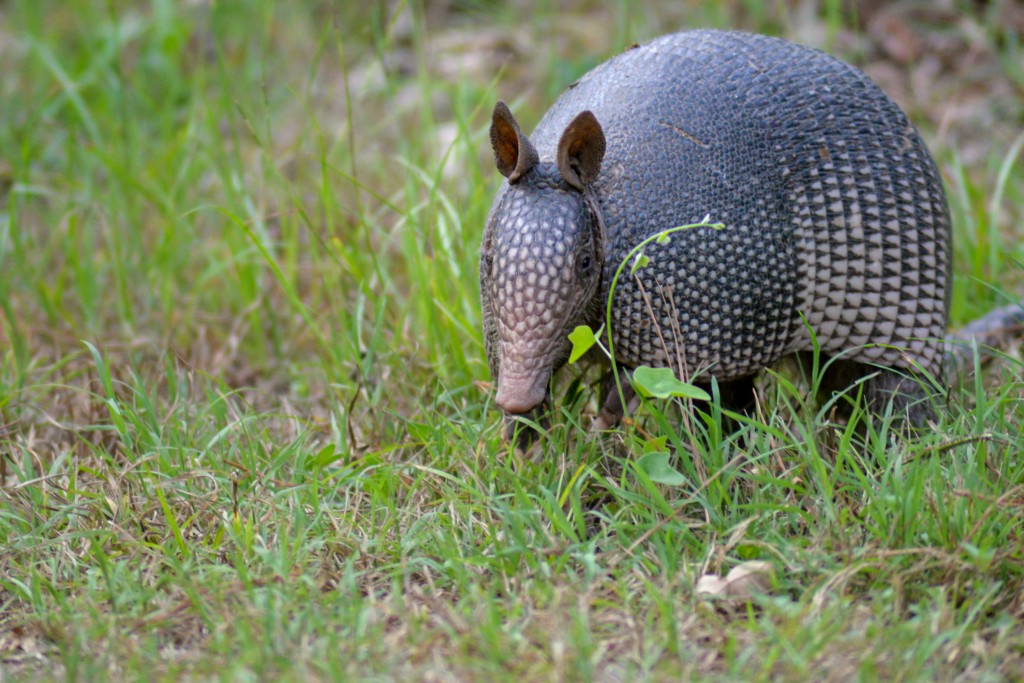
HOUSTON COUNTY – Houston County Animal Services recently made a post on their social media in response to a rise in animal nuisance calls. Now, they are sharing how homeowners can deal with wildlife.
Director of Animal Services Alan Smith said the rise is due to more neighborhoods and new construction, which is impacting wildlife by taking away their habitats. It also takes away places for animals to raise their families and find food, such as plants and bugs.
Smith said when trees and bushes are taken away and replaced with roads and housing, it causes wildlife to travel further, into another subdivision or a human-populated place.
Smith said animal control receives many calls about armadillos and those living closer to the river on the east side of the county have problems with alligators or water snakes.
Knowing signs, like droppings, can help identify the type of animal in a backyard, he also mentioned.
Smith encourages the public to follow the HERL model for wildlife control:
- Habitat Modification
- Exclusion
- Removal or Repellents
- Lethal control
The first step is habitat modification, which means making the property unattractive and discouraging to wildlife; This includes mowing grass to avoid attracting mice and their predators, such as snakes. Smith also encouraged not putting out bird feed or seeds and not leaving food outside.
According to HCAS, homeowners can harass wildlife into leaving the area and its effectiveness depends on the homeowner’s diligence.
Exclusion means setting up physical barriers, like fences, to prevent animals from entering the property.
Another way to deal with wildlife is removal or the use of repellents. Smith said removing nuisance wildlife yourself is against the law and requires a permit from the Department of Natural Resources.
However, homeowners can use repellents to keep animals away. According to the HCAS, repellents that work with tactile or visual senses include:
- Water spray, such as motion-activated sprinklers. However, they are new to the market and not widely tested.
- Bright lights, strobe lights or lasers. They are suggested as repellents for deer, rabbits, roosting birds, such as pigeons, and other wildlife. The long-term effectiveness is unknown.
- Eye balloons, scarecrows, silhouettes on windows and noise makers. These scare the animals away and are suggested by animal services.
Finally, lethal control, where a wildlife trapper captures the animal, is a step that Smith shared people do not like to hear. Trappers are licensed to remove nuisance wildlife from a homeowner’s property.
Smith believes it is essential to remain aware of wildlife because it will always be present. Wildlife trappers can remove an animal from a property, but they are just removing one of many, a fact of nature, he mentioned.
“Know that the wildlife are just as scared of you as you are of them,” he advised. “If you leave them alone, you don’t bother them and you do what you can to make sure that your home and your property is not a welcome place, then they’re just going to move on and it won’t be a problem, for the most part anyway.”
For more tips, visit the Houston County Animal Services Facebook page here.
Before you go...
Thanks for reading The Houston Home Journal — we hope this article added to your day.
For over 150 years, Houston Home Journal has been the newspaper of record for Perry, Warner Robins and Centerville. We're excited to expand our online news coverage, while maintaining our twice-weekly print newspaper.
If you like what you see, please consider becoming a member of The Houston Home Journal. We're all in this together, working for a better Warner Robins, Perry and Centerville, and we appreciate and need your support.
Please join the readers like you who help make community journalism possible by joining The Houston Home Journal. Thank you.
- Brieanna Smith, Houston Home Journal managing editor
Paid Posts
Author

Related Articles

Warner Robins Adopt-a-Box program expands: When a traffic control box becomes art
The newest utility box features a piece of Warner Robins history.

Byron woman sentenced to prison, banishment after shoplifting and identity theft
The Houston County District Attorney’s Office said she had seven prior convictions.
Centerville stabbing leaves one dead over the weekend, police investigating
A man is dead after a stabbing at a home in Centerville, Houston County Coroner James Williams and the Centerville Police Department confirmed.