History lesson on legislating elections
We cling dearly to a myth of the Jeffersonian image of a citizen-legislator, land-owning farmer, who selflessly steals time away from family and fields to help govern. This Athenian democratic ideal, mid-wifed in an Age of Reason, was the soulful passion behind the Declaration of Independence and our Revolution.
We celebrate the rise of politicians from the obscurity of poverty to the halls of great power, like Abraham Lincoln, on their own charms and warts, while remaining blind to the reality that he was an exception; money, power and political dynasties are more the rule. Frank Capra’s wonderful Depression-Era exposition on power and politics in “Mr. Smith Goes to Washington” illustrates the push and pull between our political dreams and realities, even if the denouement Mr. Capra designed for a very young Jimmy Stewart’s character is more Hollywood than Washington.
These are hard lessons. The pure individualism of the Articles of Confederation failed and, in response, our great Constitution was adopted as a balance of practicality. Idealists had fought back with ferocity. A debate between political pragmatism was publically fought in public glare of the Federalist Papers. James Madison and Alexander Hamilton as the two champions rhetorically duked it out – Madison as a champion of self-governance and Hamilton as an advocate of greater political structure. Hamilton ultimately won this fight in a TKO; even if, we misbelieve in a Madison triumph.
Since then, we have had more than our fair share of political-money scandals, from Teapot Dome to Tammany Hall to Watergate. Each time we take steps to erect barriers to “big” money, we neglect the lessons of histories, and tear them down anew because of our obsession with the citizen-legislator ideal.
Currently, this infection plagues our courts. Under the guise of the First Amendment, they have thwarted the latest attempts to bleed money out of our political process. The United States Supreme Court’s narrowly decided 5-4 Citizens United decision now looms ominously over this presidential cycle, as it has now almost impossible to regulate “political” money.
It has not helped that our Federal Elections Commission is almost completely feckless, deadlocked 3-to-3 (Republicans vs. Democrats). No one can interpret the Citizens United ruling permitting limitless political contributions; we are entering an epoch of “wild-west” financial politics with no rules, no laws, governing funding; our puny individual voices will be drowned out by the mighty and rich.
Judicial elections, thankfully, are a different matter. Here, when the Supreme Court was forced to analyze if the same interpretations of the First Amendment applied to the judiciary, the Court said, “No.” In Williams-Yule v. Florida Bar, it announced that it felt the public needed to be able to trust that its courts were above petty politics or even an inkling of “quid pro quo” judicial rulings bridged from direct political contributions. True enough, courts have to remain above reproach. Thus, Ms. Williams-Yule’s discipline by the Florida Bar, for violating a Florida rule prohibiting judicial candidates from directly soliciting campaign contributions, was upheld.
Yet again, the Roberts Court birthed another 5-4 opinion, as the Chief Justice switched his vote from one bloc of the Citizens United case to the other. In dissent, Justice Scalia asserts “The First Amendment is not abridged for the benefit of the Brotherhood of the Robe.”
As he correctly pointed out, this legalistic flip-flop treats judges differently from other politicians and means the Constitution (somehow) provides for different and lesser First Amendment rights when it comes to judges.
It does not take a lawyer to recognize that Justice Scalia has the better logic; applying different rules to judicial elections is constitutionally schizophrenic. It is also does not take a lawyer to recognize how unhealthy is the inevitability of a dynastic Hillary Clinton-machine, fueled by large donations from millionaire interests; nor, is it healthy that a “fund-raising primary” may very well winnow down a field of dozens of Republican aspirants to the few with the necessary financial backing to field a credible campaign.
This is the shame of it. Except when it affects the bench, the Supreme Court cannot divorce itself from the ethereal vision of the citizen-legislator of yesteryear.
Better that the same rules are applied to all elections; better we recognize the benefits of regulation and open our eyes to realism.
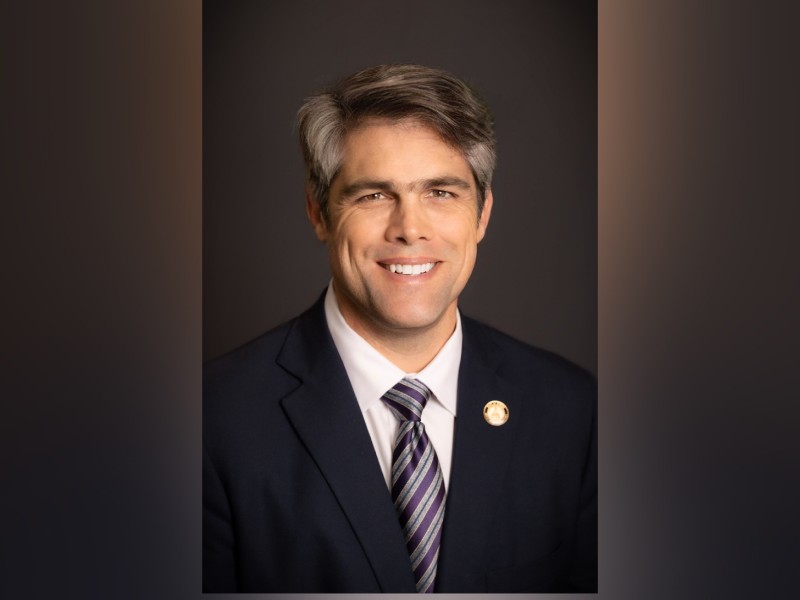
Local attorney Jim Rockefeller owns the Rockefeller Law Center and is a former Houston Co. Chief Assistant District Attorney, and a former Miami Prosecutor. Visit www.rockefellerlawcenter.com to submit confidential legal questions, and to review former articles and Frequently Asked Questions.
HHJ News
Before you go...
Thanks for reading The Houston Home Journal — we hope this article added to your day.
For over 150 years, Houston Home Journal has been the newspaper of record for Perry, Warner Robins and Centerville. We're excited to expand our online news coverage, while maintaining our twice-weekly print newspaper.
If you like what you see, please consider becoming a member of The Houston Home Journal. We're all in this together, working for a better Warner Robins, Perry and Centerville, and we appreciate and need your support.
Please join the readers like you who help make community journalism possible by joining The Houston Home Journal. Thank you.
- Brieanna Smith, Houston Home Journal managing editor