History, God’s Providence in human affairs
The Scriptures contain many verses which admonish us to acknowledge the importance of knowing and studying history-of remembering and reviewing what God has done in times past. Some of these verses are:
•Deuteronomy 32:7-“Remember the days of old, consider the years of all generations.”
•Psalm 143:5-“I remember the days of old; I meditate on all Your doings; I muse on the work of your hands.”
•Isaiah 46:9-“Remember the former things long past.”
•Romans 15:4-“For whatever was written in earlier times was written for our instruction.”
Historian David Barton of Wallbuilders, a national pro-family organization, shares some insight into the issue of our nation’s history and how it should be taught. He asserts that previous generations of American school students learned about the American Revolution, for example, by studying the lives of George Washington, Abigail Adams, James Otis, James Armistead and others; they learned about science by studying Benjamin Franklin, David Rittenhouse, George Washington Carver and Thomas Edison. Today, however, American history has generally been reduced to a succession of often sterile facts having no apparent purpose and usually without any biographical reference to real life today.
Another, and perhaps the most egregious, factor contributing to much of the current disinterest is that history is taught void of any purpose — the absence of any overarching or unifying theme. Unable to comprehend the activity of God, and unwilling to acknowledge it, the secular-dominated educational establishment stubbornly avoids suggesting any personal relevance or identifying any life lessons that can be learned from history for fear of injecting values (rights and wrongs) into the discussion. But previous generations understood that God’s purpose was revealed in history and therefore studied and taught it with the intent of seeing what could be learned and applied. As the great statesman Daniel Webster affirmed: “History is God’s providence in human affairs…”
Unfortunately, history is often no longer presented in today’s schools from this viewpoint. Yet no history can ever really be secular, for whether modern educators acknowledge it or not, God is actively involved in the dealings of all people and all nations in all ages. As Benjamin Franklin famously observed: “The longer I live, the more convincing proofs I see of this truth-that God governs in the affairs of men.”
In fact, Franklin, a founder of the University of Pennsylvania, believed that when history was presented accurately, students would reach the inescapable conclusion that God and religion (Christianity) were necessary to success in both personal and national life.
George Bancroft, who is called the “father of American history” because of his many contributions to this field, affirmed: “That God rules in the affairs of men is as certain as any truth of physical science…nothing is by chance, though men in their ignorance of causes may think so. The fortunes of a nation are not under the control of blind destiny but follow the steps by which a favoring Providence…has conducted the country to its present happiness and glory.”
When American history was taught with a purpose — when it embraced a Providential view of the events and persons of history — it was not the boring, compartmentalized, secular subject that it has become today.
The philosophy of looking at the past in order to understand and apply its lessons to the present (and future) was fully embraced by the Founding Fathers. They believed we should study the past so we would know our responsibilities for the future. For example, Samuel Adams declared: “Let us contemplate our forefathers (the past)-and posterity (the future), and resolve to maintain the rights bequeathed to us from the former for the sake of the latter.”
Patrick Henry agreed, stating: “I have but one lamp by which my feet are guided, and that is the lamp of experience. I know no way of judging the future but by the past.”
May we return to a study of the actual events — national, state, and local — of history from a Providential viewpoint. This means looking for evidence of God’s hand in events and finding out what He was up to, always remembering that “History is God’s providence in human affairs.”
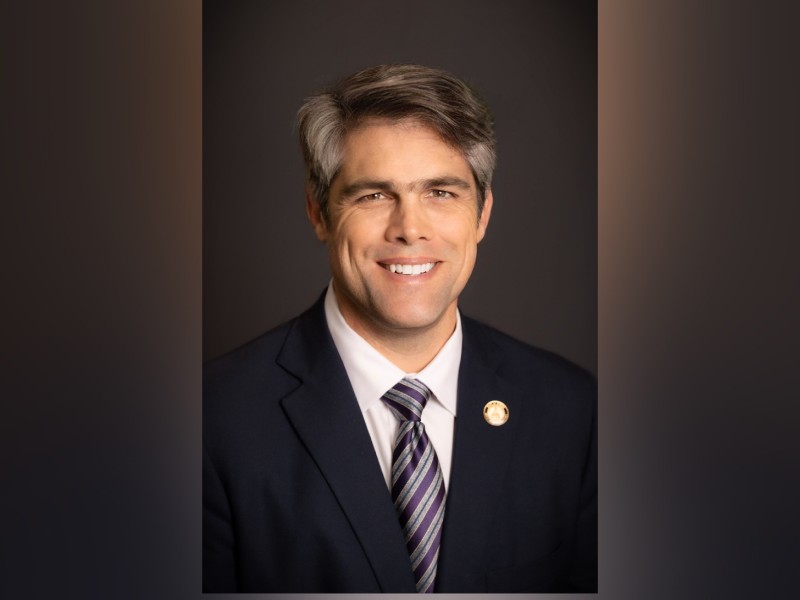
Tim Lewis can be reached at timlewis1@windstream.net.
HHJ News
Before you go...
Thanks for reading The Houston Home Journal — we hope this article added to your day.
For over 150 years, Houston Home Journal has been the newspaper of record for Perry, Warner Robins and Centerville. We're excited to expand our online news coverage, while maintaining our twice-weekly print newspaper.
If you like what you see, please consider becoming a member of The Houston Home Journal. We're all in this together, working for a better Warner Robins, Perry and Centerville, and we appreciate and need your support.
Please join the readers like you who help make community journalism possible by joining The Houston Home Journal. Thank you.
- Brieanna Smith, Houston Home Journal managing editor
Paid Posts
Author