
Grace Village: It takes a village to straighten out
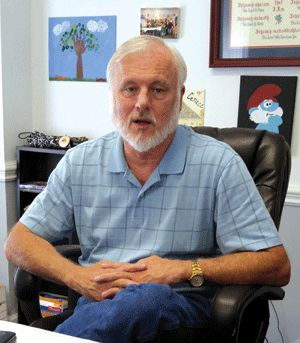
Larry Wood has been associated with Perry Volunteer Outreach for 11 of his 34 years in Perry, and the last two and one-half years with Grace Village.
“I’ve been around here since the shovel first hit the ground, and so it’s been good to watch it grow, change and become what it’s supposed to be,” he said.
Grace Village is a 24-unit women’s homeless shelter that not only offers food and shelter, but also offers 90 to 120 days of refuge from the crises of life, according to its Web page.
During a stay at Grace Village, life skills training and an atmosphere of spiritual encouragement strengthens the women and prepares them for a successful move back into the community.
Wood shared more about the ministry.
When Frank Shelton started Perry Volunteer Outreach in 2000, he found there were a lot of women coming in who needed a place to stay. Poor choices made or coming from a broken home were among a myriad of things that brought them to their current situation.
“Frank said we could put them up in a home for a couple of days, maybe even up to one week, but then you really haven’t accomplished anything. You’re just keeping them off the street,” Wood said. “Then there’s the thing of feeding them and all that, and so his brainchild and his heartchild was to provide a facility where they could stay a few months and have some time to reflect on where they were and come up with a plan that hopefully would be more successful than what they had chosen to do in the past.
“Shelton did some research and provided the land – there’s about 12 acres – and began looking for grants. He came to find out that through the city he could work with a Community Development Block Grant. My understanding is that it’s federal funds channeled through a state’s Department of Community Affairs, but it’s got to come through a municipality or government. So in partnership with the city of Perry, Frank proposed that we build a shelter. We’ll administer it, we’ll look after it and all that, and the city would have to take physical ownership of it. The grant application was literally a thousand pages long, what with all the documentation required. Well, we received the grant back in 2006.
“From foundation to the tip of the roof, the construction crew did every bit of the work, except for paving the parking lot and the air conditioning system. This is a unique combination of private individuals, local community, local government, state government, and in an indirect way the federal government to come together for a project like this. For it to turn out the way it did is kind of a rare accomplishment. And everybody involved got to take some form of credit.
“We broke ground April 16, 2006, and received our first resident here in January 2010. So, for six and one-half years we’ve been ministering to women who find themselves in crisis situations. That’s kind of how the physical plan came about.
I really didn’t intend to be this much hands-on in the program, but that’s how it worked out. I really don’t mind it; I love dealing with the women that come here right out of prison, off the street, and giving them some opportunities to put things back together.
“When they come here I always tell them I have three basic questions they need to consider while they’re here.
“The first one is Where am I? I know that some have gotten to where they’re at because they have made poor choices. What decisions have they made so that they’re at the point where they don’t have anyone to depend on or any means of support. Just in a homeless situation. They’ve either burned bridges in their relationships or a lot of their troubles are self-inflicted. And when you get them to start digging into their lives, not in a counseling relationship but more of a mentor or friendship relationship situation, you find that so many of these women have never had anybody who’s stood beside them or offered them any help.
“I can’t tell you how many have said to me, ‘Well, this is the only place I’ve been in my life where I had someone tell me they loved me and they weren’t expecting something back in return.’ That’s kind of our goal, to take them through some counseling, the idea that, ‘Here’s some wisdom that others have come about, so why don’t you consider some of these things?’ Be successful in life. I don’t mean holding down a six-figure job but just getting up in the morning and wanting to live that day full of life. For many of them that’s a big victory.
“I was talking with someone after we checked in with her parole officer. She was telling me this situation with her mother, her brother and on and on, and I asked her if she wanted to continue this legacy or did she want to break the cycle? And sad to say, some of them wait until they in their 40s or 50s to change it. It’s wide-eyed adolescents in their 20s or 30s sometimes. It’s kind of like, ‘Well I’ll just keep on doing this and things will change.’ Yes, life changes, but without any initiative it never changes for the better.
“So, the first 30 days here we tell them they can’t have any contact with family or friends or whatever. Their stay here is restricted. They can’t go wherever they please. If we go anywhere, we go as a group. If we do anything, we do it as a group. They can’t have cars. They can’t have cellphones. The reason is, I tell them and tell their family, is to shut out distractions. Not to shelter them but to protect them for a short period of time because sometimes even the most well-meaning of families can pull them off track. We try to create an environment where they can sit down and be still and think about where they are, going back to that first question.
“The second question is Where am I going? They have to have a plan for where they are going, and I tell them if they’re going back to the street or their old way of life, then I can’t help you. No. 1, I don’t agree with it, and No. 2, I don’t know anything about it. So they have to come up with a plan. Am I going to establish a relationship with family? Am I going to move back home? What do I do about reuniting with my kids? So there are a lot of things in their goals to reach. And so you set the goals.
The third question is How do I get from where I am to where I want to be? Hopefully, through the people they’ve met and the teaching they received they will come up with a viable plan on how to move themselves forward in life. I know it’s an old cliché, but to fail to plan is to plan to fail.
“The thing is, it is so short term. It’s a 90-day program and I do have some women that stay here five, six, seven months because they just need a little more time to get things in order, which is fine, because who is going to put a specific time frame on getting your life back in order? The program is 90 days, but some of these women have spent 30 or 40 years messing it up, and so how are we going to straighten it up in just 90 days? We just take care of working on the philosophy for 90 days, and that’s a major undertaking. Then they can take the next step, then another step. Don’t spend so much time looking five, 10 years down the road; that’s O.K., but if you look too far down the road you sometimes miss what you need to do here in the daily journey. The daily journey is a necessary part of the growth. I’ve always thought that if we could see the future we would do one of two things: we would either run away from it or run to it.
“One of the things that makes reaching the goal so special is the growth that you go through. So, while they’re here they have their own apartment, they have their own kitchen in the apartment. We provide the food and everything for them. We let them give us a shopping list and every week we provide them coffee, eggs, bread and milk. And they have a list that they can pick from. I had a girl here a few years ago who came from a traditional home, and she would order pig ears and pigs feet and pigtails, and I told her, ‘You eat everything but the squeal.’
“We start every day with a devotional that I or somebody else will lead. We try to get them centered, get them fed spiritually. I tell people I’m not trying to create a religious boot camp. I’m just trying to get them to learn some practical things they need to know to get through life and get along with people. You know, honor God with their life. They are responsible for their own room and some part of the common areas.
“We have cooking classes, we have computer classes, and we have several women who come in and do cross-stitching, jewelry making. We participate in celebrate recovery and church on Wednesday night.
“Once they work through the program, we give them the opportunity to find work, local jobs. But they have to stay here because businesses don’t want to train somebody, have them work for a month and then leave.
“To me, this job is really the best of both worlds. It has its challenges. And I use this kind of jokingly when I say, ‘I’m not sure if it’s the wisest man who takes on 12 distressed women.’ But it’s where I am right now; it’s my calling, my station in life, and that’s fine with me.
“I want them to improve their life. In our society if you strengthen the weakest link, then everybody is made stronger.
“We have had between 300 and 400 women go through this program. We have 24 beds and we average about 14 to 15 women at a time, or about 50 to 60 yearly.
The key to their success is they have got to have the desire to straighten out.
“I see two things in the future for Grace Village: Getting more community involvement, more volunteers; and duplicating our setup in other communities.
HHJ News
Before you go...
Thanks for reading The Houston Home Journal — we hope this article added to your day.
For over 150 years, Houston Home Journal has been the newspaper of record for Perry, Warner Robins and Centerville. We're excited to expand our online news coverage, while maintaining our twice-weekly print newspaper.
If you like what you see, please consider becoming a member of The Houston Home Journal. We're all in this together, working for a better Warner Robins, Perry and Centerville, and we appreciate and need your support.
Please join the readers like you who help make community journalism possible by joining The Houston Home Journal. Thank you.
- Brieanna Smith, Houston Home Journal managing editor
Paid Posts
Related Articles
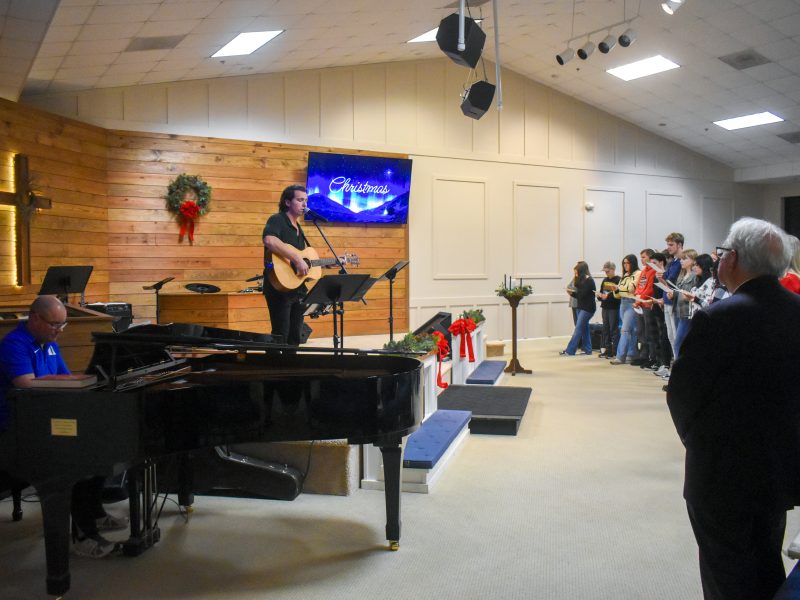
‘Christmas at the Crossroads’ brings the community together to celebrate the meaning of the holiday
Despite rainy weather, Christmas at the Crossroads united local pastors, city leaders and worshippers for a shared reminder that Christ is central to Christmas.
Family Promise provides needs for Houston County’s children experiencing homelessness
The organization has been assisting families for over a decade, providing practical and sustainable help.
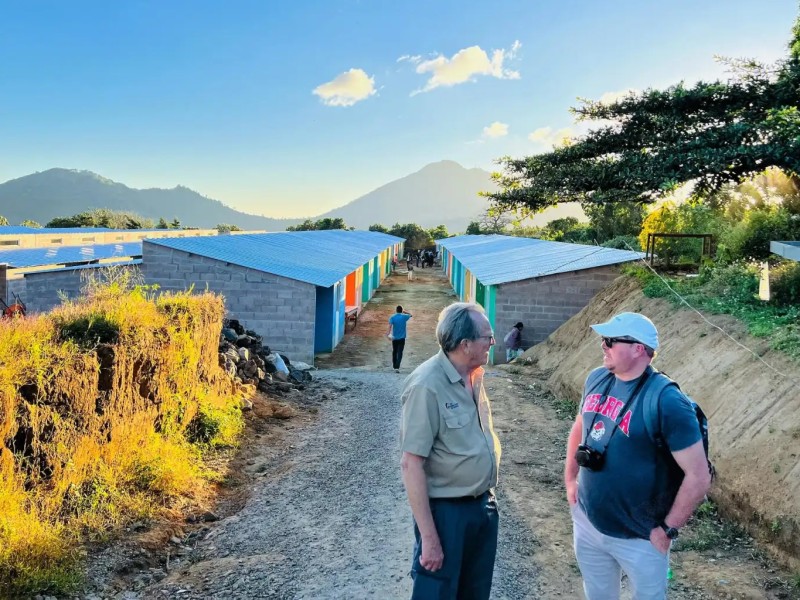
Local author’s latest book ‘Hope in Action!’ highlights outreach in El Salvador
Proceeds from book sales will also go towards outreach efforts in the country.