Foreign Intelligence Surveillance Act
Washington is all a-twitter with allegations that President Obama ordered Trump Towers wiretapped during this last presidential cycle. At some point, we might come to a collective conclusion as to the truth of such an allegation. Until we get to that point, it is probably helpful to understand the unsettling world of completely legal breaches of our privacy.
During the Cold War, Congress created the Foreign Intelligence Surveillance Act of 1978 (FISA), and a “shadow” court called the “Foreign Intelligence Surveillance Court” (FISC), to protect us from the nasty Soviet Union. This 11-member court operates separately from our other Article III courts. District Court judges from at least seven of our 11 judicial circuits are appointed by the Chief Justice of the Supreme Court to serve a maximum of seven years. Their sole purpose is to individually approve, or disapprove, FISA warrant applications submitted by the Department of Justice to conduct surveillance on foreign governments and their agents (the targets being expanded by later amendments).
This still sounds like our traditional Fourth Amendment search warrant process used by law enforcement in the United States or its territories. It is not. Everything is conducted in secrecy, secret warrants, issued in a secret process and never to be revealed to the general public; Edward Snowden’s plundering of our records, being a dangerous exception. The attorney general is even authorized to by-pass the FISA courts and authorize temporary surveillance in emergencies. FISC courts are even condemned as “rubber stamps” – there have only ever been 14 warrants ever reject (0.03 percent). Those rejections can be appealed to a special three-judge FISC panel – again, outside our normal court system.
In one sense, FISA created an extra and unnecessary layer of protection against Big Brother running amok. Foreigners would have little if any judicial recourse to evidence discovered from our intelligence surveillance. Let’s face it, spying is legal and nations do it all the time; again, “thank you” Edward Snowden for proving this axiom true. The FISA statute recognizes this by permitting an attorney general to order (for up to a year and without a court order) surveillance of foreign powers to prevent “sabotage or international terrorism.” The catch is that the purpose of the secret collection of information cannot have a ” substantial likelihood” of scooping up the contents of any communication to which an American or resident citizen is a party.
A FISA warrant permits something more expansive. The application needs to show “probable cause” (again, a standard Fourth Amendment concept) that the “target” (originally limited to a foreign government or agent) is likely engaged in terrorism. If the warrant is granted, intelligence agents had to follow strict “minimization” rules to prevent U.S. citizens from having their personal information exposed in the collection of data. Hence, while Americans might have information incidentally collected once a FISA warrant is activated, their privacy is supposed to be respected. This would be how Trump operatives could have come under investigation; agents are permitted to go where the facts take them, even with FISA warrants.
A lot has happened since 1978. Satellite communications have become common, the internet, cable television has penetrated the mass market, cell phones have become ubiquitous…and, of course, the Twin Towers were taken down in 2001. The face of terrorism has even changed. 1978 America was concerned about Soviet Union spies, now, we have North Korean and Iranian nuclear arms merchants to watch, as well as individuals (just crazy or rationally malicious) radicalized by what they perceive as a Jihad against western civilization.
FISA has adapted with these developments, especially, wit the passage of the Patriot Act, which added some new toys to our intelligence agents’ toolbox. First, it lowered one of the standards to approve a FISA warrant from a “primary purpose” to a “significant purpose” of “sabotage or terrorism” as the goal of the surveillance. Second, a “lone wolf” clause broadened the persons subject to surveillance. Third, “sneak and peek” warrants were permitted to invade the privacy of our very home for “bugging” or secret surveillance targeting information about any federal crime, including misdemeanors.
Finally, court rulings have permitted the National Security Agency (NSA) to collect all kinds of “metadata,” IP addresses, call records, even emails, store them and then, if the need arises and a warrant authorizes, search through all of this stored information for evidence of sabotage or terrorism. This means that a good chunk of our communications are held by our government in secret.
We have come a long way from the first FISA court in 1978. As the world has become more complicated, our privacy has become entangled with government’s task to protect us; this should scare all of us a bit and not just about terrorism. Our government has so much more invasive rights to know so much more about us and what we do.
This means we cannot know what has been authorized in the secrecy of the FISC courts about Russian meddling in our election. What is clear is that there are barriers to a president ordering a wiretap of a presidential campaign.
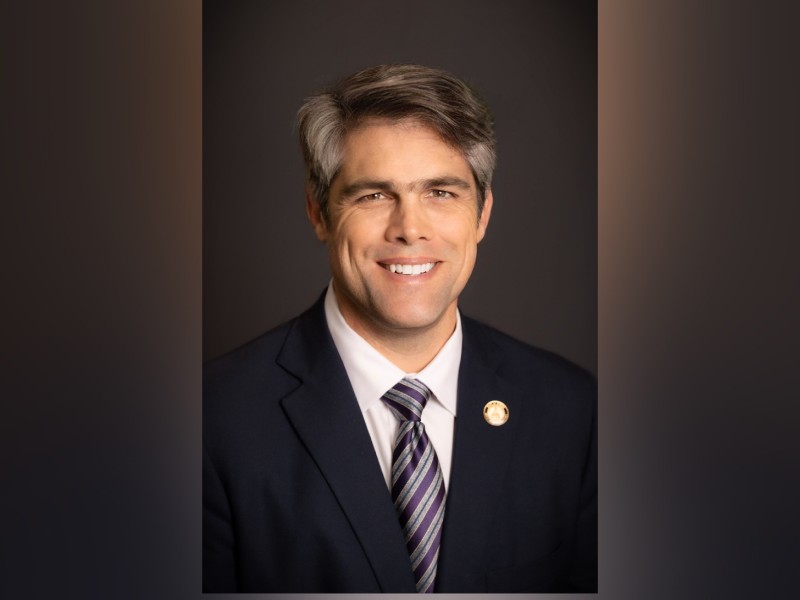
Warner Robins attorney Jim Rockefeller is the former chief assistant district attorney for Houston County and a former assistant state attorney in Miami. Owner of Rockefeller Law Center, he has been in private practice since 2000. Email your comments or confidential legal questions to ajr@rockefellerlawcenter.com.
HHJ News
Before you go...
Thanks for reading The Houston Home Journal — we hope this article added to your day.
For over 150 years, Houston Home Journal has been the newspaper of record for Perry, Warner Robins and Centerville. We're excited to expand our online news coverage, while maintaining our twice-weekly print newspaper.
If you like what you see, please consider becoming a member of The Houston Home Journal. We're all in this together, working for a better Warner Robins, Perry and Centerville, and we appreciate and need your support.
Please join the readers like you who help make community journalism possible by joining The Houston Home Journal. Thank you.
- Brieanna Smith, Houston Home Journal managing editor