
Artificial intelligence and the hyperscale data centers it calls home have become divisive topics riddled with misinformation.
In a collaborative effort at the Houston Home Journal, we’ve done the research on the big picture in the United States.
Here are some of the most commonly asked questions, and the answers we found:
Click each question to expand.
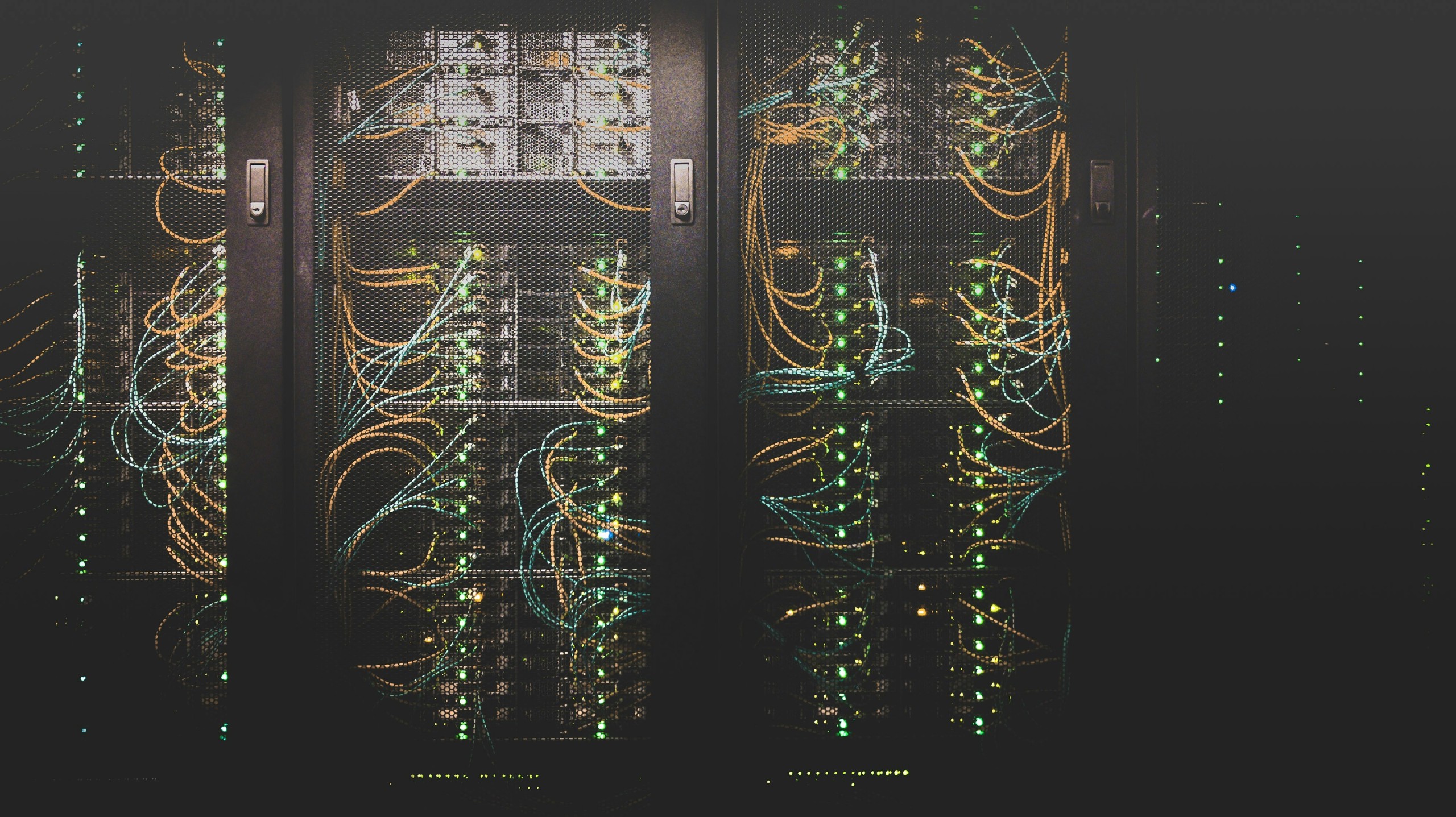
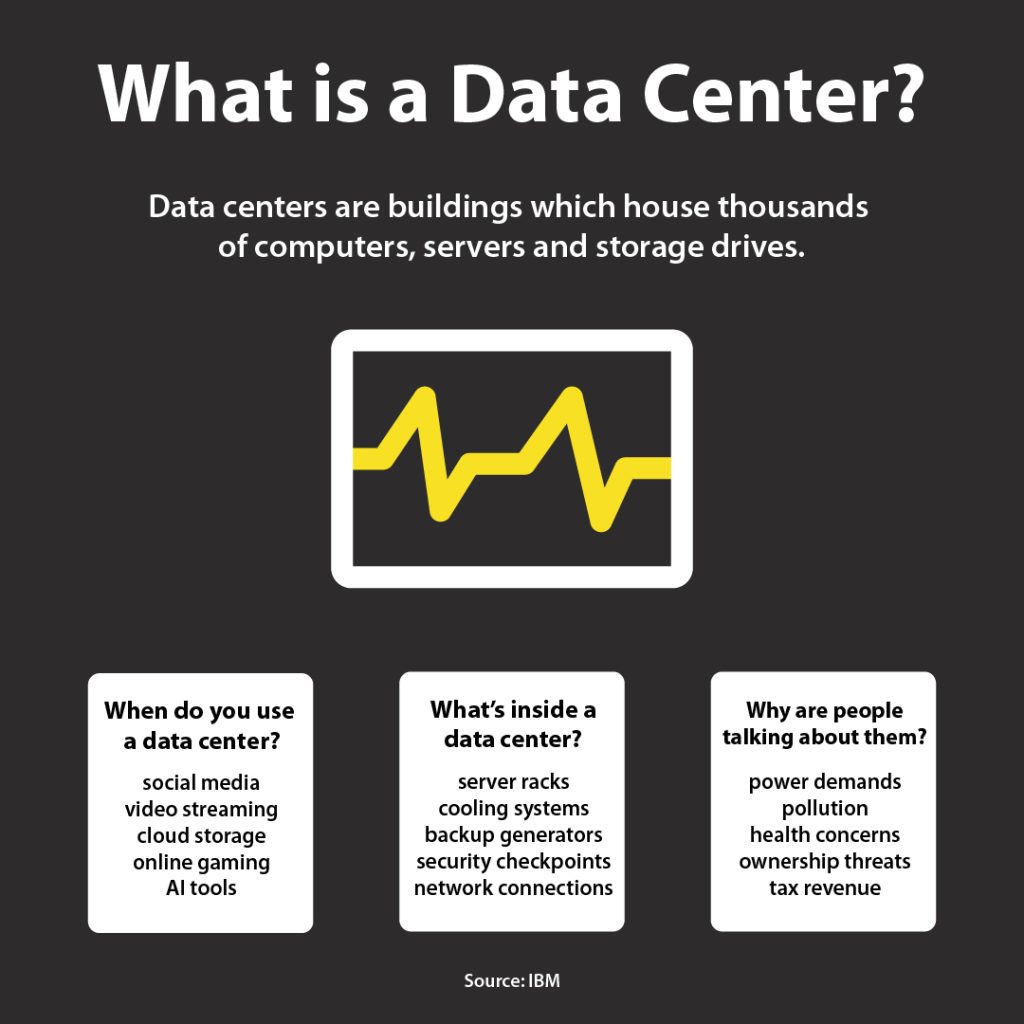
AI data centers, specifically known as “hyperscale” data centers, typically contain at least 5,000 computers in facilities as large as 60,000 square feet. Some now being built or proposed are millions of square feet.
Some of the largest centers in the world are in the U.S., in states like Virginia and Texas.
In 2025, OpenAI and Oracle announced a joint venture dubbed Stargate, an unprecedented AI infrastructure program. The $500 billion initiative started with a site in Abilene, Texas, which will feature eight buildings totaling four million square feet on a 1,100-acre campus, according to Texas Rep. Jodey Arrington’s office.
Virginia’s Loudoun County, dubbed the data center capital of the world, is home to 27 million square feet of data center space, with more on the way. That’s roughly 476 football fields.
Data centers house the equipment necessary to train large language models (LLMs) like ChatGPT, Claude and Google Gemini.
LLMs are AI systems trained on billions of words and designed to learn the “patterns and structures of language, enabling it to predict and generate plausible text,” according to Arizona State University.
AI doesn’t actually “answer” the questions you type in. It picks the word most statistically likely to come next based on the data it was trained on.
These models take thousands and thousands of computers, specifically Graphics Processing Units (GPUs). These might be more familiar as “graphics cards.”
According to NVIDIA, the world’s leading GPU producer, GPUs perform calculations faster and more energy-efficiently than Central Processing Units (CPUs).
The reason LLMs need so many GPUs packed together closely is that for every meter (roughly three feet) of space between them, there is a nanosecond of delay in the processing time.
Across thousands of computers throughout millions of square feet, such as Georgia’s Spalding County’s proposed 2.24 million-square-foot campus, those delays add up and significantly dampen system performance.
In a process called parallel processing, thousands of GPUs act as one computer. They divide the task of analyzing datasets and training LLMs into subtasks done simultaneously. This significantly speeds up the process.
Given the gargantuan size of modern AI data centers, the hum of equipment paired with the heating, ventilation and air conditioning systems and generators can reach up to 96 decibels internally, according to the National Library of Medicine. Above 85 decibels is harmful to human hearing and the threshold for potential hearing loss.
Low- and high-frequency noise can travel for miles in rural settings and be heard constantly, posing multiple health concerns.
According to a 2023 Google report, AI data centers require 24/7 video monitoring, which needs constant outdoor lighting.
Gas-powered data centers also produce significant amounts of pollutants that are harmful to the environment, the climate and people’s health. These pollutants include greenhouse gases and toxic air pollutants.
Data centers’ use of water and the construction process leave some residents with undrinkable water, and rivers full of sediment and chemicals. U.S. Rep. Alexandria Ocasio-Cortez recently pressed the EPA over water pollution near a data center in Georgia’s Morgan County.
Amazon claims its data centers are seven times more water-efficient than competitors and use higher operating temperatures and reclaimed wastewater.
Due to noise pollution, residents in Texas have reported elevated heart rates, high blood pressure, hearing loss, fainting spells, vertigo, nausea and vomiting from living near data centers, according to TIME.
The low-frequency sounds that data centers emit can be the most harmful because they travel the farthest, and do not contribute as much to the overall decibel level, making it difficult to enforce noise ordinances.
The light pollution from data centers’ exterior lighting can also interrupt sleep and confuse circadian rhythms. Excessive amounts of light at night lower melatonin production, which can lead to sleep deprivation, fatigue, headaches, stress and anxiety.
Documented effects from air pollution include stroke, cardiovascular disease and asthma symptoms, among others.
Michael Cork is a public health scientist at the Harvard T.H. Chan School of Public Health and co-founder of EmPower Analytics Group. This organization studies the health and economic impacts of air pollution from data centers and their power sources. He believes public health is being neglected in the consideration of data center projects.
“We can’t solve a problem we haven’t measured,” Cork said in an interview with the HHJ. “Right now, our main decisions for data centers are being made without any clear counting of the public health cost. And that gap means health damages are systematically left out.”
Cork has conducted studies in Virginia, Tennessee and South Carolina. He’s noticed a consistent pattern of “tens of millions of dollars in annual health damages,” specifically from fine particulate matter.
“We have the ability and the science is clear on how we can translate increases in pollution to health outcomes,” Cork said.
According to Cork, these particles are extremely small, can easily enter the lungs or bloodstream, and are linked to 90% of air-pollution-related health outcomes.
Nitrogen oxides produced by gas-powered data centers contribute to smog and soot. Exposure can lead to an increased risk of premature birth, low birth weight and increased risk of death.
The production of greenhouse gases has doubled from 2005 to 2021, according to the Environmental Defense Fund. These gases are the primary factor in climate change, which has led to an increase in climate disasters, the risk of heat stroke, dehydration-related illnesses and heat-related deaths. Higher global temperatures also make it easier for smog to form.
The toxic air pollutants produced by gas-powered data centers are known to cause cancer, neurological damage, kidney damage and reproductive harm. They also risk harming children’s brains and development.
Some of the pollutants produced by gas power plants are formaldehyde, polycyclic aromatic hydrocarbons, benzene, toluene and xylenes. Inhaling formaldehyde can lead to cancer, and exposure can lead to wheezing, bronchitis and reproductive and developmental toxicity.
Data centers also use a significant amount of potable water, according to a 2021 study, which has worsened water scarcity in some regions, increased the risk of waterborne diseases, and led to dehydration and poor hygiene among affected residents.
Due to the enormous size of AI data centers, they consume a large amount of water. However, not every company is transparent with its water usage.
Google resisted disclosing its water consumption to The Oregonian in 2021, but it was eventually revealed that it used 355.1 million gallons of water in its facilities at The Dalles, a city of 16,000 people in Oregon. That figure was 25% of the city’s total water usage in 2021.
There are multiple ways data centers use water: directly for cooling or indirectly for power generation or chip production.
The most water-intensive method is evaporative cooling, which pushes the hot air generated by the servers through water-soaked pads. The water evaporates, cooling the air. Roughly 80% of the water used in these systems evaporates, and the remaining 20% must be treated before it can be reused.
Direct-to-chip, immersion cooling and air cooling use less water but generally require more electricity and are more expensive.
The electricity generation that powers data centers also uses a significant amount of water.
An average data center used to consume 20 megawatt-hours of power a month, but AI data centers use 100 or more megawatt-hours. They accounted for 4.4% of the United States’ total electricity consumption in 2022, and that share is projected to increase to 6.7% and 12% by 2028.
Georgia Power is set to add roughly 10,000 megawatts to its capacity after Georgia’s Public Service Commission approved their $16 billion expansion plan in Dec. 2025, according to the Atlanta Journal-Constitution. They own the second-largest growth projection for the next five years, which estimates an additional eight gigawatts of demand, according to power consultant Grid Strategies.
The plan includes gas-powered power plants, but it does not include equipment they may purchase from a third party. The AJC reported that the final cost is estimated at $50 billion or $60 billion.
In 2023, the Environmental and Energy Study Institute estimated that data centers indirectly used 211 billion gallons of water, equivalent to 1.2 gallons per kilowatt-hour. The electricity demand is projected to increase to 1,050 terawatt-hours (1,050,000,000 megawatt-hours) by 2030. That’s an estimated 1.26 trillion gallons of water.
Of the 3,000 operational data centers in the United States, 87% of them are in urban areas. As noise and light pollution come under increasing public scrutiny, companies are pushing for more rural construction. 67% of 1,500 planned data center projects are in those areas.
Coweta County residents are fighting “Project Sail,” a more than 800-acre data center project in the middle of rezoned rural conservation land. The Chattahoochee Riverkeeper organization is concerned about the water that will not immediately return to the Chattahoochee River, as well as the potential effects on water temperature and the fish population.
There are also potential concerns about expanding electricity generation to serve AI data centers, particularly hydropower facilities and their impacts on fish populations.
Wisconsin residents were concerned about the rezoning of 300 acres of land from agricultural to limited industrial use, potentially for a data center. There was an application to build a data center there, but it was withdrawn in Sept. 2025 after intense community pushback.
There was a similar backlash in Indiana and Virginia last year.
An orchard in Pennsylvania was affected by infrastructure expansion driven by AI data centers.
But it’s not just empty land or rural views that are threatened by AI expansion. Georgia Power, citing eminent domain, is fighting to take a family’s home in Coweta County to expand infrastructure related to an AI data center project in Fayette County.
Georgia Power says the home is one of up to 30 homes expected to be demolished for the project.
As of June 2, 14 states have introduced legislation to limit or ban data centers.
Georgia introduced HB 1059, the “Data Center Impact Assessment and Development Moratorium Act of 2026,” in January to halt data center construction while a commission investigates the strain on public resources.
11 Georgia counties have active bans or moratoriums on data centers. Perry City Council introduced its own legislation in 2024, approved at its Jan. 7, 2025, meeting, as previously covered by the HHJ.
Data center construction can provide hundreds of temporary jobs for construction personnel and claims to create permanent jobs for staff once the project is finished.
However, a Business Insider review of 1,200 data centers found that some of the largest in the United States employ fewer than 150 permanent workers, and as few as 25.
They do generate revenue through taxes, a figure that’s ballooned from $66 billion in 2017 to $162 billion in 2023, according to an estimate in a presentation by The Data Center Coalition.
There are also concerns about infrastructure costs and the possibility that the data center will downsize or close before it recovers costs.
Before you go...
Thanks for reading The Houston Home Journal — we hope this article added to your day.
For over 150 years, Houston Home Journal has been the newspaper of record for Perry, Warner Robins and Centerville. We're excited to expand our online news coverage, while maintaining our twice-weekly print newspaper.
If you like what you see, please consider becoming a member of The Houston Home Journal. We're all in this together, working for a better Warner Robins, Perry and Centerville, and we appreciate and need your support.
Please join the readers like you who help make community journalism possible by joining The Houston Home Journal. Thank you.
- Brieanna Smith, Houston Home Journal managing editor
Paid Posts
Author

Related Articles
Warner Robins Adopt-a-Box program expands: When a traffic control box becomes art
The newest utility box features a piece of Warner Robins history.

Byron woman sentenced to prison, banishment after shoplifting and identity theft
The Houston County District Attorney’s Office said she had seven prior convictions.

Centerville stabbing leaves one dead over the weekend, police investigating
A man is dead after a stabbing at a home in Centerville, Houston County Coroner James Williams and the Centerville Police Department confirmed.