
Bear in mind: Comment period closes soon
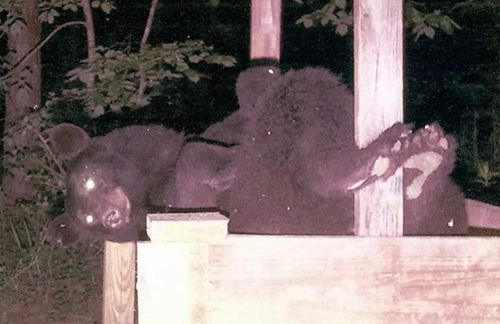
HOUSTON COUNTY, Ga. — Most folks could agree that hunting is a popular pastime and tradition of folks in the area. The current black bear population and a proposed extension to their respective hunting season in central Georgia has some local people wondering what’s to come for the animals.
The public comment period regarding the potential hunting season extension is coming to a close Monday at 4:30 p.m. If you wish to reach out and share your thoughts on the situation, send an email to gm.comments@dnr.ga.gov.
Based on “public desire” for more hunting opportunities in the area, the Georgia Department of Natural Resources is proposing to change the black bear hunting season in the “Central Bear Zone” — Bibb, Bleckley, Houston and Twiggs counties — from its one-day length on Dec. 16 and add an additional day on Jan. 6, 2024.
Officials on the matter are addressing the situation and have had some public meetings in person and virtually over the past few weeks. The consensus from DNR is that there is no evidence to indicate the population is at a critical point.
The Journal reached out to the DNR Wildlife Resources Division for some context on the situation, and spoke with Walter Lane, assistant chief of game management.
“Our goal is to maintain this population and allow as much hunting opportunity as we responsibly can,” Lane said. “Considering the size of this population, we are trying to strike the appropriate balance between hunting opportunity and conservation of the population.”
According to a slideshow used during the recent public meetings held by DNR, some specific things would have to happen on the official first day of bear season for a second one to be approved:
“Allow an additional day of opportunity if less than six females (“sows”) are killed on first day; upcoming season date is Dec. 16, 2023, and the second day would be Jan. 6, 2024, if less than 6 sows taken on Dec. 16; keeps current third Saturday in December single-day private-land-only hunt as is; allows additional opportunity, particularly if weather on Day 1 restricts harvest, while limiting the risk of over-harvesting females on Day 2; Wildlife Resource Division will confer with DNR-Law Enforcement to determine total female mortality was not greater than six (including poached/wounding losses we find) on Day 1, then we will send notification that Jan. 6 will be open.”
Bobby Bond, a wildlife biologist with the Fort Valley DNR office, said that every summer they complete bear routes and sardine can surveys, and his office has found that the population has been determined to be “mostly stable.” He also estimated that the Central Georgia Bear Zone is currently home to around 350 black bears.
“We haven’t really seen any decline and nothing to trigger that we need to do something to alter the hunt in the opposite direction,” Bond said.
He referenced some studies on this topic completed from 2003-2007 and 2012-2016.
“The latest research — that’s what we have to go by — showed that the population might have been a little bit bigger than it was in the previous population estimate,” Bond explained. “We’re fixing to start another population estimate this coming summer. We’ve been having the freedom in the past of actually using data for this population to alter the hunts.”
Those hunt alterations include moving the season to November back in 2011. Thirty-four bears were harvested that season.
Following this, officials decided to move the hunt to December, seeing a “pretty heavy” percentage of female harvest. DNR tried a January hunt, but Bond said this led to concerns from hunters as many bears were denned up for the winter.
“We moved it to January, but the problem was we had two years of January, and we only had like two total bears harvested,” Bond said. “We’ve had a vocal segment of our hunters [saying that] wasn’t truly an opportunity if no bears were available.”
The 2022 hunting season saw 15 bears harvested: 10 females and five males. Six road kills occurred last year, five males and one female, in the area.
“We were asked for expansion [on the season], and some of us brainstormed, and the current proposal is probably the most biological data [we have] to balance the hunt and the resources, because at least it has a trigger point that if six or more sows are harvested on that first day, the second day never happens,” Bond said. ” … Eleven is the maximum of any given year or two because it can be adverse across years. As long as we’re staying at an average of 11 or below, the population should be able to subsist — for sows, anyways.”
According to the abstract from the study referenced by DNR, “Assessing Population Viability of Black Bears using Spatial Capture-Recapture Models,” completed by Dr. Michael Hooker, Richard Chandler, Bobby Bond and Michael Chamberlain, the longevity of the central Georgia bear population is not at risk as long certain criteria are followed.
From 2012-2016, the group utilized barbed-wire hair snares to collect hair samples from the animals, using micro satellite genotyping to track sows.
The female population went from 106 in 2012 to 136 in 2013, remaining “relatively stable thereafter.”
“Forecasts indicated continuation of the female mortality levels experienced from 2012-2016 were sustainable over 50 years, with the estimated extinction risk being <0.001%,” the abstract read. "Increasing annual harvest by five females introduced a negligible increase in the 50-year probability of extinction, but harvesting an additional 10 females/year caused extinction risk to rise to 1.15%.
“We recommend that harvest regulations are structured such that mortality rates remain at current levels or do not increase by more than an annual average of five females above levels observed during our study. Furthermore, we recommend that managers continue to monitor the population so that harvest regulations and population models can be refined over time.”
John Trussell, who led the effort to save Oaky Woods from development to preserve the small bear population, does not support an expansion of the bear season at this time. However, he remains in support of people having their right to hunt.
“With an estimated 300 bears in central Georgia — which is barely a huntable population — we need to be very careful that hunting does not decrease the population,” Trussell said. “I strongly support all types of hunting and hope the population expands so the opportunities to hunt can also be expanded.”
There are already plans in place to convert State Route 96 from a two-lane to a four-lane roadway, specifically as the road runs closer to Twiggs County. Trussell said officials must consider the potential effects on the animal population that could come from these changes and other developments.
“Although road fences to keep out wildlife and under-road passes are being discussed, we don’t know if the bear behavior will be altered by these strategies,” Trussell said. “Also, with 7,000 acres of private land around Oaky Woods that might be developed in the near future, this will eventually increase road kill.”
Bobby Tuggle is another advocate for the one-day season. He reflected on his experience hunting and exploring the area in question, saying he has seen the bear population change over time.
“Growing up, I saw the bear [population] increase, increase, increase, and you hate to see them now want to kill more; I’m just not for it,” Tuggle said.
He said he has hunted on the south end of Oaky Woods above Big Indian Creek, seeing just one of the black bears in his 20 years of hunting there. He added that his hunting club friends saw maybe 4 or 5 in total over the same length of time.
As WMA protection became more established, the bear population increased, he said.
Expect more coverage on this topic in The Houston Home Journal, especially as the new study results become available in the next few years.
HHJ News
Before you go...
Thanks for reading The Houston Home Journal — we hope this article added to your day.
For over 150 years, Houston Home Journal has been the newspaper of record for Perry, Warner Robins and Centerville. We're excited to expand our online news coverage, while maintaining our twice-weekly print newspaper.
If you like what you see, please consider becoming a member of The Houston Home Journal. We're all in this together, working for a better Warner Robins, Perry and Centerville, and we appreciate and need your support.
Please join the readers like you who help make community journalism possible by joining The Houston Home Journal. Thank you.
- Brieanna Smith, Houston Home Journal managing editor
Paid Posts
Related Articles
Perry council discusses comprehensive plan, councilmembers speak out against rate increases
The Perry Comprehensive Plan and councilmembers speaking out against rate increases were among the topics discussed at Tuesday’s meeting.

Sheriff’s Office sports new badges for America’s 250th birthday
The Houston County Sheriff’s Office are showing their patriotism as their new badges commemorate the United States of America’s 250th birthday.

Renita Duncan aims to be the change by running for Georgia House of Representatives: ‘I will fight for our county’
Renita Duncan, a public servant dedicated to uplifting her community, is running for the Georgia House of Representatives, District 147.