America and drug addiction
Due to historical missteps we have been trapped into accepting that addiction is not a disease. This came from a place of fear of others, even from the foundation of our country.
It started with the Whiskey Rebellion of 1794, when President Washington was forced to dispatch federal troops to Western Pennsylvania to quell a potential shooting revolt against a tax on whiskey production. This was the brain-child of Alexander Hamilton. He believed that it was important for the federal government to absorb and pay the debts of the individual states, as opposed to defaulting.
The 1791 Excise Whiskey Tax was a means to raise the necessary funds to do so. It placed taxes on the domestic production and importation of alcohol. It targeted”new” arrivals on (what was then) the Western frontier of our new country. Farmers were growing (and profiting from) grain ingredients necessary for domestic alcohol production; not exactly a dietary necessity if you were a Puritan or Calvinist descendant of immigrants living in New York or New England. In other words, the mercantile Federalists were exacting taxes from regions supporting its agrarian political opponents, Democratic-Republican (or Jeffersonian-Republican) Party formed by Thomas Jefferson and James Madison.
In a broader historical sweep, the Whiskey Tax was also an early rumbling of the Prohibition Era more than a century later. The Whiskey Tax was repealed as soon as Mr. Jefferson took office in 1801; just like Prohibition died with the election of Franklin Roosevelt as President. Prohibition was cloaked with the idea of curing alcoholism, but, it was also a rebuke of the Catholic-culture of beer, wine and whiskey consumers from Ireland, Germany, Poland, and Southern Europe; once again, exacting pain from those at the bottom of society.
Since Prohibition ended, alcohol has been heavily taxed (along with cigarettes) as a “sin” tax, regulated (with respect to advertising, banned for minors, and when it can be sold), and subject to increasingly harsh drunk driving laws. Yet, it is widely available. Part of this is because alcohol has almost always had a medicinal use. Even today, it is still used as an astringent for wound care, just as it was in crude battle-field surgeries of the Revolutionary Era, when it was also used to control pain.
During the Civil War, important advances in medicine, namely morphine, made us less reliant on alcohol as a medicinal. Morphine is an opioid chemical extract from poppy seeds first discovered in the 1800s; heroin, a more powerful mixture with morphine, followed from its discovery in the 1880s. Each are extremely addictive. In fact, as a result of the wide use of morphine during the Civil War, something like 400,000 survivors were diagnosed with “Soldier’s Disease” (morphine addiction).
With this advancement came a national problem secondary to addiction, Chinese immigration. Ironically, Chinese “opiate eaters” were the direct result of Britain forcing China’s government, through war and invasion, to accept imports (from India) of opium seeds. On our West Coast, Chinese immigration as cheap labor (think railroad expansion) brought with it the British-fueled habit of smoking heroin. These new immigrants were easy targets of revulsion, being at the bottom of our economic ladder and looking “different” from the rest of us.
During this same time frame (the mid-19th Century), we also saw the explosion of cocaine (extracted the coca leaf) consumption . It was used (as with morphine) as an unpoliced medicinal. The original formula for Coca-Cola, as might famously be recalled, had cocaine as one of its main ingredients. Sears Roebuck sold cocaine with syringes in its catalog as a medicinal aid.
With the coming of the Progressive Era, there was a new energy to address the wave of addiction sweeping the country, both from opioids and cocaine; and, of course, there was also the “Women’s Christian Temperance Union’s” long sought goal of banning alcohol. It was a “Wild-West” of unregulated cocaine and opioid concoctions marketing health benefits.
In 1908, President Teddy Roosevelt appointed Dr. Hamilton Wright as our first “Opium Commissioner” to report back to him on how to stem the tide of opioid addiction (almost 1% of us were addicted). By 1912, we were a major actor in convening an international conference at The Hague to limit opium trafficking. Domestically, proponents of regulating the distribution of opioids and cocaine were profligating racist-propaganda of the opium-eating “Chinaman” and (in the South) wild-eyed cocaine using Black men raping white women. Both of these racist-images to rally public opinion are ironic, as the largest population of opiate addicts were white women (to a large degree from prescribing the use of morphine for “women problems”) and White Americans consumed cocaine at higher percentages than Black Americans.
The result of this nefarious campaign was the Harrison Narcotics Tax Act of 1914. At the time, the ability of Congress to control the free flow of goods was widely believed to be a violation of our federalist, shared power, political system. States were still seen as having the sole right to decide commerce authority within their borders. This left to the federal government the power to tax and control international border entries. Thus, this law heavily taxed production and delivery of opium and coca (and their derivatives) and marihuana (as it was then spelled), and banned their importation.
However, tucked into this law was a clause prohibiting doctors from prescribing opiates only to treat addiction as “disease.” Across the nation, doctors were prosecuted for the crime of treating addiction as a disease. The United States Supreme Court eventually ruled that this was an appropriate exercise of congressional authority. Thus, we started down a path of viewing addiction as a choice, not a disease, a perverse perspective we are still struggling to escape. Yet, with the beginnings of regulating medication, in general, we created an environment in which large pharmaceutical companies grew ever stronger, with more and more powerful drugs, and ending with our current addiction to opiates, the chemically-manufactured cousins to natural opioids like morphine and heroin.
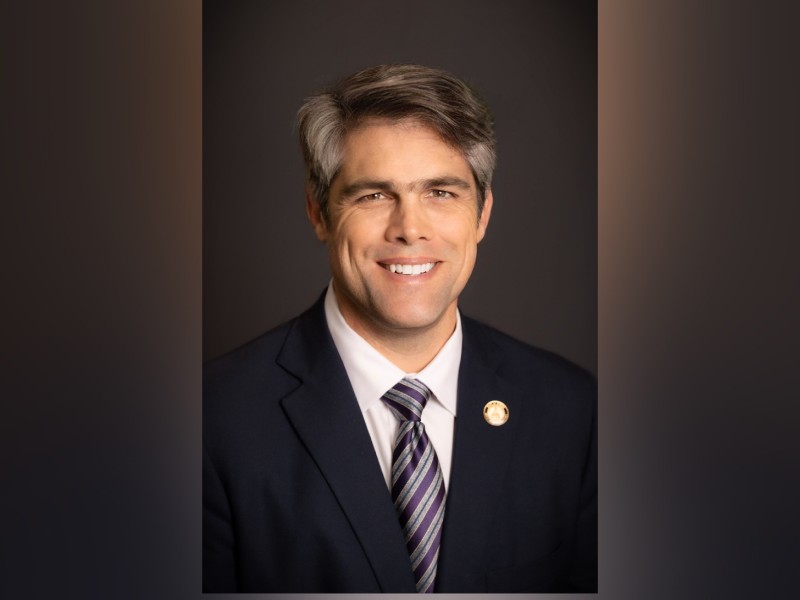
Warner Robins attorney Jim Rockefeller is the former Chief Assistant District Attorney for Houston County, and a former Assistant State Attorney in Miami. Owner of Rockefeller Law Center, Jim has been in private practice since 2000. E-mail your comments or confidential legal questions to jim@rockefellerlawcenter.com.
Before you go...
Thanks for reading The Houston Home Journal — we hope this article added to your day.
For over 150 years, Houston Home Journal has been the newspaper of record for Perry, Warner Robins and Centerville. We're excited to expand our online news coverage, while maintaining our twice-weekly print newspaper.
If you like what you see, please consider becoming a member of The Houston Home Journal. We're all in this together, working for a better Warner Robins, Perry and Centerville, and we appreciate and need your support.
Please join the readers like you who help make community journalism possible by joining The Houston Home Journal. Thank you.
- Brieanna Smith, Houston Home Journal managing editor
Paid Posts
Author