
Administrator pulls back curtain on city operations, what makes Warner Robins run
Warner Robins City Administrator James Drinkard explains the ins-and-outs of Houston County’s largest municipality.
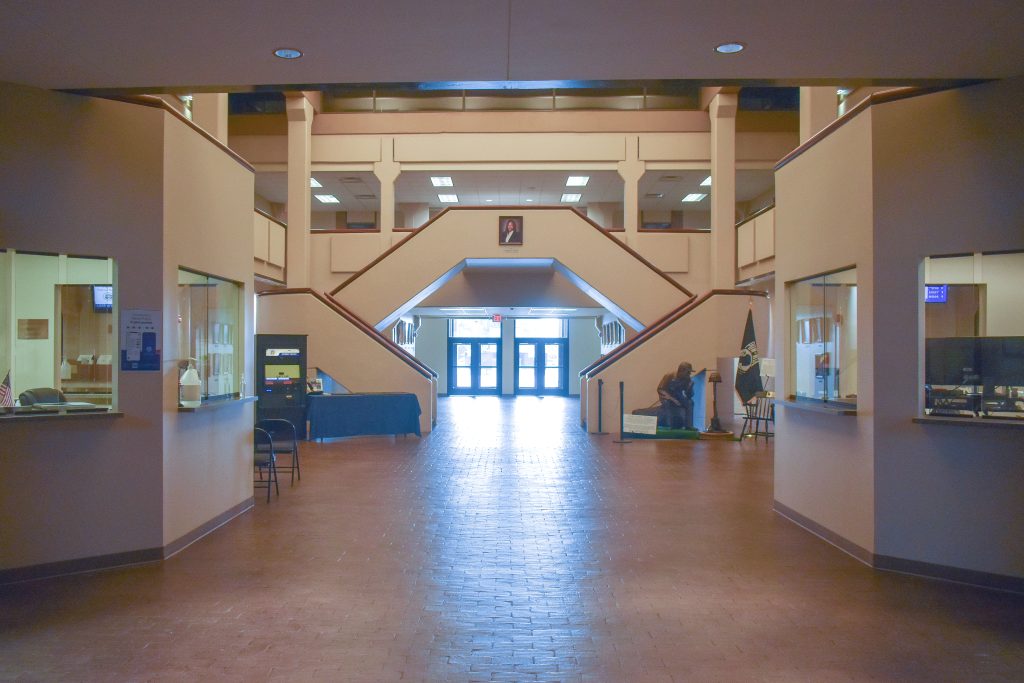
WARNER ROBINS — As the largest municipality in Houston County and the 11th largest in the state, it’s safe to say the city of Warner Robins always has something going on, whether it’s a new initiative, event plans or under-the-radar daily operations.
According to City Administrator James Drinkard, the city has 627 positions in total, spanning across 14 departments. Central to City Hall are the city clerk, city administrator, finance, general administration and the mayor’s office. General administration includes jobs like information technology, customer service, billing, purchasing and building maintenance.
Various departments, such as police, fire, public works and recreation, operate out of satellite locations scattered throughout the city.
Organizationally, the highest position in the chart goes to citizens, then mayor and city council. The city administrator, city clerk and city attorney report to mayor, then department directors report to the city administrator. A director heads up each department, then if applicable, supervisors report to the director.
“I have a certain level of authority to run day-to-day operations, but contractual obligations, purchases over certain levels, etc., that takes an act of the city council or an act of the mayor or a combination thereof,” Drinkard said.
Drinkard explained the mayor and council are responsible for setting policies, identifying key goals, and determining the city’s priorities. Then, Drinkard and department directors develop strategy and recommend initiatives to the mayor and council, who will then choose which projects proceed.
In corporate terms, Mayor LaRhonda Patrick acts as the city’s “Chief Executive Officer,” while the administrator, Drinkard’s position, acts as “Chief Operating Officer,” responsible for managing initiatives, working with departments to execute them, and advising mayor and council on strategy.
Putting projects into motion requires a great deal of communication, both formally and informally. Informal communications, like face-to-face conversations and phone calls, are used for day-to-day operations. Drinkard said formal communication consists of avenues like email and face-to-face meetings.
To facilitate teamwork and communication between departments, the city will start monthly meetings in the new year to improve internal communications.
“I want our department directors to know a fair amount about what’s happening in every department, what projects every department’s working on, and also be thinking about how their particular area of expertise and their perspective, how can that be [applied] to whatever the project is to improve the overall result,” Drinkard said.
As a bonus to external communication, council packets will include staff reports, giving a summary of the items brought to mayor and council. The agenda packets are among several channels of communication between the city and citizens, including the city’s website, social media, traditional media, and a mobile app.
“When you’re talking about communicating with the public, it’s like a layer cake. If you treat communications like a sheet cake, it’s going to be monotone, and you’re going to miss a lot of people. I have a firm belief that if you want to communicate with people, you have to go to where they are. Don’t ask them to come to you,” Drinkard said.
Part of the task includes evolving communication to ensure citizen voices play a larger role in shaping the city, while maintaining transparency.
“A city has a responsibility not just to communicate to residents, but to communicate with residents and engage with residents. It needs to be a conversation. So, I’m going to be looking to implement new means of truly engaging. How can we get citizens involved in decision making processes earlier? How can we get their voice into the mix earlier?” Drinkard said.
Citizens are thought of as shareholders. Their investment into the city is expectant of a return on investment through city services and enhanced quality of life. Drinkard said, unlike typical businesses, citizens rely on the city more in economic hardship, as it provides free events and recreation.
“The sole reason for the city of Warner Robins to exist is to improve the lives of 85,000 people, in round figures. So that’s the dividend. And everything that we do should have that in mind and should drive towards that return on investment: providing good parks, making sure it’s safe, a clean community, a high quality of life, a place where you want to raise a family, a place where you want to start and operate a business and pursue your dreams,” Drinkard said.
Drinkard said the city aims to be noticed on some fronts, like public safety and recreation, but under the radar on services related to utilities and infrastructure. He said if citizens notice these things, it means something is broken.
“The backbone of the community is typically the people you don’t see. It’s the public works tech who’s down in a hole trying to clear out a sewage line. Nobody thinks about that person until that sewage line doesn’t work. But they’re out there every single day doing jobs that most people wouldn’t want to do, and they do it with pride, they do it with honor, and they do it with passion,” Drinkard said.
Warner Robins doesn’t just want to be a city, but a community, served by employees with a heart for helping people and improving their community.
“A city is just a place. It’s a dot on the map, a collection of buildings and streets and stuff,” Drinkard said. “A community, it’s like the difference between a house and a home. A house is a structure. A home is a structure that’s held together with heart. A community is a place that is held together with heart and a spirit. We want this to be a community.”
Before you go...
Thanks for reading The Houston Home Journal — we hope this article added to your day.
For over 150 years, Houston Home Journal has been the newspaper of record for Perry, Warner Robins and Centerville. We're excited to expand our online news coverage, while maintaining our twice-weekly print newspaper.
If you like what you see, please consider becoming a member of The Houston Home Journal. We're all in this together, working for a better Warner Robins, Perry and Centerville, and we appreciate and need your support.
Please join the readers like you who help make community journalism possible by joining The Houston Home Journal. Thank you.
- Brieanna Smith, Houston Home Journal managing editor
Paid Posts
Author

Related Articles

Warner Robins woman convicted of $5.4 million Medicaid fraud scheme
Elizabeth Sue Ivester, 63, of Warner Robins was sentenced to ten years with the first seven to be served in federal prison for a $5.4 million Medicaid fraud scheme.
Houston County NAACP to host annual Martin Luther King Jr. Day march in Warner Robins
The march will start at Union Grove Baptist Church. After a pause at Commercial Circle, attendees will walk to the Wellston Center.

19-year-old injured after accidental self-inflicted gunshot wound
A 19-year-old male was taken to the hospital after accidentally shooting himself in the hip Wednesday evening. The incident is still under investigation.