
A gerrymandering extravaganza
Thanks to the United States Supreme Court, “gerrymander” is a word we all need to study up on.
Dear Readers, Thanks to the United States Supreme Court, “gerrymander” is a word we all need to study up on. The repercussions are unclear.
The term “gerrymander” comes from the politics of the early 19th Century. Elbridge Gerry was a signer of the Declaration of Independence. He also started his political career as a Federalist, only to switch to Thomas Jefferson’s fledgling Democratic-Republican Party, serving as James Madison’s Vice President until Madison’s death.
Before serving in Madison’s cabinet, he had been the Governor of Massachusetts. In 1812, he signed a law creating a congressional district favoring the Democrat-Republicans resembling a “salamander” – hence, the “gerrymander” linguistic term of art.
This political practice creates weirdly constructed voting districts. The geographical oddities are only one issue, it also leads to constituent disenfranchisement.
Take the city of Nashville, Tennessee’s largest city and state capital. It has been carved up into pieces, and citizens are grouped with rural communities, often from geographically distant swaths of Tennessee, for partisan purposes. This is gerrymandering at its worst. The result is that Nashville lacks a congressional voice.
With the end of Reconstruction and the birth of Jim Crow, African-Americans were denied political representation across the Bible Belt. What happened in the South is more historically prominent, broadly, communities across the country, the same tune rang – deny registration and the right to vote, then scatter African-Americans across voting districts to dilute their voice.
This century of political racism came to a screeching halt in 1965 with the Voting Rights Act (VRA) signed by Lyndon Baines Johnson. At the time, the Black vote had been loyal to the emancipating Party of Lincoln, and White Americans supported the Democratic Party. As LBJ correctly prophesied, the passage of the VRA was the death knell for his party in the South; the parties flipped their racial composition.
The VRA prevented the dilution of black voting populations wherever there had been a practice of racial gerrymandering. True for the former Confederate Southern States, where racial animus had especially been prevalent.
The VRA came up for renewal in 1982. It was passed with broad bipartisan support, and Ronald Reagan signed it, crowing that it was “the crown jewel of American liberties.” Again, renewal came twenty years ago (2006), passed with broad bipartisan support (without dissent in the Senate), and was signed into law by George W. Bush.
Since there have been two developments. First, Republicans used it as an excuse to pack voters into voting districts to increase their power. An elegantly clothed form of partisan gerrymandering.
Second, conservative jurists, led by Chief Justice John Roberts, have had the VRA in their sights. In 2013, he penned the Supreme Court’s majority (5-4) opinion in Shelby County v. Holder, eviscerating Section 4 requiring pre-clearance of voting district changes by the Justice Department with judicial oversight. His theory was that the country had evolved and there was no longer any racism in the drawing of voting districts.
Last week’s 6-3 opinion in Callais v Louisiana, authored by Associate Justice Samuel Alito, did the same thing to Section 2, which prohibits diluting the voting power of minorities and racial “cracking,” the doppleganger to Nashville’s political plight. With the stroke of a pen, the Court made it legally possible to dilute the voting power of African-American populations and approved partisan gerrymandering. The death knell of the VRA has been rung, oddly, in April instead of June when it typically issues a term’s major opinions.
Louisiana is about 33% African-American, yet only one of its six congressional districts was majority-minority; the courts required another one to mirror its population distribution. The Supreme Court said this was unconstitutional because it was a racially based political decision. Governor Landry has scurried to cancel ongoing voting in congressional primary elections to redraw Louisiana’s congressional map before November to numerically increase “Republican” seats.
Justice Alito’s legal logic mirrors Chief Justice Roberts’ 2023 opinion in Students for Fair Admissions v. Harvard, outlawing consideration of race in the college admissions process. He argues that the Constitution is “color-blind” – clue to Justice Alito, it’s not, it approved slavery and counted 3/5th of Black Americans in population statistics. The consequences of this opinion were that minority admissions dropped a quarter in the next two classes at our top 50 colleges.
There will be political consequences; Democrats are embracing partisanship and gerrymandering, reacting to Republicans (like Landry) eliminating majority-minority congressional districts. We are sorting ourselves into deep-hued, strident partisan local communities, with the Supreme Court’s blessing. Buckle up!
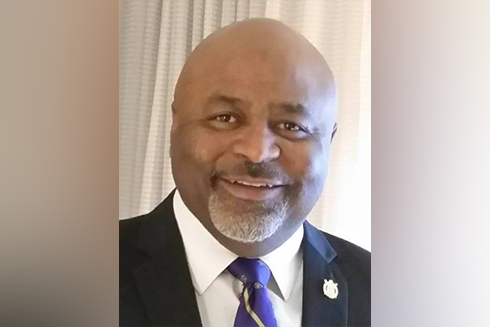
Warner Robins attorney Jim Rockefeller is the former Chief Assistant District Attorney for Houston County, and a former Assistant State Attorney in Miami. Owner of Rockefeller Law Center, Jim has been in private practice since 2000. E-mail your comments or confidential legal questions to ajr@rockefellerlawcenter.com.
Before you go...
Thanks for reading The Houston Home Journal — we hope this article added to your day.
For over 150 years, Houston Home Journal has been the newspaper of record for Perry, Warner Robins and Centerville. We're excited to expand our online news coverage, while maintaining our twice-weekly print newspaper.
If you like what you see, please consider becoming a member of The Houston Home Journal. We're all in this together, working for a better Warner Robins, Perry and Centerville, and we appreciate and need your support.
Please join the readers like you who help make community journalism possible by joining The Houston Home Journal. Thank you.
- Brieanna Smith, Houston Home Journal managing editor
Paid Posts
Author

Related Articles
Schemes, schemes, schemes!
There is a lot of noise out there.

No redraw of Georgia’s maps… for now
The United States Supreme Court struck down Louisiana’s Congressional district maps last week, setting off a wave of redistricting sessions in legislatures across the South.

‘Toon’ In for May — Jim Balletto
May’s opinion comics from local cartoonist Jim Balletto.