
A 50-year fleet: Houston County’s medical mainstay
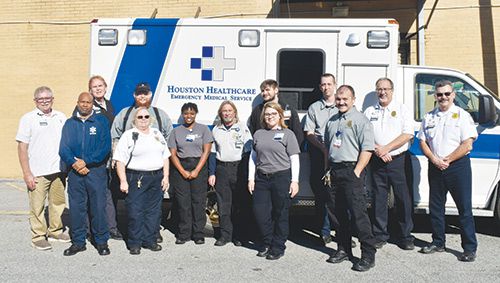
WARNER ROBINS, Ga. — From its humble beginnings of the local funeral home running emergency calls for the hospital, to its now 16-ambulance fleet and over 80 employees, emergency medical services — specifically Houston Healthcare EMS — have come a long way in pre-hospital transportation and treatment. This month marked its 50th anniversary as a service to the residents of Houston County.
The Journal interviewed a couple of EMS officials from the organization. David Borghelli, EMS director, along with Brenda Kosar, paramedic supervisor, spoke on the organization’s half a century in business.
They explained that EMS, as most people know it, began in the early 70s, especially after the TV show “Emergency!” first aired. People in the medical field were also navigating specific laws regarding what would go on to be considered EMS care.
“I’ve watched [HHC EMS] grow from the early 80s on up, and it’s grown tremendously,” Kosar said. “The call volume has grown tremendously, I watched us move from dispatching our own ambulances to the 911 service.”
She said fire departments are located in every city and within the county, assisting in vehicle extrication, among other duties, when needed.
“[Fire crews] get there first, and they help us when we get there,” she added. “It works out as a good team, and we watched all that transpire and grow over the years, adding ambulances and services. It’s been really interesting.”
“There’s a lot of pride in this,” Borghelli said. “This is my family.
“The first day I came here from California, I had never been further east than Denver, Colorado, my entire life. These guys really made me feel welcome initially, and to watch some of the things they told me about the early days, and how much they had already progressed so much. But then to still have that energy to continue to modernize and progress and such — there’s a lot of pride.”
They both said that HHC EMS has held a strong position within the community, facing waves of industrywide shortages head-on and continuing to provide quality service while retaining qualified employees.
“We’ve built something that a lot of other communities have not been able to do,” Kosar said. “A lot of services have closed, they’ve folded. They’re not able to staff their ambulances. … We’re still able to attract paramedics to come to work here because our reputation is good.”
“There’s been ups and downs,” Borghelli said. “We learn from them and become a better service.”
Kosar said that if there is ever a day where there is so much going on they can’t cover all the calls at one time, they add another ambulance to the county fleet. When she began work with HHC EMS, there were only three ambulances; now, there are 11 available during the day and seven at night.
The county is covered by a variety of ambulances running calls 24 hours, 12 hours and 8 hours a day, respectively, depending on the time of day: 11 vehicles from 6 a.m.-8:30 p.m. Monday through Friday, seven vehicles from 6 a.m.-8:30 p.m. Saturday through Sunday and seven vehicles working the night shifts from 7 p.m.-7 a.m. The 12 and 24-hour ambulance crews consist of two paramedics and EMTs.
One non-emergency transport van is operated Monday through Friday. Other ambulances may be used as needed for disasters or football games.
The organization serves as the 911 Zone Provider for the county, serving 380 square miles 24 hours a day, seven days a week, 365 days a year.
“We do a demand analysis constantly,” Borghelli said. “We look at a 20-week period, and look at how many calls we have for each hour of each day of each week.”
Based on what they learn from these trends, they can address it with their Board of Directors and see about expanding the fleet and its resources.
“They believe in us, and they support us,” Borghelli added, also commenting on mutual support from county leadership and other first responding agencies.
They said they used to have to take heart patients to facilities in Atlanta or Augusta, and the expansion of the Cardiac Cath Lab at HHC and the heart and trauma centers in Macon make those situations easier to handle more quickly.
HHC EMS also teams up with Air Evac Lifeteam 154 out of Perry Hospital for appropriate situations. Borghelli said that the team and HHC EMS train together regularly to address car wrecks with multiple patients, as well as cases of people suffering from strokes that need assistance from a neurosurgeon, for example.
“We’re able to fly those patients pretty rapidly, and we have a great relationship with [Air Evac],” he said. “We use them quite frequently out in the field — especially in the far south of the county to get the big wrecks and things like that. … If our medics realize that this person’s well-being is going to be remarkably improved by a more rapid transport, then they’ll call for the helicopter.”
He said that pre-hospital work can sometimes involve addressing mental health challenges in patients, adding that they are actively navigating legislation regarding how to legally and properly care for people experiencing mental health distress.
“We’re working with our legislators on changing the rules, so that we can transport directly to a mental health center rather than to the emergency rooms; that’s in progress,” Borghelli said. “I envision, pretty rapidly, you’re going to see — rather than, say, two paramedics, an EMT on an ambulance responding to these mental health [calls] — you’re going to see maybe a paramedic and a mental health professional responding to these patients.”
The paramedic can determine if there’s a medical issue happening, and the mental health professional can analyze the situation, defuse it if need be and make appropriate recommendations on how to address the issue.
He mentioned a pilot program that completed two years ago — the Community Paramedic Program — with the goal of keeping people out of the emergency room by prioritizing preventative care. They said they began with a group of 40 patients and addressed their own individual situations, saying that emergency room visits dropped 50% compared to their years before.
“A lot of it’s just education,” Borghelli said. “Teach them how they can go and get their medications for cheaper, which specialist should they be calling. It was great. Unfortunately, just like everything else, when COVID hit, it put this on a hiatus.”
They said this type of care has come “full circle,” comparing this program to the older days of medicine when house calls were more frequent. Borghelli added this could open up a new job market for medical workers looking to specialize in that type of mobile preventative care, and especially care regarding the #3 killer behind heart attacks and strokes: systemic infections.
Kosar said proper car seat choice and installation is crucial for child safety and injury prevention. Instead of just a stretcher in the back of the ambulances, there are now adjustable harnesses, and built-in car seats are standard issue in the case of having to transport a child.
Borghelli recommended speaking with a paramedic any time one is unsure on whether their seatbelts and car seats are installed properly. If you need a car seat replaced following a wreck or aren’t able to buy one, there are programs in place to help here in Houston County.
HHC EMS has over 80 well-trained, qualified personnel, including 76 medics, one clinical coordinator, three EMS supervisors, one EMS manager and one EMS director. The various backgrounds and trainings of these individuals span EMT, Advanced EMT, Paramedic, Advanced Cardiac Life Support, Advanced Stroke Life Support, Trauma, Pediatric, Tactical and more.
In regards to recent school shootings, Borghelli mentioned that tactical medical response has changed since decades past. Medical personnel are now able to be proactive sooner during those situations — even responding at the same time as law enforcement — and not necessarily required to stay back until police have secured the scene of a shooting.
“Stop the Bleed” training for area teachers can assist in treating shooting victims if medical personnel aren’t able to get in to help at that particular moment of an injury. This can include applying tourniquets, treating wounds and securing a classroom.
For people that are interested in maybe pursuing a career in EMS, Borghelli said there are levels to the industry where individuals can get a taste of what it’s like before diving in completely or finding out too late that it’s not for them.
They both recommended taking every chance to speak publicly that you can, honing communication skills in general along with writing, anatomy and physiology, foreign languages, computer skills and maintaining your physical fitness.
“EMS is now a growing career field,” Kosar said. “It’s not stagnant; once you get here, you’re not stuck here. You have a lot of careers you can branch off to: nursing, respiratory, physical therapy and so forth.”
Kosar and Borghelli alike said a large reason why they work in this field is because of the rewarding feeling from those life-changing calls involved.
“You have a lot of challenges, and you learn how to solve those challenges, you learn how to care for those patients appropriately,” she said. “And when you have somebody tell you that you’ve saved their life: that’s what we do it for.”
Remember, the field can come with its fair share of stresses, she added. EMS staff are on call a lot of the time, the hours are long, and they typically work on weekends and holidays.
“If you don’t learn to balance your work life and your home life, then you don’t make it in this career field without burning out,” Kosar said. “You have to get you some hobbies, get you some things you really enjoy doing and leave work at work … Listen to your family, talk to them. Don’t put all of your concerns ahead of them.”
At HHC EMS, personnel are given opportunities to speak with an industry confidant regarding traumatic incidents, whether singular or cumulative, with the Critical Incident Stress Management Program. The Employee Assistance Program can also assist in singular incidents.
Other resources — such as time off, peer counseling and group events — are implemented within the organization to make sure employees are given professional help in this regard. Full-time workers also receive paid time off, and mentorship programs are in place to help in confident decision-making, among other things.
Kosar’s father and brother were volunteer firefighters, and she ended up becoming one herself when she was 19. After spending some time in that position — while also as working as an officer with the Warner Robins Police Department — she pursued some other interests in the public safety sector.
“I had been there four or five years when Houston County Ambulance Service gave us a rescue vehicle because they didn’t have the manpower to use it on a daily basis,” Kosar said. “So, then we went to rescue training and auto extrication training, and that got me even more interested. Some of the paramedics came down, talked to us and signed us up to go to EMT class.”
Kosar went on to join HHC EMS two years later in March 1987. She was recently recognized for 35 years of service with the organization.
Borghelli began his journey as a seasonal wildland firefighter in California, eventually receiving additional training and a full-time position.
Public safety and health care is something he’s familiar with, Borghelli explained.
“My grandmother was director of nursing at a hospital, so I’d always been exposed to health care,” Borghelli said. “I became an EMT, then went to paramedic school.”
His career path led him to serve as an ambulance and fire engine medic, helicopter flight medic, field training officer instructor, 911 dispatcher, fire officer, EMS supervisor and then second-in-command to a large metropolitan service in California. He has also completed the EMS Management and Leadership course at Georgia Southern University.
“With this knowledge, I thought I was ready to lead my own service,” he said. “These experiences, the EMS licenses and other education allowed me to be mobile and travel across the country for a position that I was qualified for and I wanted.”
Borghelli has served in Houston County now for 17 years.
The organization stays involved with community outreach by participating with STAR Kids, EMS for Children Initiative, Golden Olympics for Senior Citizens, school programs and demonstrations, political and civic participation, guest speaking and community education.
HHC EMS has been awarded the Georgia DPH Region 5 EMS Service of the Year Award, VHA Georgia Leadership Award in Community Benefit Excellence, Middle Georgia Chapter of the American Red Cross Paramedic of the Year Award, Knights of Columbus Middle Georgia Medical Person of the Year, Georgia DPH Region 5 EMS EMT of the Year, VHA Heroes of Georgia Award and Georgia State EMS Director of the Year.
HHJ News
Before you go...
Thanks for reading The Houston Home Journal — we hope this article added to your day.
For over 150 years, Houston Home Journal has been the newspaper of record for Perry, Warner Robins and Centerville. We're excited to expand our online news coverage, while maintaining our twice-weekly print newspaper.
If you like what you see, please consider becoming a member of The Houston Home Journal. We're all in this together, working for a better Warner Robins, Perry and Centerville, and we appreciate and need your support.
Please join the readers like you who help make community journalism possible by joining The Houston Home Journal. Thank you.
- Brieanna Smith, Houston Home Journal managing editor
Paid Posts
Related Articles
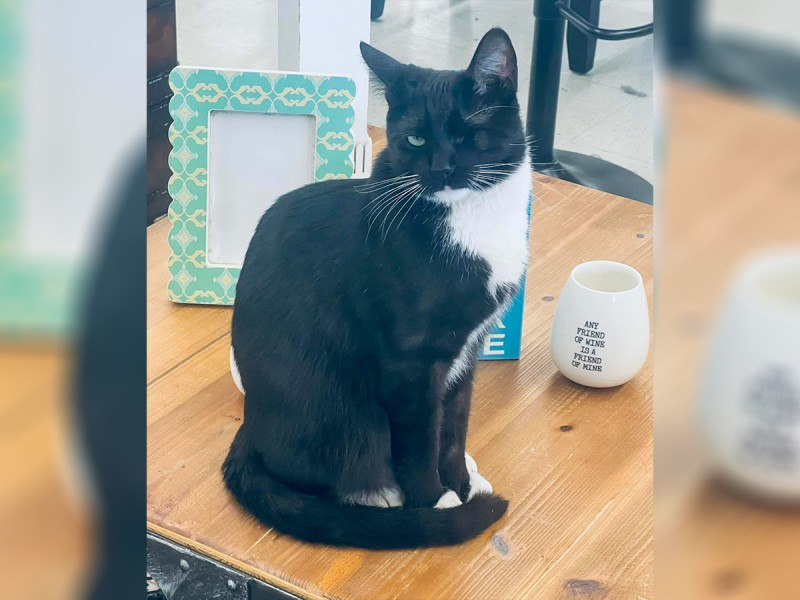
Looking for Alpine: Beloved Habitat For Humanity store cat goes missing
Houston County Habitat for Humanity ReStore is asking the community to help look for their store cat Alpine, who went missing on Jan. 7.
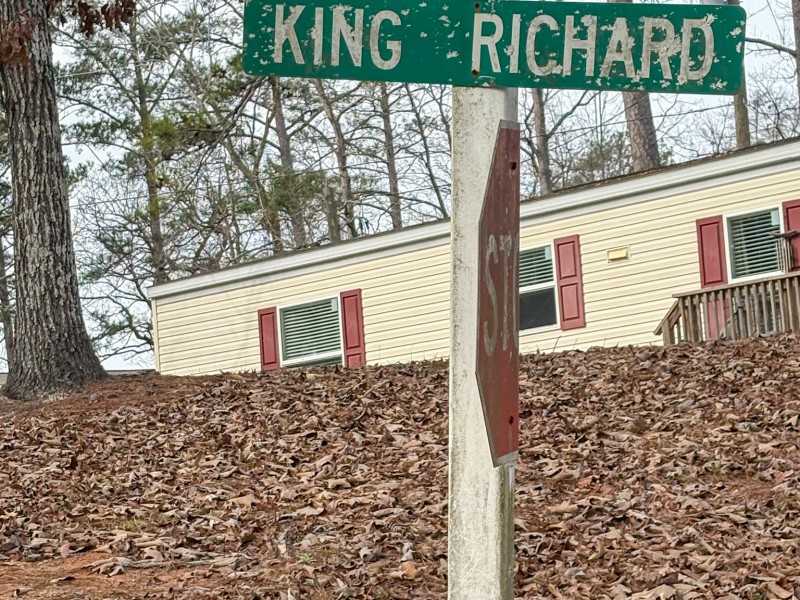
Two arrested after stabbing and standoff on King Richard Drive
Two people have been arrested following a stabbing and standoff on Wednesday night. It happened on the 500 block of King Richard Drive.

Warner Robins Mayor LaRhonda Patrick aiming to excel in 2026
Warner Robins Mayor LaRhonda Patrick looks back on the city’s accomplishments and challenges in 2025.